
Metal 4G LTE 50X Camera
5.0Editor score
50X true optical zoom
Dual-view 6MP imaging
Separate 6W solar panel
Security Cameras for Job Sites guide compares cellular, solar, PTZ, night vision, storage, and durability to help you choose reliable off-grid coverage today.
Security cameras for job sites must protect equipment, materials, temporary structures, and remote work areas without relying on wired internet or constant access to power. Cellular connectivity, solar charging, durable enclosures, and useful night coverage matter because construction environments are often temporary, exposed, and difficult to network.
This guide compares ten cellular and wireless security camera options using the information available for each model. We examine power options, cellular support, image capabilities, detection features, night vision, storage, weather resistance, installation flexibility, and the kinds of job sites each camera is best suited to monitor.
Each review explains the product's standout strengths, limitations, and ideal operating environment. Ratings and specifications can change as manufacturers update products, while prices and cellular plans also fluctuate, so readers should confirm current details and service requirements before making a purchase.
5.0Editor score

4.0Editor score
5.0Editor score
The table below compares all ten cameras across connectivity, imaging, power, and outdoor protection, making it easier to identify the right model for a remote site, storage yard, active construction zone, or equipment area.


The TACTACAM Defend 360 is a 4.0-rated cellular security camera designed for locations where ordinary WiFi is unavailable. Its defining advantage is the combination of LTE connectivity, 360-degree pan, tilt, and zoom control, plus a solar-powered rechargeable battery. That makes it a practical option for remote gates, equipment yards, temporary work areas, cabins, and other off-grid properties where running both a network connection and electrical wiring would be inconvenient.
We may earn a commission when you buy through this link, at no additional cost to you.
The camera provides 4K-resolution photographs and 1080p video, which is useful when the goal is to capture a clear view of people, equipment, or site activity. Its phone-based controls allow an installer to reposition the camera remotely rather than relying on a fixed viewing angle. Solar charging helps maintain the internal battery, while motion detection sends real-time notifications and imagery directly to the user's phone, reducing the need to open an app continuously just to check whether something is happening.
There are a few qualifications to keep in mind. The headline 4K figure refers to photographs rather than the stated video resolution, so buyers looking for 4K video should not mistake one for the other. Cellular operation also requires usable LTE coverage and an appropriate service arrangement, which should be verified before installation. Although the camera is described as weather-resistant, its mounting location still matters: a shaded wall, recessed position, or obstructed solar exposure can reduce charging performance.
Overall, the Defend 360 is the most balanced pick in this guide for users who need a genuinely wireless camera with substantial viewing flexibility. It is especially compelling for a job site where one movable camera needs to cover several directions without wiring. For buyers who prioritize photo detail, broad remote control, and straightforward off-grid operation, this is the strongest all-around recommendation.
Remote pan, tilt, and zoom control is especially valuable on sites whose equipment positions change over time. The camera can be redirected toward a gate, trailer, material stack, or work area without physically moving the mounting point.
A solar panel and rechargeable internal battery remove the need for a permanent outlet. This is a major advantage for short-duration projects and remote installations, provided the panel receives adequate sunlight and cellular reception is available.
We may earn a commission when you buy through this link, at no additional cost to you.
The Vosker VKX is a 3.4-rated 4G LTE camera aimed at construction sites, storage areas, farms, and other places where a self-powered cellular system is more useful than a conventional WiFi camera. It combines a frameless solar panel, a high-capacity battery, a 90-degree field of view, 1080p daytime imagery, and infrared night vision reaching up to 100 feet. Motion can trigger photo alerts or 15-second video requests through the mobile app.
We may earn a commission when you buy through this link, at no additional cost to you.
One of the most appealing job-site features is the stated autonomy of up to six months without external power. A rugged antenna and IP65 weather resistance are also well matched to exposed locations, while the swappable 14,000mAh battery can be reached from the front. That simplifies maintenance compared with designs that require the entire camera to be removed. The integrated deterrent light adds a visible security presence and is intended to discourage intruders near valuable materials, trailers, and storage containers.
The tradeoff is that the VKX is not a live-streaming security camera. Continuous recording is unavailable, and clips are requested on demand or generated from motion-triggered photographs. Users who need uninterrupted recording should not assume this camera behaves like a conventional wired or WiFi surveillance system. Its 3.4 rating also suggests that some buyers may be less satisfied with the overall experience, even though the stated hardware features are well aligned with remote worksites.
The VKX remains a sensible selection for projects where low maintenance and extended autonomy matter most. It fits locations with reliable cellular service, adequate sunlight, and a need to inspect activity periodically rather than watch it constantly. For that use case, the camera's solar design and accessible battery make it particularly convenient.
This camera is built for the type of monitoring that worksites require: periodic checks, motion-triggered photographs, and requested video clips. It is less suited to supervisors who expect constant live viewing or uninterrupted event recording.
The front-access battery, rugged antenna, frameless solar panel, and IP65 enclosure all support dependable outdoor operation. These details can reduce maintenance time compared with systems whose internal components are difficult to reach.
We may earn a commission when you buy through this link, at no additional cost to you.
This 5.0-rated metal-bodied cellular camera is the most feature-rich model in the list, particularly for users who need to identify distant details. Its dual-lens system provides 6MP images, supports a 50X true optical zoom, and displays two angles at once in the app. The camera can pan 355 degrees and tilt 90 degrees, giving a wide field of coverage that is useful for large yards, equipment areas, and active construction zones.
We may earn a commission when you buy through this link, at no additional cost to you.
Optical zoom is the central differentiator. Unlike digital magnification, which enlarges pixels and loses clarity, true optical zoom brings distant subjects closer while preserving more detail. That makes the camera more appropriate for monitoring gates, access roads, parked equipment, or a perimeter beyond a normal fixed camera's comfortable range. The 6MP sensor and color night vision, which is stated to reach 150 feet, further improve the value of the dual-camera design.
The enclosure uses metal rather than lightweight plastic, improving heat resistance and durability for extended outdoor use. A 6W solar panel and 12,000mAh battery support operation away from outlets, with the panel able to run the camera for up to three months without sunlight under the stated conditions. The camera and panel also install separately, allowing the installer to optimize both the viewing angle and solar exposure. On the other hand, the camera offers manual control rather than automatic motion tracking, so it will not automatically follow a moving subject.
This is the premium choice for a site where image detail and wide-area coverage justify a more advanced platform. It works best for buyers who understand the camera's manual PTZ behavior, can provide solid cellular reception, and want a metal enclosure capable of enduring demanding outdoor conditions. For distant identification or flexible dual-angle monitoring, it offers the most compelling specification set in this guide.
The 50X true optical zoom is valuable when equipment, workers, or vehicles must be identified from across a large site. It narrows the viewing field by design, but it captures substantially more usable detail than relying on digital enlargement.
The dual-screen app view lets users inspect a top perspective and lower perspective simultaneously. This is convenient for monitoring both a broad approach and a more specific staging or storage area.
We may earn a commission when you buy through this link, at no additional cost to you.
The SEHMUA 4G LTE is a 4.2-rated camera for users who need a basic off-grid security solution without WiFi or a permanent electrical supply. It includes a U.S.-only EIOTCLUB SIM compatible with AT&T, T-Mobile, and Verizon, and the included trial provides a period to evaluate cellular service. A subscription is required afterward for continued operation, with cloud storage also offered on a trial basis.
We may earn a commission when you buy through this link, at no additional cost to you.
The camera combines a rechargeable battery, a 6W solar panel, a PIR motion sensor, and a wide-angle lens with horizontal and vertical rotation. Its 2K resolution and full-color night vision make it more useful for nighttime monitoring than a basic monochrome infrared system. Four-times digital zoom provides some additional detail when an object is already within the camera's field of view, while the spotlight must be enabled manually in the Ubox app.
The main compromise is the ongoing cellular service requirement. Users must also check carrier coverage at the exact installation location, because cellular performance can deteriorate around metal buildings, excavated areas, and partially enclosed sites. Digital zoom also cannot match the clarity of a true optical lens at long range. These limitations make the camera more appropriate for general site awareness than precise identification of distant faces or vehicle plates.
The SEHMUA is a good fit for a small crew, contractor, or property owner who wants simple rotation, phone alerts, night vision, and the ability to speak through the camera. It offers a 4.2 rating and a useful combination of features for a straightforward installation. The principal message is clear: verify cellular service first, then treat this as an affordable, flexible monitoring solution for the coverage it can provide.
Horizontal and vertical lens rotation allow the camera to cover a gate, temporary building, equipment stack, or work area. It is a simple approach to site coverage, although it does not provide automated subject tracking.
Built-in two-way talk lets a supervisor speak to someone near the camera over the cellular connection. That can be useful for visitors, deliveries, or workers who need directions, provided the site has adequate signal.
We may earn a commission when you buy through this link, at no additional cost to you.
The Vosker VKX 2-Pack provides two cellular solar cameras for users who need to monitor more than one part of a job site. It carries a 3.4 rating and shares the VKX family's emphasis on low-maintenance operation, extended autonomy, and requested video rather than continuous recording. Each unit can capture motion-triggered photographs and produce 15-second clips on demand through the mobile app.
We may earn a commission when you buy through this link, at no additional cost to you.
Using two cameras can create a more useful security layout than placing one unit in a central location. One may watch a main access gate while the other covers a trailer, material stockpile, or equipment yard. The larger frameless solar panel is stated to support as much as six months of autonomy, and the absence of snow and dust buildup on the panel design is beneficial in exposed northern or dusty environments.
This package does not provide uninterrupted recording, so it should be evaluated as a camera for event documentation and periodic checks rather than continuous video surveillance. A Vosker data plan is needed to transmit photos and videos, and cellular coverage must support both positions. The privacy snooze feature is useful for planned site activity, allowing detection to be disabled temporarily when crews or authorized visitors are present.
The 2-Pack is an attractive option when a single-camera solution would leave important areas exposed. It is particularly suitable for small sites with two clearly defined priorities, such as a gate and a material-storage point. Buyers should weigh the convenience of the package against their need for live viewing or continuous recording and confirm that both installation points have suitable cellular service.
Two cameras eliminate the need to compromise between a gate and a distant equipment area. The package is best for sites where the most important assets can be divided into two distinct monitoring zones.
Temporarily pausing detection can reduce unnecessary alerts during active work periods. That control is helpful on job sites where ordinary movement is expected throughout the day.
We may earn a commission when you buy through this link, at no additional cost to you.
This 4.1-rated two-pack provides cellular, solar-powered monitoring for sites without WiFi. Each camera supports 2K imagery, 270-degree pan, 90-degree tilt, four-times digital zoom, and four spotlights for color night viewing. A PIR sensor can detect people, vehicles, and animals, with alerts delivered through the Ubox app. The package is aimed at straightforward, wireless deployment around construction locations, storage areas, and remote properties.
We may earn a commission when you buy through this link, at no additional cost to you.
The included SIM and trial period provide a convenient way to begin using the cameras, while a selection of cellular plans supports continued service. A local microSD card can store events for playback, and cloud storage is available if the user applies. Two-way audio allows communication with people near the camera. The solar panel and rechargeable battery eliminate the need for cables, making these cameras convenient for temporary sites that do not have permanent utilities.
The two cameras are not a complete substitute for planning network coverage. Both locations must have usable LTE service, and the microSD card needed for local event storage is not included. The four-times digital zoom can help with closer inspection, although it is not equivalent to true optical magnification. The camera's PTZ controls also require the user to choose an angle rather than following motion automatically.
This package is a strong middle-ground choice for a small or medium job site that needs two points of coverage and values night visibility, phone alerts, and flexible storage. It is well suited to owners or contractors who want a relatively simple system without a wired installation. The most important pre-purchase checks are cellular reception at both camera locations and the ongoing service terms.
The two-pack can cover a wider property more efficiently than one fixed viewpoint. It is a practical choice for securing a front access point and a separate equipment or storage area.
Four spotlights support the camera's color night vision, which can make vehicles, people, and equipment easier to identify after dark. Placement should account for glare, reflections, and any neighborhood or site lighting rules.
We may earn a commission when you buy through this link, at no additional cost to you.
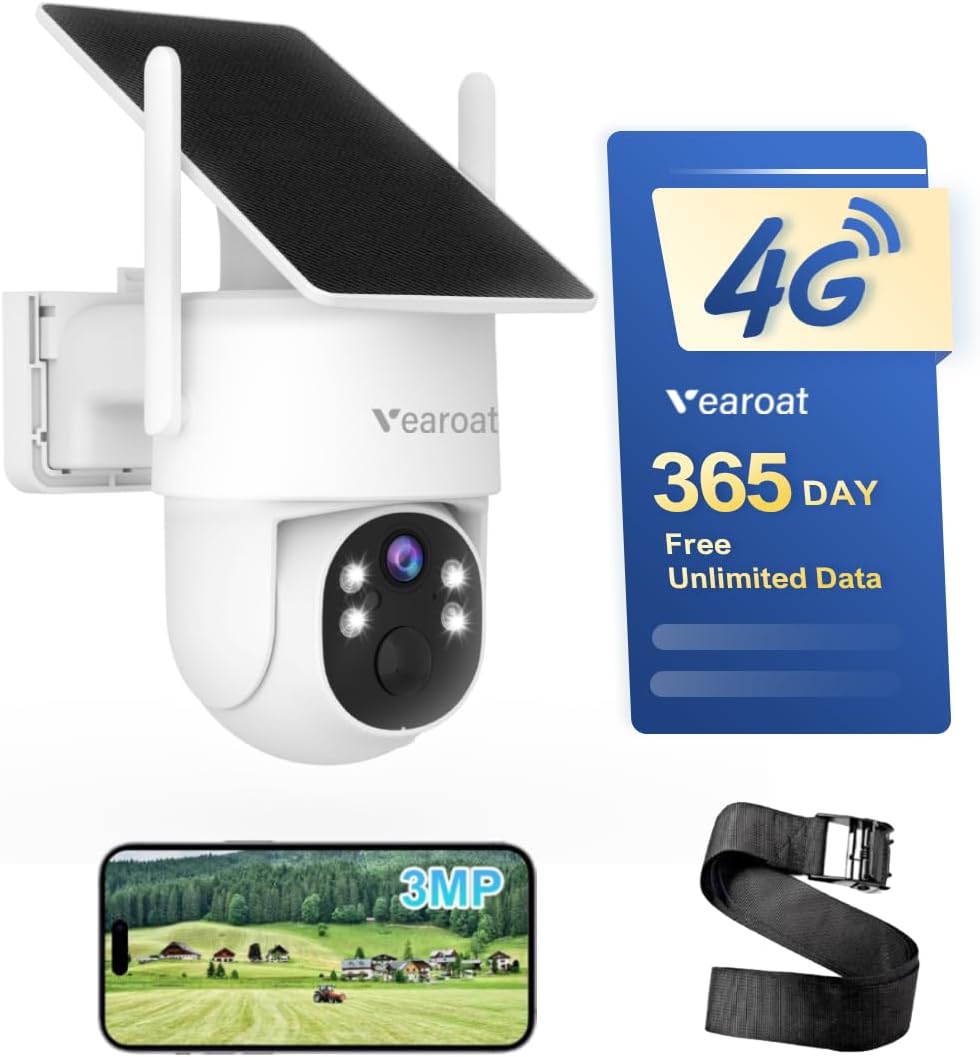
The 4G LTE 365-Day Camera is a 5.0-rated, solar-powered option for users who want a cellular job-site camera without immediately committing to a short-term service arrangement. The included SIM comes with 365 days of unlimited data, making it easy to evaluate the camera over a full year of operation. After that period, the device can be continued through its renewal process.
We may earn a commission when you buy through this link, at no additional cost to you.
The camera produces 2K video with color night vision, supported by infrared LEDs and image sensors. It offers 360-degree pan, 120-degree tilt, and six-times digital zoom for broad manual coverage. A 7,800mAh rechargeable battery and included seven-watt solar panel are intended to support continuous outdoor operation, while two-way audio lets supervisors speak with visitors, delivery drivers, or other people near the installation.
One important detail is that local video storage requires a microSD card up to 128GB, and the card is not included. The camera must also have consistent cellular service and enough direct sunlight for dependable charging. Digital zoom can assist with visual inspection, but it does not deliver the detail of a true optical zoom. Those limitations do not reduce its usefulness for routine jobsite awareness, yet they matter when defining the camera's ideal role.
For buyers seeking a capable budget-oriented system, this is the most balanced recommendation in the guide. It combines a strong rating, a generous included data period, 2K night imaging, local storage support, and two-way communication. It is best for a single remote camera position with reliable service and clear sun exposure, providing useful coverage without requiring a wired network or outlet.
The included 365-day unlimited data period removes much of the uncertainty associated with short introductory plans. It gives an owner or contractor time to assess cellular performance, solar charging, and alert usefulness across changing seasons.
A 360-degree pan and 120-degree tilt allow the camera to cover a broad area from a single mounting point. The controls are especially helpful when gates, staging areas, or equipment positions change during a project.
We may earn a commission when you buy through this link, at no additional cost to you.
The Vosker VKX Video is a 3.5-rated cellular camera for remote properties, barns, farms, and construction sites where solar autonomy and visible deterrence are the main priorities. Like the other VKX models, it captures motion-triggered photographs and can return 15-second video clips when requested through the app. Continuous recording and live streaming are not available, which makes it more of an event-documentation camera than a conventional continuous surveillance recorder.
We may earn a commission when you buy through this link, at no additional cost to you.
The integrated light is positioned to signal the camera's presence and discourage intruders, animals, and other unwanted visitors. A larger frameless solar panel is stated to deliver as much as six months of autonomy, while the frameless shape helps prevent snow and dust from accumulating. The rugged antenna is designed to support communication in remote environments, and the IP65 enclosure provides protection against dust and water.
A front-access swappable battery makes servicing more convenient, especially for users responsible for several remote installations. The camera can also be snoozed temporarily to respect privacy or avoid alerts during planned activity. As with the other VKX options, photo and video transmission requires a cellular data plan, and coverage must be adequate at the mounting location. The stated six-month autonomy should also be understood as a potential under suitable conditions rather than a guaranteed interval in every climate.
The VKX Video is a reasonable choice when a visible deterrent and low-touch maintenance are more important than live viewing. It can protect equipment, trailers, stored materials, and remote work areas, especially when occasional inspection is sufficient. Buyers who need continuous evidence recording should choose a different camera, while those who value solar endurance and an explicit deterrent light will find the core proposition compelling.
The integrated light can make the security installation obvious to someone approaching the site. It supplements the camera by discouraging unwanted activity before someone attempts to approach equipment or storage.
The front-access battery and dust-resistant solar design are useful where visits are infrequent. Routine servicing is easier because the user does not need to dismantle the entire camera to reach its power source.
We may earn a commission when you buy through this link, at no additional cost to you.
The HOSAFE.COM 4G LTE is a 4.1-rated solar cellular camera designed for job sites and other locations that lack a WiFi connection. It offers 2K image quality, a 270-degree pan, 90-degree tilt, four-times digital zoom, and four spotlights for color night vision. The preinstalled cellular SIM and trial period allow the system to be connected to a major U.S. carrier, while a solar panel and rechargeable battery keep the installation cable-free.
We may earn a commission when you buy through this link, at no additional cost to you.
One of its most useful features for a new owner is the included 64GB microSD card. That enables local event playback without requiring a separate storage purchase, while optional cloud storage is available through an application. The Ubox app supports motion notifications and two-way audio, making it possible to speak to a visitor or worker near the camera. PIR detection can identify movement from people, vehicles, and animals.
Users should verify that the location has stable LTE service and that cellular service is appropriate for a camera that may transmit many events. The four-times digital zoom helps but does not provide true optical magnification. The camera's weather resistance is rated IP66, and the stated operating range extends from minus 4 to 122 degrees Fahrenheit, making it suitable for many outdoor environments. Placement still requires attention to solar exposure and signal quality.
The HOSAFE.COM is a well-rounded selection for users who want local storage included and two-way communication in a weather-resistant, solar-powered system. It is well matched to a small contractor, rental property, equipment enclosure, or active work zone. The combination of 2K imagery, night spotlights, flexible storage, and cellular independence makes it particularly convenient for a temporary installation.
The included 64GB card removes the need to buy storage before the camera can retain local recordings. It also provides a useful fallback when cloud access has not been activated or cellular transmission is temporarily unavailable.
The spotlight-equipped color night vision is useful for identifying activity after dark. Installing the camera away from reflective surfaces and competing lights will help preserve a clear image.
We may earn a commission when you buy through this link, at no additional cost to you.
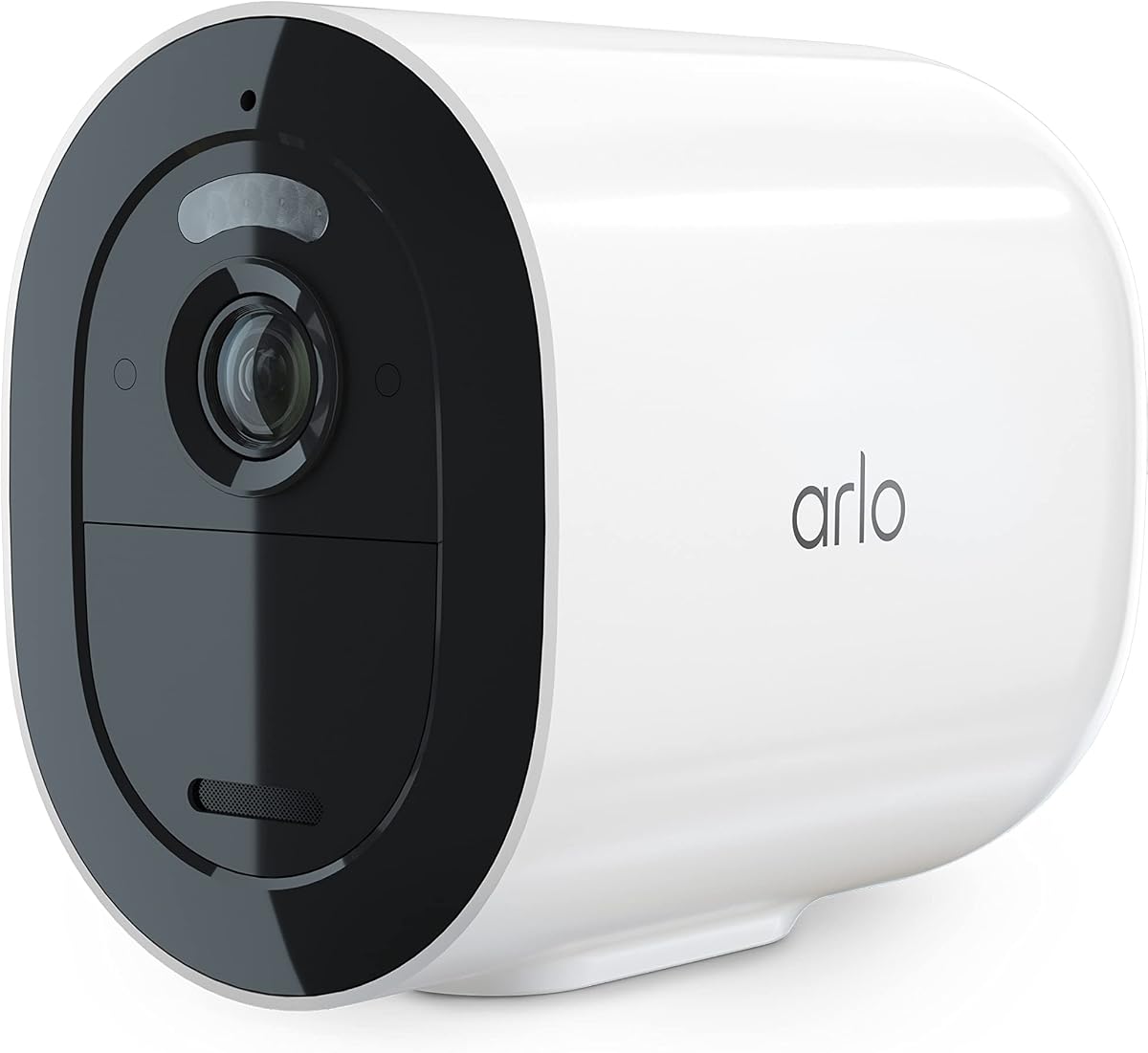
The Arlo Go 2 is a 3.5-rated wireless camera that supports both 4G LTE and 2.4GHz Wi-Fi, offering more connection flexibility than a cellular-only model. It records 1080p video with a 130-degree field of view and provides motion notifications, live streaming, color night vision, two-way audio, a spotlight, and a siren that can be activated remotely. A rechargeable battery eliminates permanent wiring, and the weatherproof housing suits outdoor use.
We may earn a commission when you buy through this link, at no additional cost to you.
Arlo Go 2 also includes a built-in microSD slot for local recording, which is important because a cellular camera should not be dependent entirely on remote transmission. GPS location tracking helps users locate or recover the camera through the Arlo Secure app and a smartphone map service. The camera can be installed on a construction site, at an RV, on a boat, at a vacation property, or in a camping area, making it a more varied option than a dedicated solar jobsite unit.
The principal trade-off is that the SIM card is not included, so cellular buyers must arrange compatible service separately. The camera's 130-degree field of view is narrower than the broad PTZ coverage offered by many solar models in this list, and its 1080p resolution is below the 2K and 6MP alternatives. Some enhanced features also require a paid Arlo Secure plan, while the included local storage helps preserve core recording flexibility.
The Arlo Go 2 is worth considering when live streaming, app-based control, ecosystem compatibility, and the option to use either Wi-Fi or LTE matter most. It is less specialized for extended off-grid autonomy because its listed power source is a rechargeable battery rather than a bundled solar system. For a flexible, familiar wireless camera that can handle both connected and cellular sites, it remains a credible final selection.
Supporting LTE and Wi-Fi gives the camera more deployment options than a cellular-only model. It can use a home or site network when available and switch to cellular when wired internet is impractical.
GPS location tracking can help recover a misplaced camera, while live streaming and remote siren activation provide more immediate control. Both features are particularly useful for temporary or mobile installations.
We may earn a commission when you buy through this link, at no additional cost to you.
A job-site camera should match the site's power, network, environmental, and monitoring conditions. The most important decision is not simply resolution; it is whether the system can remain connected, charged, accessible, and legally appropriate where it is installed.
Most cameras in this guide use 4G LTE because job sites often lack dependable WiFi. Before buying, check coverage at the exact camera position rather than relying on the signal shown near a road or main office. Metal buildings, stacked materials, excavated ground, and partially enclosed structures can weaken reception. Also confirm whether the camera accepts the carrier associated with the included SIM, whether the SIM works in the intended country, and whether a separate card is required. A camera may advertise cellular operation but still be less effective than a WiFi model where high-speed service is abundant.
Solar power is what makes many off-grid installations practical. Compare the panel size, battery capacity, stated autonomy, and charging behavior rather than treating all solar cameras as equivalent. A larger panel can provide a better margin during cloudy weather, snow, dust, or shaded periods. Some products advertise several months without sunlight, but actual performance varies with orientation, season, temperature, and how often the camera records. Removable or front-access batteries make remote maintenance easier and may be worth prioritizing across multiple installations.
Resolution determines the potential detail in an image, but lens design and zoom type determine how much of that detail remains usable. A 2K camera is generally more appropriate for broad jobsite awareness than a 1080p model, while a 6MP dual-camera system can add flexibility. True optical zoom is especially helpful for gates, access roads, and distant equipment because it magnifies the scene without relying entirely on digital enlargement. Digital zoom is convenient but usually produces a smaller, less detailed crop. Consider night-vision range, color capability, and the physical field of view alongside daytime resolution.
Job-site cameras range from event-triggered tools that capture photographs or short clips to products designed for live viewing and local playback. PIR detection can reduce unnecessary alerts caused by changing light or vegetation, but the available trigger categories differ by model. Look for human, vehicle, and animal detection when relevant, plus adjustable sensitivity and snoozing controls for active work periods. Continuous recording uses more power and data than on-demand capture, so a camera without it may be more appropriate for a remote site checked periodically.
Construction sites expose cameras to rain, wind, dust, heat, cold, vibration, and occasional impact. A metal enclosure may offer greater heat resistance and structural confidence than lightweight plastic, while an IP65 or IP66 rating indicates protection against specified dust and water ingress. These ratings do not eliminate the need for sensible placement. Install under an eave when possible, avoid direct runoff, tighten mounting hardware, and keep the solar panel clear of obstruction. Extreme conditions can also reduce battery performance, so local climate belongs in the decision.
Cellular service and storage are related but separate decisions. A camera may transmit images over LTE while saving video to a microSD card, or it may offer cloud storage through an optional plan. Check whether a card is included, its maximum supported capacity, and whether the camera can function without cloud access. Review the cellular trial, renewal process, and any plan requirements before installation. The app is the operational center for these cameras, so confirm that its remote access, notification, playback, and account features suit your workflow and support the number of cameras you need.
A camera's features mean little if it cannot see the assets that matter. Map entry gates, material stacks, machinery, temporary offices, trailers, and blind approaches before mounting equipment. Wider PTZ models can cover more from one position, while true optical zoom may justify a second camera aimed at a distant gate. Consider whether workers will move the camera, whether sunlight will be obstructed later in the project, and whether a deterrent light could affect neighboring properties. Separate camera and panel placement, as offered by some models, helps optimize viewing and charging.
A visible security camera can deter theft, but placement must respect workplace privacy, recording rules, union or site policies, and local regulations. Avoid pointing a camera into private changing areas, neighboring homes, or a worker's private vehicle without a legitimate purpose. Detection snoozing can help during authorized activity. Integrated lights may improve deterrence but should be positioned and configured responsibly. Contractors and site managers should also notify employees and visitors about monitoring in accordance with company policy and applicable law.
Begin by surveying the site and selecting each camera's exact location. Check cellular signal, sunlight, mounting surface, sight lines, and the position of the solar panel before drilling. Assemble the camera according to the manufacturer's instructions, install any required SIM, and complete the app setup. For models that require an initial cable charge, connect the camera to power before relying on solar operation. Confirm that the app receives a notification, that motion detection is enabled, and that the viewing angle shows the intended area.
After installation, test the system under realistic conditions. Walk through the monitored zone to verify PIR sensitivity and alert timing, then inspect the camera at night to check for glare, shadows, infrared reflection, or spotlight washout. Test live viewing, playback, two-way audio, requested video clips, and local storage where applicable. Create a schedule for reviewing footage, and use detection snoozing during planned work periods so genuine alerts remain meaningful. Confirm that the camera's date, time, and notification settings are correct.
For ongoing care, clean the lens and solar panel regularly, especially after dust, mud, snow, or construction debris. Inspect mounts for looseness and check that water can drain away from the enclosure. Review battery performance and charge the removable battery indoors when service conditions prevent adequate solar charging. Keep the camera's service plan active, retain cloud or local storage as intended, and test cellular performance during different project phases. Replace batteries when runtime declines or damage is visible rather than waiting for the camera to stop recording.
Most cellular cameras in this guide do not require WiFi because they connect through a 4G LTE network and their own SIM. A WiFi connection is useful for high-speed streaming or large downloads, but LTE can provide sufficient access for live views, alerts, photographs, and short clips. Buyers should confirm that their chosen location has adequate cellular reception before installing a camera.
One camera can cover a useful area, but it rarely replaces multiple cameras on a large site. A wide PTZ model may cover a yard or building exterior, while a second camera can protect a distant gate or storage area. Mapping assets, blind spots, access points, and sunlight before deciding how many cameras are needed will produce a more reliable layout than estimating from property size alone.
Optical zoom uses the lens to magnify the scene and generally preserves more detail. Digital zoom enlarges pixels from the existing image, which can make distant objects easier to locate but often produces a blurrier result. For a jobsite camera that must identify equipment, faces, or license plates from a distance, true optical zoom is the more useful capability.
Yes, the cellular cameras listed here are designed for off-grid use through rechargeable batteries and solar charging. Some models include a separate solar panel, while others use a smaller integrated panel. Solar operation still depends on adequate direct sunlight, and several cameras require an initial cable charge before being powered on for the first time.
No. Some models include a SIM with a trial or a longer included data period, while others require the buyer to obtain compatible service separately. Arlo Go 2, for example, does not include a SIM card. Check the current service terms, supported carriers, renewal process, and regional limitations before installation, especially if the camera will be used outside the United States.
It depends on the model. Arlo Go 2 supports live viewing and local recording, while the Vosker VKX cameras are designed around motion-triggered photographs and requested 15-second clips rather than continuous recording. Continuous capture can consume more battery, storage, and cellular data, so event-based models may be better for remote installations that do not need uninterrupted footage.
The amount needed depends on the features being used. Motion alerts and photographs generally require less bandwidth than continuous live streaming or large video downloads. A camera may still function with moderate signal while taking longer to transmit, so testing the intended carrier and app at the exact mounting position is more reliable than relying on a general coverage map.
Choose a high, secure position with a clear view of the area, direct sunlight for the panel, and enough cellular reception. Avoid locations where trucks, scaffolding, stacked materials, or future construction will block the view or charging. It is also wise to test night visibility, reflections, and the camera's two-way audio before considering the installation complete.
The TACTACAM Defend 360 is the most balanced overall option, combining cellular independence, solar power, 360-degree remote control, and strong photo capture. The Metal 4G LTE 50X stands out for premium imaging, true optical zoom, dual views, and a metal housing, while the 4G LTE 365-Day Camera delivers the strongest budget-oriented package with 2K night vision, local storage support, and a generous included service period.
The right camera ultimately depends on the site rather than a single specification. Choose true optical zoom when distant identification matters, favor broad PTZ control for open yards, and prioritize solar endurance for installations that are difficult to service. Also consider whether continuous recording is necessary, whether two-way audio will be useful, and whether local storage provides a useful backup. Signal strength and solar exposure should always be tested before making the final decision.
Prices, carrier terms, software features, and included data can change over time, so buyers should review the current product listing before purchasing. Confirm the camera's compatibility with the intended carrier, check that the app supports the required number of devices, and read the latest installation instructions. Those final checks help ensure that the selected security camera can provide dependable coverage throughout the project.