
KFD ResMed AirSense 11 DC Adapter
4.8Editor score
AirSense 11 and AirMini support
65W DC output
Accepts 12V and 24V input
Three-meter total cable length
Compare ten battery and power options for running a CPAP machine, including cords, converters, compatibility, wattage, charging methods, travel use, and backup
A battery setup can keep a CPAP machine running during outages, camping trips, flights, and other situations where reliable wall power is unavailable. A useful solution must match both the machine’s power requirements and the battery’s output, while also providing a secure, properly rated connection.
The products in this guide include machine-specific DC cords, USB-C power-delivery converters, cigarette-lighter adapters, and cables designed for established CPAP battery systems. We compared their stated compatibility, input and output requirements, supported machines, installation method, and intended backup applications.
Each review identifies the product that best suits a particular setup, while the comparison table makes the technical differences easier to scan. Ratings and specifications can change, product availability varies, and current prices should be checked before purchasing.
4.8Editor score

4.4Editor score
4.2Editor score
The table below compares each cable or converter by its power path, supported machine family, connection method, and strongest intended use. These details reveal that the same battery may require a different cable, protocol, or voltage depending on the CPAP model.

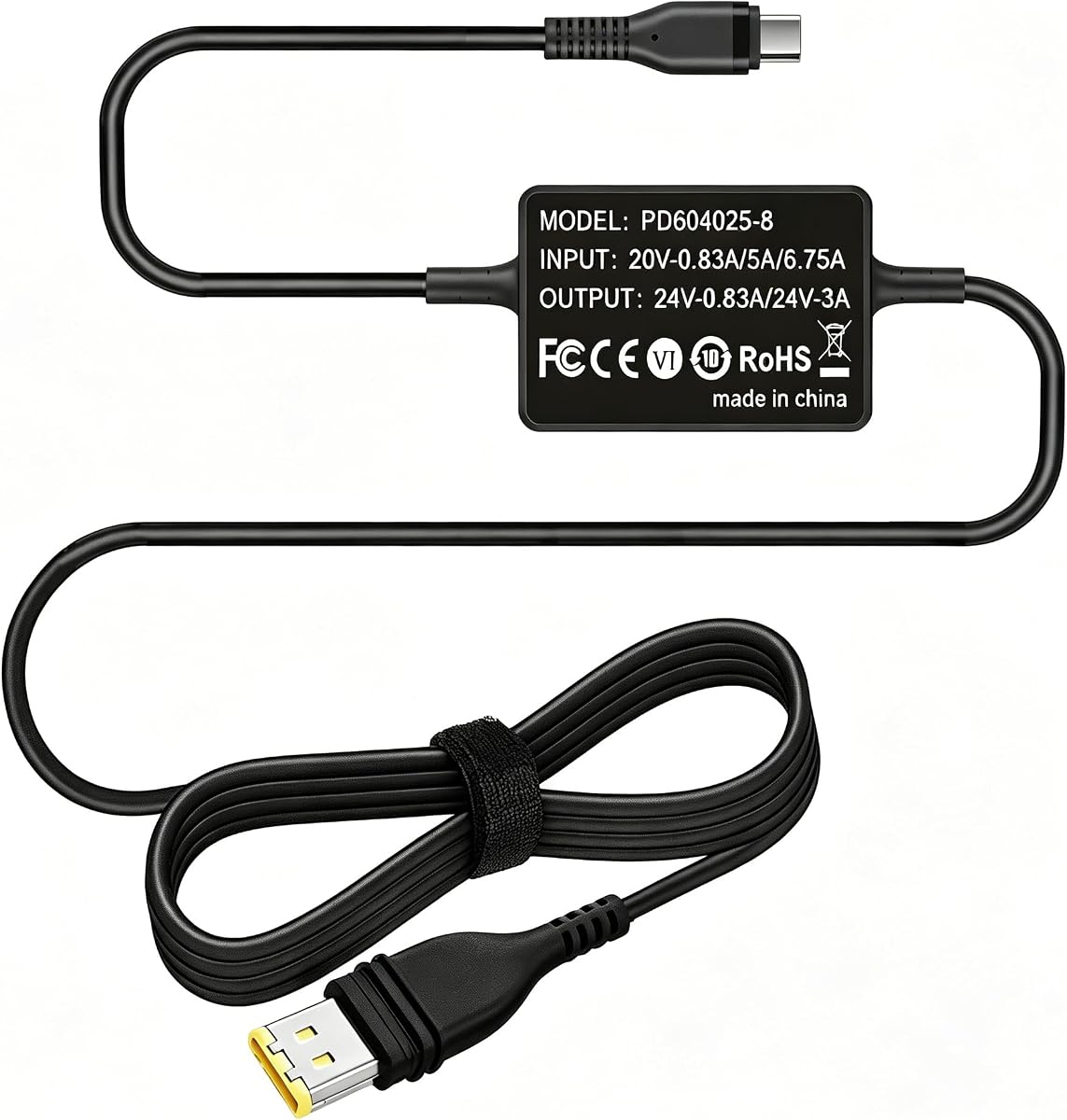


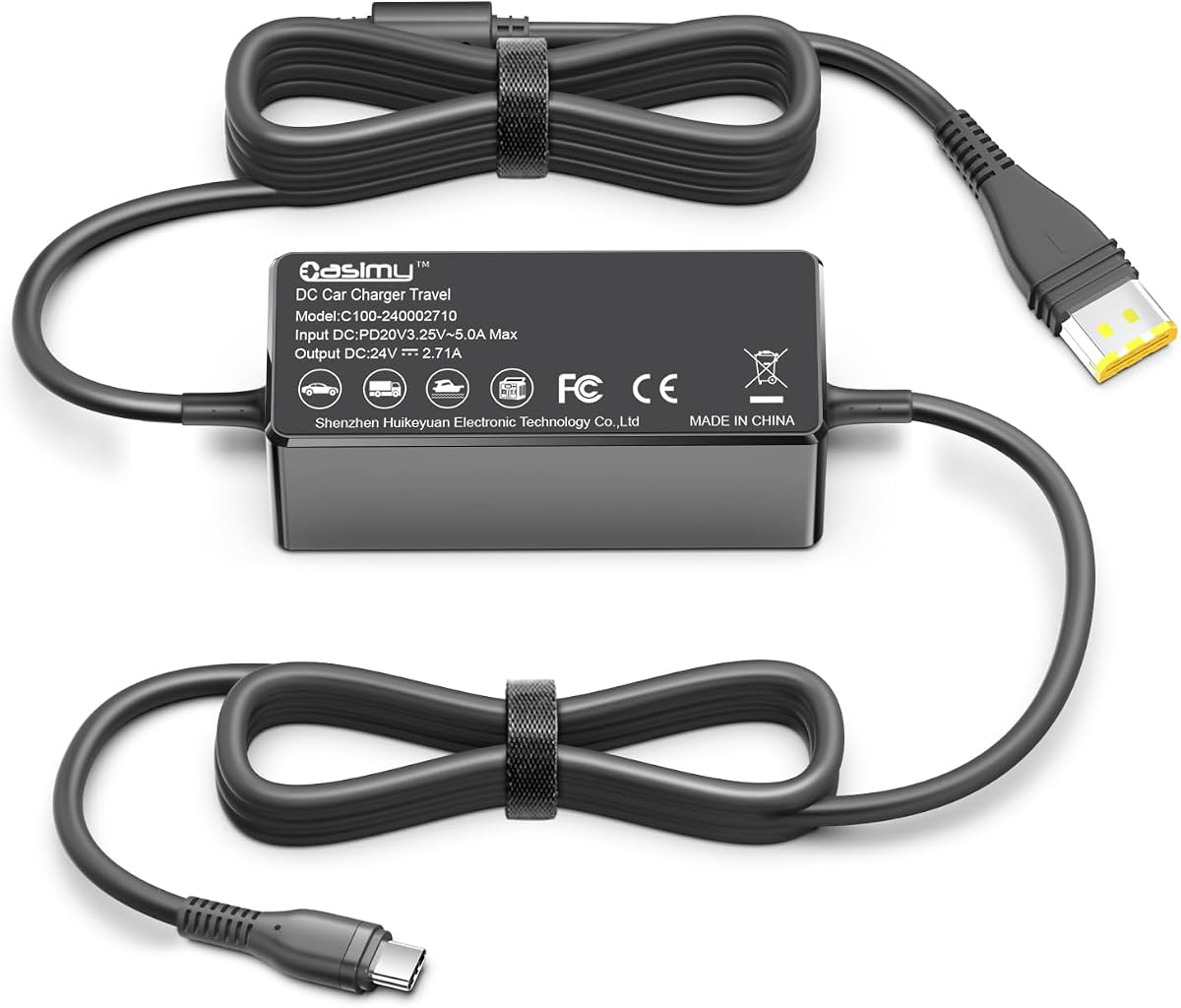

The KFD 12V-24V Car Charger Converter is a versatile way to connect a compatible battery, power bank, portable station, or other qualifying DC source to a ResMed AirSense 11 or AirMini. Its 4.3 rating reflects a generally useful design, particularly for travelers who want more than one possible input method. The product stands out for its stated 65W output and broad 12V–24V input range.
We may earn a commission when you buy through this link, at no additional cost to you.
Two connection approaches are built into the product description. A cigarette-lighter socket arrangement accepts a 12V–24V source, while a USB-C PD approach calls for a source capable of delivering 20V and more than 65W. The DC side can provide 24V at 2.71A for a 65W result, and the total cable measures 2.6 meters. That range of inputs makes the adapter useful with a car outlet, suitable battery pack, or compatible portable power station.
Compatibility is intentionally focused rather than universal. It supports ResMed AirSense 11 variants, including AutoSet and Elite versions, along with the AirMini and specified 39205, 390010, and r390-7230 power configurations. It is expressly not designed for ResMed S9, S10, Philips DreamStation, Respironics, or System One 50 and 60 devices. The product also states that an insufficient source can prevent normal operation, making battery capability a crucial part of the purchase decision.
This is a strong choice for an AirSense 11 or AirMini owner who needs one adapter for several approved power sources. It is less suitable for a mixed fleet of older machines because the correct machine-specific cable would be needed. Buyers should still verify connector shape, voltage, and power requirements before use, especially when connecting an unfamiliar portable station or power bank.
The cigarette-lighter and USB-C PD approaches give the adapter flexibility around vehicles, battery packs, and power stations. The source must still meet the required output, so nominal USB-C wattage alone does not guarantee compatibility.
A stated maximum output of 24V at 2.71A supports the full 65W requirement associated with the listed ResMed models. That makes the cable more appropriate than a low-wattage USB converter for demanding backup use.
We may earn a commission when you buy through this link, at no additional cost to you.
The 20V CPAP Power Cord is a focused USB-C solution for ResMed AirSense 11, AirCurve 11 Elite, and AirMini machines. It carries a 4.7 rating, the highest among the products designed specifically around these current ResMed models. Its main appeal is a simple connection chain: a suitable USB-C PD source enters one end, while the machine-specific DC connector exits at the other.
We may earn a commission when you buy through this link, at no additional cost to you.
The product calls for a USB-C source that offers at least 20V and 65W, specifically warning against 5V, 9V, and 15V supplies. Output choices include 24V at 0.833A for 20W and 24V at 2.71A for 65W. Those specifications make it relevant to compatible 24V CPAP battery backups, power banks, and portable power stations, provided the source supports the required PD voltage and power level.
Installation guidance is unusually practical. The instructions say to connect the USB-C end, wait three to five seconds, and then attach the CPAP end. If the unit does not start, the suggested process is to unplug it, allow approximately 30 seconds for power to clear, and repeat. This sequence may be important because the converter has to negotiate the appropriate PD output before the machine is energized.
This cable is best for someone who already owns a modern, sufficiently powerful USB-C power bank or portable station and wants a compact, direct connection to an AirSense 11 or AirMini. It is less attractive for a household with several generations of machines because it does not solve every connector and voltage issue. Checking the power bank’s output labels before buying can prevent disappointing results.
A power bank may advertise substantial capacity while offering only 5V, 9V, or 15V over USB-C. This cable needs 20V PD and up to 65W, so review the source’s detailed output specification before making a purchase.
A USB-C-to-DC cord avoids a bulky cigarette-lighter adapter and can be the simplest approach when the battery already includes a modern USB-C port. It also creates fewer opportunities for an incorrect low-voltage connection.
We may earn a commission when you buy through this link, at no additional cost to you.
The Freedom CPAP Battery Compatible Cable is designed around the Freedom CPAP Battery 160Wh rather than a general-purpose power bank. Its 3.9 rating places it behind several of the newer AirSense 11 options, but its machine-specific integration can still make it a practical choice for owners committed to that battery platform. The highlighted 24V version is intended for compatible ResMed equipment.
We may earn a commission when you buy through this link, at no additional cost to you.
This cable is part of a broader system supporting 12V, 14V, and 24V output options, with those options corresponding to leading machines such as DreamStation, ResMed, and Transcend Micro. Because the correct cable is essential to voltage matching, owners should select the version that agrees with both their machine and the Freedom battery’s intended output. The product description says no tools or additional adapters are required for most machines.
Its strongest use case is portable operation with a compatible Freedom CPAP Battery. The setup is positioned for home use, camping, travel, and outages, and the 160Wh battery integration is the central feature rather than a secondary function. A separate optional AC power adapter can also be used for routine charging or emergency preparation, although that adapter is not automatically included with every cable purchase.
Choose this product if you already use the Freedom CPAP Battery and want a direct 24V link. If you are comparing widely different battery systems, a universal-looking cable may be less restrictive. The key is not simply the machine name but the complete combination of battery model, output voltage, and connector.
The cable was engineered around the Freedom CPAP Battery 160Wh, reducing the uncertainty involved in adapting a generic portable station. Consistent battery and cable pairing is the central buying consideration.
The plug-and-play format and lack of required tools make setup straightforward. At home or on the road, a secure connection is easier to achieve than with a collection of improvised adapters.
We may earn a commission when you buy through this link, at no additional cost to you.
The DC 24V Power Cord is a direct battery-to-machine solution for ResMed AirSense 11 and AirMini devices. It has a 5.0 rating, the highest numerical rating among the listed products, and is especially relevant to owners of the MAXOAK K5, K6, and Medistrom Pilot-24 Lite portable battery systems. Unlike USB-C PD converters, it draws power from a 24V DC barrel output.
We may earn a commission when you buy through this link, at no additional cost to you.
The 5.9-foot cord uses a connector described as 5.5 by 2.5 millimeters with 2.1-millimeter sizing, allowing it to connect with compatible 24V CPAP batteries, power banks, and portable stations. The specification is strict: the cord must not be used with a 12V or 5V output battery. It is also not intended for ResMed S8, S9, or S10 machines, even though some of those devices may use superficially similar power connections.
A major strength is the reduction in conversion layers. Instead of asking a portable station to negotiate a USB-C PD profile and then convert that output to the machine’s required voltage, this cable takes a direct 24V route. That can simplify setup and make the intended battery ecosystem easier to understand. It also remains compatible with the listed AirSense 11 variants, AirMini, and specific ResMed power configurations.
This is a particularly strong match for someone who owns one of the named 24V battery systems and a current-generation ResMed machine. It is not the most flexible choice for a household using several CPAP brands, and a USB-C source is not a substitute for the required 24V barrel output. The machine, battery, and connector should all be verified before purchase.
A direct barrel connection avoids unnecessary protocol conversion between the battery and machine. This can be especially helpful when the battery is designed around CPAP use and already has the correct output.
The product explicitly connects with the MAXOAK K5, K6, and Medistrom Pilot-24 Lite families. Known battery models are more useful to a buyer than a vague claim of universal compatibility.
We may earn a commission when you buy through this link, at no additional cost to you.
The 20V PD USB-C Power Supply is a USB-C-to-DC converter intended for ResMed AirSense 11 and AirMini machines connected to portable power stations or compatible battery banks. It has a 4.1 rating and distinguishes itself by listing a broad range of supported Anker, Jackery, and BLUETTI power-station models. It offers 24V outputs of either 0.833A for 20W or 2.71A for 65W.
We may earn a commission when you buy through this link, at no additional cost to you.
Its source requirements are unambiguous: the USB-C PD port must provide at least 20V and 60W, while 5V, 9V, and 15V supplies should not be used. Several Anker power banks and one specifically described 100W AC and 45W USB-C power bank are excluded. This makes the product appealing for portable-station users who want a broad brand list, but less attractive when compatibility depends on a particular power bank model.
The connection sequence is important. The manufacturer recommends plugging the ResMed end first and attaching the USB-C end afterward. If a FLGAN 20V PD converter blinks when connected to a power bank, the suggested fix is to disconnect it, leave it powered off for about 30 seconds, and reconnect the CPAP end first. These details indicate that PD negotiation can be sensitive to connection order and source behavior.
This charger is a good match for someone with one of the explicitly supported portable stations and an AirSense 11 or AirMini. It is less suitable for a collection of interchangeable Anker power banks, since many are specifically listed as incompatible. Users should identify the exact model of their source rather than relying only on the brand name.
Compatibility is stated at the model level, and several Anker models are excluded. Record the full battery model number and confirm it against the supported list before ordering.
The recommended ResMed-first sequence helps the converter establish the correct power relationship. Allowing a full pause before retrying can also clear a failed negotiation.
We may earn a commission when you buy through this link, at no additional cost to you.
The PD USB-C 20V DC Converter Cable provides a modern USB-C connection between a portable power source and a ResMed AirSense 11 or AirMini. Its 4.2 rating reflects a solid, narrowly focused accessory. It is designed for 20V PD input and provides a 24V DC output to the machine, with stated modes of 0.833A at 20W and 2.71A at 65W.
We may earn a commission when you buy through this link, at no additional cost to you.
Supported portable hardware includes Anker models 733, 746, 747, 537, 735, 521, 523, 535, 555, and 757, along with Jackery Explorer 160, 240, 300, 500, and 1000 models. BLUETTI EB3A, EB55, AC200MAX, AC200P, and AC180 are also listed. Importantly, the exclusions are just as specific: several Anker power banks and the 746 configuration with a 100W AC outlet and 45W USB-C PD port are not supported.
On the machine side, compatibility includes ResMed AirMini, the Air11 65W 39205 and E1399 references, ResMed 390010 and r390-7230, and AirSense 11, AutoSet, CPAP, and Elite variants. The product does not present itself as a broad solution for older ResMed systems. Buyers should therefore verify both the battery model and the CPAP model before assuming the cable will work.
This converter is a good choice for a traveler or backup user whose portable station appears on the supported list and whose machine is a current AirSense 11 or AirMini. It offers a cleaner alternative to a cigarette-lighter connection and a more compact way to power the machine. Exact model checking remains essential because similarly branded power banks can have very different USB-C capabilities.
USB-C PD can remove the need for a larger vehicle-style adapter. When the portable station supports the required profile, the setup becomes one short cable chain.
The long supported list gives useful guidance, but the explicit exclusions show why the battery’s full model number matters. Similar Anker or Jackery products may use different ports or power protocols.
We may earn a commission when you buy through this link, at no additional cost to you.
The Freedom CPAP Battery Compatible Cable is a simple connection option for the Freedom CPAP Battery 160Wh. It carries a 3.0 rating, the lowest among the ten products, but that figure should be interpreted alongside its purpose: it is a cable made for a specific battery ecosystem rather than a general converter for every machine. The listing describes 12V, 24V, and 14V output cable options.
We may earn a commission when you buy through this link, at no additional cost to you.
Those voltage choices allow the system to address leading CPAP families such as DreamStation, ResMed, and Transcend Micro. The product emphasizes integration with the Freedom battery for consistent power delivery, and the straightforward connection design is suitable for home use, travel, camping, and outages. No tools or extra adapters are generally needed when the correct cable and machine are paired.
An optional AC power adapter can be used to charge the Freedom battery in normal circumstances or prepare it for an emergency. Because the cable and the battery form a related system, the buyer should confirm the correct output variant for the CPAP machine rather than selecting solely by connector appearance. The cable should never be used with a source whose voltage conflicts with the selected output.
This product makes the most sense for an existing Freedom CPAP Battery user who values a known, purpose-built connection. Its 3.0 rating suggests that satisfaction may be less consistent than with several newer alternatives, so prospective buyers should read current customer feedback carefully. It is not the first choice for someone seeking a universal cable that can adapt many unrelated power banks.
The Freedom battery, selected voltage cable, and CPAP machine should be treated as one system. Matching all three reduces the risk of an unsuitable connection.
Keeping the battery charged makes the plug-and-play cable more useful during an outage. The optional AC adapter offers a convenient way to maintain readiness at home.
We may earn a commission when you buy through this link, at no additional cost to you.
The EASYLONGER Car Adapter is the broadest multi-machine option in the guide, with a 4.4 rating. It includes four DC cables for ResMed S9, AirSense 10 and AirCurve 10, AirMini and AirSense 11, and Philips DreamStation and DreamStation 2. That makes it a practical choice for households that have more than one generation of equipment or that need one vehicle setup to cover several people.
We may earn a commission when you buy through this link, at no additional cost to you.
The converter accepts both 12V and 24V input, with a one-button switch for selecting the appropriate mode. It can be used with compatible car outlets and CPAP battery packs. Its three output ports are rated for up to 84W through DC, 30W through USB-C, and 18W through USB-A, allowing the unit to handle the CPAP connection while also serving smaller devices. A switch-off control is included for safety when the adapter is not in use.
The package includes the main PD converter, the four machine-specific DC cables, and a user manual. This is a more substantial solution than a single-purpose power cord, and that breadth is reflected in its design. Buyers must still select the correct included cable for their CPAP. A connector that looks similar may be intended for a different voltage or machine family.
The EASYLONGER adapter is a strong general-purpose choice for travel, vehicles, and general backup planning. It is especially attractive to owners of both ResMed and Philips equipment because both cable families are included. The tradeoff is bulk and the need to manage multiple cables, but for users who value one adapter for several machines, that flexibility can be more useful than a specialized single cord.
The included ResMed and Philips cables cover several popular machine families. This is valuable for households with different units or for people who travel with more than one CPAP system.
The USB-C and USB-A outputs can charge compatible everyday devices from the same source. This adds convenience, although the CPAP output should remain the primary priority.
We may earn a commission when you buy through this link, at no additional cost to you.
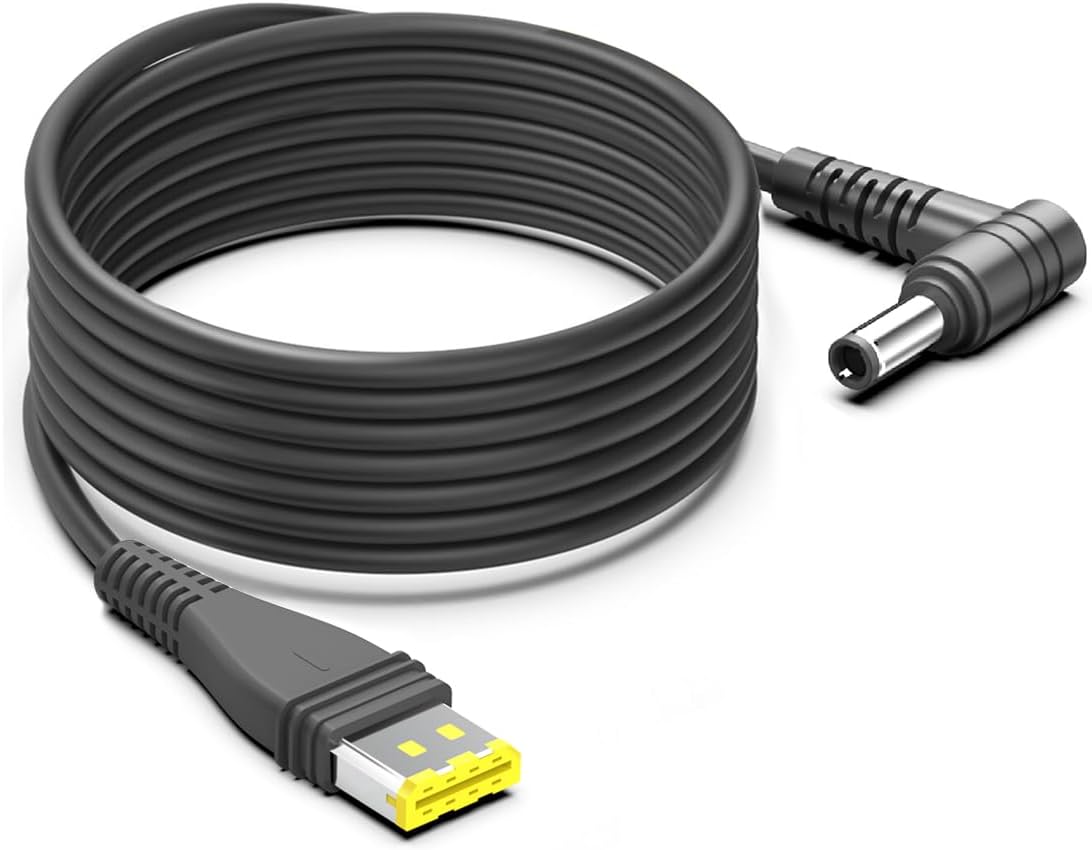
The KFD 12V-24V DC Adapter is a strong choice for current ResMed users who want a direct cigarette-lighter-style connection to a battery backup. It has a 4.8 rating, making it one of the most well-regarded products in the comparison. The listing highlights support for ResMed AirSense 11, AirMini, and several specific power-supply references, with 65W output.
We may earn a commission when you buy through this link, at no additional cost to you.
Its input range is DC 12V–24V with a stated maximum of 12A, while the description also notes an allowable 9V–32V range. Output is DC 24V at 2.71A, and the total cable reaches three meters. The cigarette-lighter connection is intended for a power unit, power adapter, power bank, portable station, or battery pack whose DC output is 12V–24V, up to 5A, and more than 65W.
The product also identifies compatibility with the Medistrom Pilot-24 Lite, which makes the intended battery relationship clearer than for a generic vehicle adapter. KFD states that its products are CE, FCC, and RoHS certified and tested by the manufacturer to match or exceed OEM specifications. It also lists a 30-day free exchange and a 36-month warranty, providing additional reassurance beyond electrical specifications.
This adapter is well suited to an AirSense 11 or AirMini owner with a sufficiently powerful 24V battery. Its 4.8 rating is a strong signal, but the stated source requirements should still be followed carefully. It is not intended for S9, S10, DreamStation, Respironics, or System One 50 and 60 equipment, so buyers with older machines should look elsewhere.
The three-meter total cable can make placement easier inside a vehicle, beside a bedside backup battery, or near portable equipment. Length is useful only when the source can still meet the required electrical specifications.
The stated input, output, certifications, exchange period, and warranty provide a useful framework for evaluating suitability. Users should still pair the adapter with a source specifically intended to deliver adequate power.
We may earn a commission when you buy through this link, at no additional cost to you.
The DC 24V Power Cord combines a direct battery connection with a particularly strong protection and warranty package. It has a 4.2 rating and is compatible with the ResMed AirSense 11, AirMini, MAXOAK K5 and K6, and Medistrom Pilot-24 Lite. The five-point-nine-foot cable uses the same 5.5 by 2.5 millimeter and 2.1-millimeter connector format used by other direct 24V solutions in this category.
We may earn a commission when you buy through this link, at no additional cost to you.
Its most distinctive feature is the stated over-voltage, over-current, and short-circuit protection, identified as OVP, OCP, and SCP. The product is also described as UL, CE, FCC, and RoHS certified. These safety claims are particularly relevant when a cable bridges a portable battery and a medical device, although buyers should still use only a source that meets the specified voltage and power requirements.
The warranty is listed as 60 months, accompanied by a 90-day money-back guarantee. That level of coverage differentiates the product from many shorter-cable alternatives. It also provides additional after-sales support for compatibility questions, which can be valuable because the listing contains several closely related ResMed and battery model references.
This cord is an excellent choice for a current AirSense 11 or AirMini owner who already uses a listed 24V portable battery. It is not intended for ResMed S8, S9, or S10 machines, nor should it be connected to a 5V or 12V battery. Direct 24V power, a verified barrel connector, and the machine’s power requirements must all align before use.
OVP, OCP, and SCP protections are intended to guard against voltage fluctuations, excessive current, and short circuits. These safeguards add confidence when using a portable battery with a sensitive device.
A stated five-year warranty gives this direct cable an edge for owners seeking long-term support. The 90-day return period also provides a defined window for resolving compatibility concerns.
We may earn a commission when you buy through this link, at no additional cost to you.
The right battery solution depends on your CPAP model, the battery’s output format, required wattage, connector type, and travel conditions. Reviewing these factors before purchasing helps prevent a setup that looks compatible but cannot deliver stable power.
Start with the exact model name printed on your CPAP or the relevant part number on its power supply. The products in this guide vary considerably: many are specific to ResMed AirSense 11 and AirMini, while the EASYLONGER kit includes cables for ResMed S9, AirSense 10, AirCurve 10, AirMini, AirSense 11, Philips DreamStation, and DreamStation 2. A connector that looks alike does not guarantee electrical compatibility because voltage, pin arrangement, and power requirements can differ even within one manufacturer’s line.
Choose a cable explicitly listed for your machine. If the seller’s information is ambiguous, contact the seller with the model number and ask for written confirmation before connecting a battery.
The battery side and machine side must agree on the required voltage. Several direct cables in this guide require a genuine 24V DC output and explicitly warn against 12V or 5V sources. The USB-C alternatives require a different relationship: their source must negotiate 20V USB-C Power Delivery before the converter supplies 24V to the machine. Using a physically compatible plug with the wrong voltage can prevent operation and may create avoidable risk.
Treat 12V, 20V, and 24V as distinct requirements rather than interchangeable labels. Check both the source specification and the machine’s power-supply label before making a selection.
A full-size modern CPAP may require substantially more power than a small travel device. The leading ResMed converters in this guide offer 65W operation, while some also provide a 20W output for supported use cases. The KFD adapters likewise state 65W output, while the EASYLONGER converter can deliver up to 84W through its DC output. A source that cannot sustain the selected wattage may cause a blinking light, failed startup, or intermittent operation.
Prioritize a battery that can continuously deliver the machine’s full requirement. Capacity in watt-hours is important for runtime, but output capability in watts is equally important for whether the machine will start and run correctly.
The most common paths in this category are a 5.5-millimeter DC barrel connection, a cigarette-lighter socket, and USB-C PD. Direct barrel cables are straightforward when the battery already has the correct 24V port. Cigarette-lighter adapters suit many vehicle outlets and CPAP battery packs. USB-C is compact and attractive for modern power banks, but it requires the source to support 20V PD and sufficient power—not merely a USB-C label.
Inspect both the connector shape and the electrical specification. A cable should be fully inserted without force, and its stated voltage and current should match the source and machine.
Output wattage determines whether a machine can operate, while battery capacity influences how long it can operate. A compact power bank may be ideal for a short trip or emergency reserve, while a larger CPAP battery or portable station may be better for extended outages. The Freedom options are specifically tied to a 160Wh battery, whereas the other products are cables or converters that can work with separately selected power sources.
Estimate runtime by comparing the battery’s usable capacity with the machine’s average power draw and allowing for conversion losses. For extended travel, choose enough capacity to cover the entire trip plus a reasonable reserve.
Travel readiness involves more than electrical compatibility. A three-meter cable provides placement flexibility but takes more room than a compact lead. The EASYLONGER multi-port adapter consolidates several functions but is larger and includes four cables. A USB-C PD converter is often the most compact option for someone already carrying a modern power bank, while a direct 24V cord is highly portable when the battery has a matching barrel output.
Consider where the system will be stored, whether cables may be bent tightly, and whether airline carry-on rules affect the battery. Select the simplest arrangement that preserves the required output.
Protection against over-voltage, over-current, and short circuits is valuable in a portable setup. The protected 24V cord in this guide explicitly lists OVP, OCP, and SCP, while several other products provide CE, FCC, and RoHS certification information. These claims help distinguish the products, but they do not replace correct matching. A certified cable still should not be connected to an unspecified or visibly damaged power source.
Look for clear safety documentation and a meaningful warranty or return period. Also inspect cables regularly for damaged insulation, loose plugs, discoloration, or heat-related changes.
Some USB-C converters are sensitive to connection order. The 20V PD AirSense Cord recommends connecting USB-C first, waiting three to five seconds, and then attaching the CPAP. The 20V PD AirSense Charger gives the reverse order and recommends waiting about 30 seconds after a failed connection. These procedures suggest why a short written guide is valuable: rushed reconnection can leave the converter negotiating the wrong power profile.
Read the instructions before traveling and practice a full connection at home. Know how to disconnect the source, wait as directed, and retry before assuming the battery or machine has failed.
Begin by identifying the exact CPAP model, the power requirement on its original supply, and the output specification of the battery or power station. Compare those values with the cable’s stated input and output. For a direct 24V system, the source should provide 24V through a compatible 5.5-millimeter barrel connection. For a USB-C system, the source must support 20V PD at the required power level.
Connect the system while the CPAP is not in use, following the manufacturer’s sequence. A direct DC cable normally attaches the battery first and the machine second. For the listed USB-C converters, follow their specific instructions, which may call for connecting the ResMed end first or waiting several seconds after attaching the power source. If the converter blinks or does not start, disconnect it completely, wait as directed, and try again.
After a successful connection, start the CPAP and confirm that it displays normal operating information rather than an alarm. Keep the battery within its manufacturer’s recommended temperature and storage conditions, inspect the cable and connectors regularly, and avoid using visibly damaged components. Recharge the battery according to its own instructions and test the complete setup before relying on it for travel or an outage.
No. The battery must provide the voltage, connector, and continuous power level required by the specific CPAP. Many modern ResMed models need a 24V supply and up to 65W, while some USB-C solutions require a source that supports 20V Power Delivery. Always check the labels on the machine, original power supply, battery, and selected cable before connecting them.
It may work if the power bank supports USB-C Power Delivery at 20V and provides enough continuous power for the selected converter. A power bank with USB-C connectors but only 5V, 9V, or 15V output will not satisfy the stated requirements. Several Anker power banks are specifically excluded by the manufacturers of the converters reviewed here, so verify the exact model.
The main difference is the electrical output delivered to the machine. A 24V cable can work with a compatible 24V battery, while a 12V cable is intended for machines designed around 12V. The direct 24V cables in this guide explicitly warn against 12V and 5V battery outputs. Connector similarity is not enough; both the source and machine requirements must match.
A compatible portable power station can be useful when it supplies the correct output at the required wattage. Dedicated CPAP batteries often provide a simpler connection and a more clearly defined operating profile. For a portable station, confirm the available port, voltage, and maximum output, then verify that its exact model appears in the cable maker’s compatibility list.
A blinking indicator commonly means the converter is not completing its power-delivery negotiation. The source may provide insufficient power, may not support 20V PD, or may be connected in the wrong order. Disconnect everything, wait about 30 seconds, and reconnect the machine end first or follow the sequence stated in the product instructions. Repeated failure may indicate an incompatible source.
It depends on the cable. Most of the AirSense 11 and AirMini products in this guide are not compatible with ResMed S8, S9, or S10, and several exclude Philips DreamStation models. The EASYLONGER kit is the exception because it includes separate cables for ResMed S9, AirSense 10, AirCurve 10, AirMini, AirSense 11, Philips DreamStation, and DreamStation 2. Select the exact included cable for the machine.
Charge the battery fully, connect it to the CPAP, and run a complete test with the machine at its normal therapy settings. Confirm that the machine starts normally and that the runtime provided by the battery is adequate for your emergency plan. Keep the correct cable, a suitable charging method, and written operating instructions together, and recharge the battery after every use according to its manufacturer’s guidance.
Disconnect the cable and machine, then check the source capacity, selected voltage, connector, and machine model. Confirm that the battery is charged and that its output is within the cable’s specified range. For USB-C systems, wait as directed before retrying with the recommended connection order. If the problem continues, test the CPAP with its approved wall supply and consult the relevant manufacturer or seller.
The EASYLONGER Car Adapter is the most versatile pick for people who own several supported ResMed or Philips machines, while the KFD AirSense DC Adapter offers a well-rated 24V option for AirSense 11 and AirMini users. The protected 24V power cord stands out for direct battery integration, named safety protections, and a five-year warranty.
Prioritize exact machine compatibility, correct voltage, and adequate continuous wattage before considering convenience. A 20V USB-C PD solution is attractive for modern power banks and portable stations, but it requires a source with the proper protocol and output. A direct 24V cable is often simpler when the battery already has the correct barrel connection.
Finally, check current ratings, availability, and prices on the linked product pages before purchasing, as all three can change. Verify the battery model, read the connection instructions, and perform a full test before relying on the setup for travel, camping, or emergency backup.