
ANJANK Wireless Bed Shaker Clock
4.4Editor score
Wireless shaker with three intensities
Eight gradual alarm sounds
Nine-color night light
This expert guide compares 10 Alarm Clocks for Adhd, highlighting loud alerts, vibration, wearable reminders, displays, sleep-friendly features, and reliability
Alarm clocks designed for ADHD must do more than announce the time. They need to interrupt distraction, support irregular routines, and provide several paths for waking up without requiring a person to immediately make a complex decision. The best options combine sound, light, vibration, visual timers, and repeated reminders in ways that suit different attention needs and bedrooms.
This guide compares ten alarm clocks for ADHD using the supplied feature information, customer ratings, power options, alarm controls, and monitoring functions. It covers dedicated bed shakers, wearable vibration bands, conventional bedside displays, sound machines, and visual timers, showing which products excel at urgent waking, routine support, shared spaces, and overstimulation concerns.
Each pick explains its strongest benefits, practical limitations, and ideal user so you can choose a more reliable morning routine. Ratings and product details reflect the information available for this guide, while features and availability can change, so readers should verify the current listing and compatibility before purchasing.
4.4Editor score

4.5Editor score

4.5Editor score
The comparison covers every product in the guide, emphasizing the alert method, scheduling flexibility, power resilience, and features that support attention, sensory sensitivity, and consistent morning routines.


The Sonic Bomb Dual Extra Loud Alarm Clock is our strongest all-around recommendation for someone whose sleep inertia or auditory attention makes ordinary alarms unreliable. Its 4.5 rating reflects a well-established feature set centered on volume, vibration, and persistence. The clock offers an adjustable 113dB alarm, red flashing alert lights, and a powerful bed shaker, giving users several ways to receive the same wake-up signal.
We may earn a commission when you buy through this link, at no additional cost to you.
The standout feature is the choice between vibration, buzz, and combined vibration-and-buzz modes. Alarm duration can run from one to 59 minutes, while snooze timing is adjustable from one to 30 minutes. That level of control is useful for ADHD users who may need a long, repeated cue rather than one brief sound. The bed shaker provides a physical wake-up option without requiring the person to locate a wearable or respond to a screen.
There are trade-offs. The shaker is wired, so the clock and shaker need to be positioned within reach of the cable. Its 113dB output and flashing red lights are intentionally aggressive, which can be effective for heavy sleepers but unpleasant for sound-sensitive users. The supplied information also does not describe a rechargeable main unit, making careful placement and a test routine more important.
This is the most suitable choice for heavy sleepers, students with packed schedules, and people who respond better to forceful sensory input than to gentle tones. It is less attractive for light sleepers or shared bedrooms where maximum volume would be inappropriate. Even so, the combination of adjustability, multiple alert paths, and backup support makes it the most versatile option in this roundup.
Sound, vibration, and flashing lights can reach a person through different sensory channels. Choosing the most effective combination after testing it on a lower setting can make mornings more dependable without requiring constant supervision.
The unusually broad alarm-duration range allows a short prompt to become a sustained sequence when needed. This is particularly helpful when a person has difficulty registering a single alarm and briefly wakes without choosing to get up.
We may earn a commission when you buy through this link, at no additional cost to you.
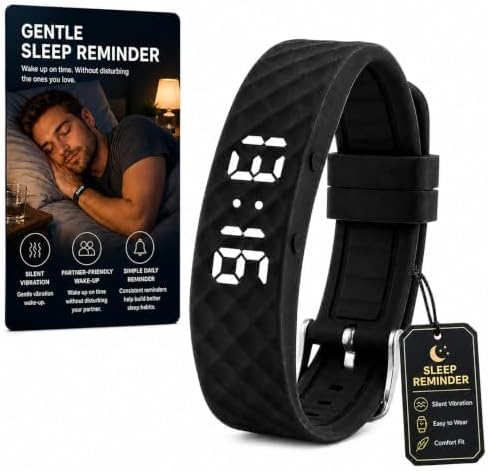
The Vibrating Wristband Alarm Clock offers a different approach from bedside devices: it keeps alerts on the body, where a sleeping person may notice them more readily. Its 4.2 rating reflects a broad collection of functions, including up to eight independent vibration reminders, a countdown timer, activity tracking, sleep monitoring, and a clear time display.
We may earn a commission when you buy through this link, at no additional cost to you.
Silent alerts are the defining benefit. The band can signal waking, medication, classes, workouts, hydration, meals, or breaks without creating a sound that distracts family members, roommates, or classmates. Its raised wrist display shows the time, date, and weekday, while automatic sleep tracking runs from 11 p.m. to 7 a.m. and assigns a sleep rating.
The wearable format also introduces practical limitations. Some people wear watches or wristbands loosely, may remove them while sleeping, or simply become accustomed to a familiar vibration. The micro USB charging arrangement is less universal than newer USB-C options, and the stated water-resistance description inconsistently refers to IP65 and IP68, so the listing should be checked for exact protection details.
This product is a good fit for students, office workers, travelers, and anyone who shares a sleeping environment or wants reminders beyond the morning alarm. It is especially useful as part of a broader ADHD routine rather than solely as a bedside clock. Testing the strap position and alarm strength for several nights is advisable before relying on it for critical wake-up events.
Because the reminder is delivered through vibration rather than a room-filling sound, it can support a morning routine without waking anyone else. This makes it valuable in dorm rooms, shared apartments, and homes where noise is a concern.
Eight independent alarms can structure medication, hydration, study, and work intervals throughout the day. That broader scheduling role is useful for people who benefit from external prompts across multiple routines.
We may earn a commission when you buy through this link, at no additional cost to you.
The ANJANK Extra Loud Alarm Clock is the most feature-rich bedside model in the roundup, combining a wireless bed shaker, a 112dB speaker, dual alarms, eight sounds, and extensive lighting controls. Its 4.4 rating reflects a versatile design aimed at heavy sleepers and users who may not reliably register a conventional alarm.
We may earn a commission when you buy through this link, at no additional cost to you.
The wireless shaker is the main upgrade over wired alternatives. It reaches up to 32.8 feet, uses a rechargeable 1500mAh battery, and provides high, medium, and low vibration levels. Users can place the unit under a pillow, beside a mattress, or elsewhere in the room without managing a cable. The main clock also offers two alarms and eight gradual sounds, from sharp tones to chimes, birds, rain, piano, and streams.
Its lighting system is unusually flexible. The RGB display can be dimmed from zero to 100%, while the night light offers nine colors, a rainbow flow, six brightness levels, and an off mode. A USB-C output can charge a phone overnight. The main limitation is that the clock itself has no battery backup and must remain plugged in, although the supplied information notes that the wireless shaker is rechargeable.
This is the best premium choice for someone who wants a highly personalized morning environment rather than a single-purpose alarm. It accommodates different sound sensitivities, light preferences, and sleep habits, although users who require full bedside-clock backup after an outage should consider that limitation. The range of options also makes initial setup more involved than a simpler clock.
Nine night-light colors and a dimmable display allow the alarm environment to match a person's visual preferences. Someone who dislikes a harsh white screen can use a softer color or turn the display down while retaining a visible alarm.
Freedom from a connecting cable makes it easier to place the shaker where vibration is likely to be felt. The three intensity settings also accommodate users who need a firm cue but do not want maximum vibration every morning.
We may earn a commission when you buy through this link, at no additional cost to you.
The Acedeck Super Loud Alarm Clock delivers a straightforward 115dB wake-up option without the complexity of a wearable or bed-shaker system. It holds a 4.5 rating and emphasizes exactly what many ADHD users need from a bedside alarm: high volume, recognizable sounds, two schedules, snooze, and dependable settings.
We may earn a commission when you buy through this link, at no additional cost to you.
Six alarm sounds provide some variety without requiring a complicated menu. The clock supports two separate alarms, a built-in snooze function, and a large 4.2-inch LED display with adjustable brightness. During an outage, AAA batteries preserve the alarm memory and allow the scheduled alarm to operate, although the batteries are not charged by the clock.
This is a sound-only design, which is an important distinction from the stronger picks in the guide. It cannot deliver a physical bed-shaker alert, and maximum volume may be excessive for some users. Display brightness adjustment helps reduce nighttime glare, but it does not add light-based waking. Users who need a bed shaker can place the clock close enough for the sound to be effective and then evaluate one of the vibration options separately.
It is a strong choice for students, dorm residents, shift workers, and heavy sleepers who respond reliably to loud audio. The straightforward controls, dual alarms, and outage memory make it approachable, while USB charging is a convenient bonus. It is particularly compelling for anyone who wants a high-volume alarm without assembling several separate components.
A straightforward bedside alarm with two schedules and snooze is easier to operate consistently than a feature-heavy device. For users who dislike navigating dense menus, fewer core functions can make the alarm a dependable part of a routine.
The battery system retains settings and permits the alarm to sound during a power interruption. It does not power the display in the same way as mains electricity, but it helps preserve the most important scheduled event.
We may earn a commission when you buy through this link, at no additional cost to you.
The Bed Shaker Heavy Sleepers Clock is a balanced option for users who want both audible and tactile alarms without a wearable. Its 4.2 rating comes with a broad set of practical controls: two independent alarms, sound-only, shaker-only, and combined modes, a large display, snooze, and battery memory.
We may earn a commission when you buy through this link, at no additional cost to you.
The seven-inch LED display uses large numbers that are easier to parse quickly, which can be valuable during the groggy first moments of the morning. Brightness spans eight levels, the clock supports both 12- and 24-hour formats, and a dedicated snooze button pauses the alarm for nine minutes. Setup requires some learning because the controls cover time, alarms, and additional functions.
The sound loudness should not be oversold. The supplied information specifically cautions that people expecting a screaming alarm may find it less forceful, even though volume is adjustable. The display remains visible while the clock is powered and cannot fully turn off, which may bother users seeking complete darkness. During a power outage, AAA batteries preserve the time and alarm settings, although the display turns off.
This clock makes sense for adults, college students, and heavy sleepers who want a tactile option and appreciate a large display. It is also a practical middle ground between a basic digital alarm and a more elaborate multi-sensory system. Test the shaker and sound on low settings first, then establish a clear physical route from bed to feet so waking up does not depend on hunting for controls.
Sound only, vibration only, and combined alerts let the user match the clock to mattress softness, hearing, and sleep depth. Starting with combined mode can reveal whether the physical signal is being felt clearly enough.
A large display makes the time easier to identify without prolonged focusing. Combined with adjustable brightness and front-facing controls, it supports a routine that requires less visual effort while still remaining visible across the room.
We may earn a commission when you buy through this link, at no additional cost to you.
The DreamSky Vibrating Alarm Clock is built for flexible placement, allowing the portable unit to sit on a nightstand, bed, mattress, under a pillow, or beneath a quilt. Its 4.4 rating reflects a thoughtful travel-friendly design with five vibration levels, wireless operation, a rechargeable battery, and a cord that helps prevent the clock from being lost.
We may earn a commission when you buy through this link, at no additional cost to you.
The alarm can operate through vibration alone or through both sound and vibration. Vibration progresses through 20%, 40%, 60%, 80%, and 100%, providing enough range for different mattress types and sensitivity levels. It runs for five minutes when activated, and a dedicated snooze button adds nine minutes. A separate shake-off control stops the current alarm while preserving the next day's schedule.
Setup is designed to be simple. After power-up, the user selects a local time zone, and automatic daylight saving time handles seasonal changes. The 12- or 24-hour display includes a 15-second backlight when any button is pressed. The main inconvenience is the five-minute active alarm window, which may be brief for someone who is not yet conscious when it begins.
This is a strong recommendation for travelers, students, and people who want a tactile alarm without a permanent bedside setup. The supplied long cord can secure the unit to a bed or desk, which is particularly helpful in temporary sleeping arrangements. Because the clock is rechargeable, it also avoids the routine of replacing batteries, although it should be charged before important nights.
The wireless unit can follow the user between a bedroom, hotel room, and other temporary arrangements. Its rechargeable battery and included cord make it particularly useful for travel without requiring a permanent bedside outlet.
A low setting can provide a gentler prompt, while the highest level offers a more forceful wake-up cue. Testing the levels on the intended mattress is important because cushioning can change how vibration is transmitted.
We may earn a commission when you buy through this link, at no additional cost to you.
The Odokee Digital Alarm Clock combines a 4.5 rating with a balance of visibility, volume, and ambient color. It is built for readers who want a clear time display, a powerful alarm, and a gentle nighttime light without moving to a much more complicated clock. Its large two-inch numbers are designed to be read across a room.
We may earn a commission when you buy through this link, at no additional cost to you.
Alarm output reaches 110dB, while five sounds include birds, a beep, soft music, Ode to Joy, and a siren. The five-level display dimmer can be reduced or switched off at night, and the night light provides eight colors with adjustable brightness. A nine-minute snooze function adds a short delay, while a USB charging port supports overnight phone charging.
Backup functionality is provided by two AAA batteries, although they are not included and do not illuminate the display. Like the other sound-only options, the clock cannot wake through bed vibration. The advantage is its simpler feature set and visible controls, which are located on the front for easier setup than a hidden menu arrangement.
This is a well-balanced choice for light sleepers who need a louder option, students in dorms, and anyone who wants color-rich nighttime guidance without a wearable. It is not the first choice for a heavy sleeper who needs tactile stimulation, but it handles the common combination of readable display, adjustable sound, and low-disruption lighting particularly well.
Eight night-light colors give the clock a softer role during the wind-down period. Turning the light down or off also prevents the display from becoming the first thing that brightens the room each morning.
The sound selection includes both gentle options and a conventional beep. That range lets users start with a less jarring tone and determine whether maximum volume is necessary for a reliable wake-up.
We may earn a commission when you buy through this link, at no additional cost to you.
The Buffbee Alarm Clock with Sound Machine is designed for people whose biggest difficulty is not waking with enough force, but settling and waking without a harsh transition. It combines 24 calming sounds, gentle alarm tones, a seven-color ambient light, and a display that can be dimmed from zero to 100%. Its 4.4 rating reflects a specialized focus on sleep-friendly routines.
We may earn a commission when you buy through this link, at no additional cost to you.
The sound library can mask street noise, racing thoughts, or a restless shared environment. Alarm choices include birdsong, waves, a beep, a brook, and piano, all designed to create a softer start than a typical buzzer. The ambient light provides a low-level visual cue, while the adjustable display can be set to avoid unnecessary glare.
The key limitation is force. This clock is built for gentle waking rather than penetrating deep sleep, and it has no bed shaker, wearable vibration, flashing emergency light, or high-volume specification comparable with the heavy-sleeper models. It is a plug-in product, so it also requires an outlet and does not provide the backup behavior of some alternatives.
This is the most relevant pick for users who feel overstimulated by harsh alarms or who want one device to support both bedtime and morning. It can also serve as a structured transition aid when the goal is emotional comfort rather than maximum urgency. For severe sleep inertia, pair it with a more forceful alarm or use it as a secondary sleep-support device rather than the only wake-up system.
Using ambient sound at bedtime and a gentle alarm in the morning creates a consistent audio environment. That continuity may make the transition into the day feel more predictable than abrupt silence followed by a harsh alarm.
Natural and musical alarm sounds offer a less aggressive alternative to a continuous buzzer. They are especially relevant for users who become irritated or overwhelmed by sudden noise in the morning.
We may earn a commission when you buy through this link, at no additional cost to you.
The Amazon Basics Small Digital Oval Alarm Clock is the streamlined choice for a nightstand where fewer functions are preferable. It has a 4.4 rating and provides the essentials: a readable green LED time, a soft nightlight, a repeating snooze, and battery-backed memory for the time and alarm.
We may earn a commission when you buy through this link, at no additional cost to you.
The clock measures 4.5 by 3.5 by 2.4 inches and weighs 0.4 pounds, making it easy to place on a crowded bedside table. Its integrated nightlight provides low-level guidance in a dark room without requiring a separate lamp. The repeating snooze is a familiar feature for users who prefer a simple interface over menus, sound libraries, or programmable vibration.
This is not a heavy-sleeper alarm. The supplied information lists no unusually high output, selectable alarm sounds, tactile shaker, or dual scheduling. The small 0.7-inch green display is convenient for a glance but is not designed to be read from across the room. Batteries are not included, and the backup is intended to retain time and alarms for up to eight hours rather than serve as a complete alternative to mains power.
The clock is a good fit for light sleepers, children, travelers, and anyone wanting a uncomplicated device that will not add visual or auditory clutter. It can also act as a secondary clock when a more powerful alarm handles the initial wake-up. Its main advantage is restraint: it does one uncomplicated job without requiring attention to a feature-heavy interface.
Its compact body leaves room on a nightstand, shelf, or desk. The small display and integrated nightlight provide useful information without taking over the surrounding space.
The repeating snooze provides a familiar way to pause the alarm and wake again. Its uncomplicated behavior makes it suitable for users who find complicated controls more distracting than helpful.
We may earn a commission when you buy through this link, at no additional cost to you.
The Visual Timer 4-in-1 Alarm Clock is the most useful choice for visual thinkers and anyone who needs to see how much time remains. Its 4.4 rating comes with three alarm settings, a circular countdown display, a silent electronic movement, and a wide screen that presents the time, date, weekday, and operating mode.
We may earn a commission when you buy through this link, at no additional cost to you.
The defining feature is a visual progress bar for countdowns from zero to 60 minutes. That makes it useful for focused work, studying, exercise, kitchen tasks, and Pomodoro-style intervals. The timer can be stopped or cleared with a long press, while three alarm settings allow a daily routine to include several distinct wake-up points without requiring three devices.
The clock does not have a stated maximum sound level, bed shaker, or wearable alert. It may therefore be less effective as a sole wake-up tool for someone with severe sleep inertia. Its built-in 400mAh battery and Type-C port allow flexible use, although the supplied guidance recommends cable operation for optimal performance.
This is a strong pick for students, children, professionals, and ADHD users who lose track of elapsed time during a task. The combination of visible progress and multiple alarms can turn an abstract schedule into an observable process. Pair it with an audio or vibration alarm if waking requires a strong physical cue, and use the visual timer to reinforce the surrounding routine.
A circular bar gives users immediate feedback about how much time remains. That visual structure can make a broad task feel bounded and easier to begin, which is valuable during periods of difficulty initiating work.
The absence of ticking keeps the bedside environment quieter while preserving a precise digital display. This can be advantageous for users who are sensitive to repetitive background sounds.
We may earn a commission when you buy through this link, at no additional cost to you.
The most useful alarm clock is not necessarily the loudest or most feature-rich model. Choose by matching the alert mechanism, routine requirements, sleep environment, power needs, and sensory preferences to the way you actually wake and organize your day.
Sound is familiar and requires no contact with the body, but it can fail when a person is a deep sleeper, has hearing differences, or shares a bedroom. Vibration reaches the user physically and can be quieter, although its effectiveness depends on mattress density, placement, and whether the device remains worn or positioned correctly. A combination of sound and vibration gives the user more options than either method alone.
Start with the mechanism that is most likely to be noticed, then add another only if necessary. High-volume models suit heavy sleepers, wearable bands suit shared spaces, and under-pillow or bedside shakers provide tactile cues without requiring a wrist device. Light-based wake-up features are useful for gradual routines but generally do not replace an urgent auditory or physical alert.
The strongest picks include clearly stated maximum outputs of 112dB, 113dB, and 115dB, while the Odokee model offers an adjustable range up to 110dB. These figures help distinguish high-force alarms from gentle sound machines and compact digital clocks. A larger number does not guarantee that a particular person will wake more effectively, but it generally indicates a wider range for heavy sleepers.
For light sleepers, maximum output may be unnecessary and potentially disruptive. Begin with a moderate setting and test it overnight. If the user does not wake consistently, move gradually higher or add a bed shaker. If harsh sound causes anxiety or irritation, consider a wearable or gentler alarm rather than forcing an extreme volume setting.
ADHD-related difficulty waking may involve failing to register the first cue, entering a brief period of sleep after an alarm, or drifting back asleep after snoozing. Products with long adjustable alarm durations, repeating snooze, or multiple alarm times provide more opportunities to respond. The Sonic Bomb offers particularly broad duration and snooze adjustments, while several other models support two or three independent schedules.
Separate alarms can mark different days, but they should not create unnecessary confusion. Label weekdays in the phone if the clock cannot, and avoid placing too many similar times only a few minutes apart. A morning wake-up, medication reminder, study block, and lunch prompt may be more useful than four tightly clustered morning alarms.
A powerful alarm can solve one problem while creating another in a shared room, apartment, dorm, or family home. Wearable vibration and under-pillow options are quieter, while bedside products with dimmable displays and colored night lights may be easier to use without flooding the room with light. Consider whether the device will disturb a partner or nearby family members before choosing maximum output.
Sound-machine functions can also change the shared environment. A clock that masks disruptive noise may help one person sleep while making the same noise less noticeable to others. Placement is equally important: test a shaker on the intended mattress and keep a wearable snug enough to remain noticeable throughout the night.
A clock that loses its settings or fails to sound during an outage can undermine an otherwise reliable routine. Several bedside models include AAA battery memory or backup, while the Acedeck and Bed Shaker Heavy Sleepers Clock are explicitly designed to trigger alarms during power interruptions. The ANJANK main unit requires a plug, although its wireless shaker includes a rechargeable battery.
Backup capability is not the same as full secondary power. A display may remain dark while the alarm still sounds, and batteries can deplete without warning. Whichever clock you choose, replace backup batteries on a schedule and test the outage procedure. Rechargeable wearables and portable shakers also need regular charging, so visibility of the power indicator matters.
A large collection of sounds, colors, timers, tracking data, and menus can feel supportive to one person and overwhelming to another. The Buffbee sound machine offers a gentler sleep-and-wake experience, while the Amazon Basics clock keeps the interface intentionally small. The Visual Timer adds useful structure, but its role is closer to task management than forceful waking.
Choose the number of functions that support a clear routine and ignore the rest. Large displays, front-facing buttons, simple shake-off controls, and clearly separated alarms can reduce setup friction. If a clock offers many lighting colors or sound options, decide which one or two you will actually use and avoid repeatedly changing them.
The display should communicate time quickly without becoming a source of sleep disruption. Two-inch bold numbers on the Odokee and 4.2-inch LED screen on the Acedeck support quick recognition, while the Bed Shaker Heavy Sleepers Clock uses a seven-inch display. Other products offer dimming from zero to 100%, multiple brightness levels, or a 15-second backlight.
A light-sensitive user may prefer a display that can be turned down or completely darkened during normal operation. Check the distinction between the time display and the separate ambient night light, because some clocks allow one to be off while the other remains visible. A display that is easy to read but impossible to dim may work against a consistent sleep environment.
ADHD support often requires prompts for medication, hydration, meals, studying, movement, and breaks rather than only waking up. The wearable band supports eight independent reminders and countdown intervals, while the Visual Timer provides a clear 60-minute progress display for focused tasks. These broader functions can be more valuable than another conventional sound if the challenge is sustaining attention after getting out of bed.
Choose a system that fits your actual routine without creating a demanding tracking burden. Simple alarms are easier to maintain, while activity and sleep tracking can provide useful context without requiring constant engagement. A limited set of reliable prompts is generally preferable to a complicated system that becomes too demanding to prepare each night.
Begin by testing the clock before relying on it for a critical morning. Set the alarm, place it in its intended position, and give yourself several nights to adjust. For a shaker, try every vibration level on the actual mattress; for a wearable, wear it in the same way each night; and for a sound machine, determine the lowest ambient level that provides useful background masking. A short test is not enough because awareness often improves after several repetitions of the same cue.
Build a physical and digital routine around the selected alert. Keep the device in the same place, confirm the display before sleeping, and reduce the number of decisions required after the alarm starts. If using multiple alerts, give each a clear purpose. Place a chair or task directly where the person lands after getting up, and identify one immediate action, such as taking medication or drinking water, so the wake-up cue connects to the next behavior.
Care for the clock according to its power design. Keep bedside models connected as required, replace backup batteries on a regular schedule, and test the alarm after an outage rather than assuming every function remains active. Charge wearable and portable devices before the evening routine, clean wristbands after exercise, and keep bedside shakers and clock surfaces free of dust. Periodically verify alarm times, snooze behavior, display brightness, and vibration strength.
The most useful type depends on how attention and sleep inertia affect the user. Some people respond best to a very loud sound, while others need vibration, a visual timer, repeated alarms, or a wearable reminder. A combined sound-and-vibration clock is often adaptable, but a gentle sleep-focused model may be better for someone sensitive to harsh stimulation. The best approach is to test several alert types gradually and keep the setup predictable.
A high-output alarm can be useful when a conventional alarm is repeatedly ignored, but it should be introduced carefully. Begin at a moderate setting and increase the volume only as needed. Excessive noise may startle a person, increase anxiety, or disturb others, while a flashing light can be unpleasant for some users. A bed shaker, wearable vibration, or gradual sound may provide a more comfortable way to achieve a reliable response.
It can support external structure, but it does not replace a complete routine. An alarm can mark the start of the day, while reminders for medication, meals, hydration, and work intervals help bridge gaps in planning and initiation. Combining a wake-up alarm with a visual timer and a small set of recurring cues is often more helpful than relying on one device to manage every part of the day.
A bed shaker is convenient because it does not need to be worn and can be placed under a pillow or near a mattress. A wearable is better for private rooms, travel, and reminders throughout the day because it travels with the user and remains discreet. Shaker effectiveness depends on mattress cushioning, while wearable effectiveness depends on fit and whether the band remains on throughout sleep. Test both in realistic conditions if possible.
Several products in this guide are designed to retain settings and sound an alarm during an outage, often using AAA backup batteries. Backup behavior varies: the display may turn off, and it may only preserve essential alarm functions rather than provide full operation. Read the product instructions, install the correct batteries, and test the procedure before relying on it during an actual outage.
There is no universally best sound. A sharp tone may be more effective for a deep sleeper, while birdsong, waves, or piano may be less jarring for a sound-sensitive user. Gradual sounds can ease the transition into wakefulness, whereas maximum volume offers stronger interruption. Testing several options at realistic overnight levels is more useful than assuming a particular sound category will work for every person.
Use enough alarms to support the routine without creating a crowded or confusing schedule. One strong wake-up alarm, one backup alarm, and reminders for important daytime tasks can be a practical starting point. If the alarms are only a few minutes apart, they may create confusion or encourage repeated snoozing. Assign each alarm a clear purpose and remove the ones that do not support a specific action.
A visual timer is better for monitoring time spent on a task, while a sound or vibration alarm is generally more effective for waking a sleeping person. The two can be complementary. A user might use a sound alarm to begin the morning and a visual countdown to structure focused work, while dimming both displays at night and keeping a small number of clear prompts.
The Sonic Bomb Dual Extra Loud Alarm Clock stands out for its combination of 113dB output, flashing lights, a wired bed shaker, adjustable alarm duration, and battery backup, making it the most versatile choice for heavy sleepers. The ANJANK Wireless Bed Shaker offers the richest customization with a 112dB speaker, two alarms, eight sounds, wireless vibration, and a nine-color light, while the Odokee Digital Alarm Clock delivers a focused combination of volume, readable numbers, sound choices, and an eight-color night light.
Prioritize the mechanism that matches the actual failure point in your routine. Choose strong sound for auditory waking, a bed shaker or wearable for tactile alerts, a visual timer for attention and task boundaries, and a sound machine for gentler sleep and wake transitions. Reliability also matters: verify backup behavior, control layout, display brightness, charging requirements, and whether the device can be used consistently without creating extra steps.
Product features and availability can change, so review the current listing before buying and confirm that the alert method, power requirements, and included components match your needs. A brief bedside test and several nights of consistent use are the best way to determine whether the chosen clock improves the morning routine rather than simply adding more stimulation.

