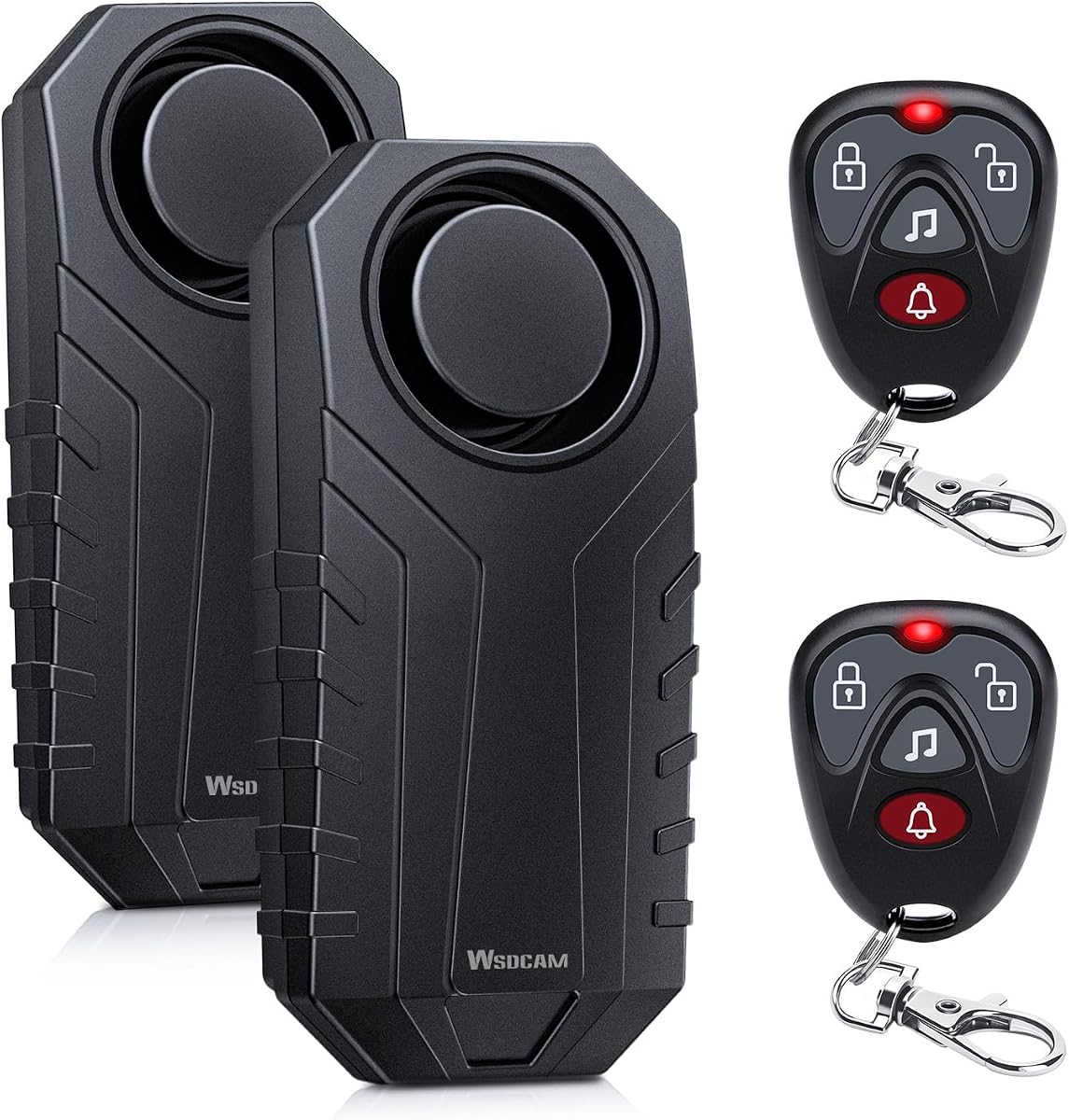
WSDCAM Vibration Sensor Alarm
4.6Editor score
113dB audible alarm
Seven sensitivity levels
Wireless remote control
IP65 waterproof housing
Explore the best alarm system for boats in 2026, comparing anti-theft alarms, GPS monitoring, bilge alerts, marine sensors, and remote security hubs for
A boat alarm system can provide far more than theft deterrence. Depending on the model, it may detect impacts, track a vessel’s location, monitor high water, check battery condition, or report entry activity while the boat is unattended. The most useful system is one that matches the vessel, the storage environment, and the protections the owner actually needs.
This guide compares ten alarm and monitoring products ranging from a portable vibration alarm to sophisticated cellular hubs, GPS trackers, and marine annunciators. The evaluation considers alarm coverage, sensor capabilities, wireless range, remote notifications, installation demands, marine durability, power requirements, and the experience offered to boat owners.
Each review explains the product’s strongest benefits, practical limitations, and ideal use case so readers can distinguish a basic anti-theft deterrent from a connected monitoring system. Product availability, included accessories, technical details, and prices can change, so verify the current listing and compatibility before making a final purchase.
4.6Editor score

4.8Editor score
5.0Editor score
The table below compares the core monitoring method, connectivity, environmental protection, and installation requirements of all ten products. These differences help separate inexpensive local deterrents from comprehensive systems that provide off-site alerts and vessel-health information.




The WSDCAM vibration sensor alarm is a straightforward anti-theft device with a 4.6 rating and a two-pack format. It is not a dedicated marine monitoring platform, yet its vibration detection, 113dB siren, remote control, and IP65 housing can make it a useful supplementary deterrent for a boat, trailer, dock box, or other valuable outdoor asset.
We may earn a commission when you buy through this link, at no additional cost to you.
Its strongest advantage is straightforward operation. The sensor detects movement or impact, sounds an alarm, and supports remote control from as far away as 328 feet according to the supplied information. Seven sensitivity levels allow the owner to reduce false triggers in a gently moving environment or increase sensitivity in a more exposed location. Three volume settings and three bell sounds provide additional control over how the unit announces activity.
The limitations are important. This product does not offer GPS tracking, cellular notifications, high-water detection, entry-zone monitoring, or remote reports of vessel condition. It is also described as a multipurpose vibration alarm rather than a purpose-built boat system, and the included adhesive-and-strap installation should be checked carefully for secure attachment. A loud local siren may deter opportunistic tampering, but it cannot tell an owner what happened after leaving the area.
This is a sensible budget choice for a small boat, trailer, or runabout whose owner wants a simple, portable deterrent without installing a complex monitoring network. It is best treated as one layer of protection rather than a replacement for locks, lighting, a proper trailer security system, or a professionally installed marine alarm. Buyers wanting off-site intelligence should consider the connected options later in this guide.
Adjustable sensitivity and volume make it possible to tune the alarm to different surfaces and operating conditions. The 113dB output is intended to create an immediate audible deterrent, while the remote search function can help locate a vehicle or asset in a crowded area.
The sensor can be secured with double-sided adhesive and a strap, reducing the need for permanent wiring. Its IP65 rating supports outdoor use, although a boater should still confirm the attachment can withstand motion, spray, heat, and prolonged exposure.
We may earn a commission when you buy through this link, at no additional cost to you.
LocMarine’s Global LTE Boat Monitoring and Security Hub carries a 4.8 rating and stands out as the most complete monitoring system in this group. It combines 4G and 5G LTE communication with GPS tracking, geofencing, entry alerts, speed information, and monitoring for bilge water, high water, shore power, and battery status.
We may earn a commission when you buy through this link, at no additional cost to you.
The supplied listing emphasizes that all sensors are included, reducing the need to assemble a custom marine monitoring network from separate components. The user-friendly LocMarine app is the central interface for checking the boat and receiving information, while 4G and 5G LTE connectivity allows monitoring beyond Bluetooth or WiFi range. The product is also described as rugged, durable, made in the USA, and insurance ready.
A comprehensive platform still has trade-offs. Cellular coverage must be available where the boat is stored, and the included monitoring service may eventually require a subscription depending on the seller’s current terms. The listing says no NMEA network is required, which simplifies compatibility, but installation and sensor placement still deserve careful planning. This is an ownership-management platform, not a replacement for physical locks or cautious storage practices.
The LocMarine system is the strongest recommendation for an owner who wants a single, integrated solution for theft deterrence and boat-health awareness. It particularly suits boats left at marinas, docks, storage facilities, or remote locations where a local siren alone would be insufficient. Buyers should verify cellular coverage, included sensor placement, installation requirements, and current service terms before ordering.
Rather than isolating location from environmental alarms, this hub combines bilge, high-water, shore-power, battery, entry, speed, and geofence information in the app. That breadth gives owners a more useful picture than a single impact alarm.
4G and 5G LTE service allows the boat to be checked remotely rather than only at the vessel. The absence of an NMEA requirement may also make the system approachable for owners who do not want to connect it to a broader onboard electronics network.
We may earn a commission when you buy through this link, at no additional cost to you.
The Skyhawk Oversea Cellular Hub is a wireless boat-monitoring gateway with a 4.5 rating. It is designed as the central communications link between a vessel and compatible Oversea sensors, supporting location-on-demand checks, unauthorized-access detection, and boat-health information through the Oversea app.
We may earn a commission when you buy through this link, at no additional cost to you.
Its primary advantage is installation flexibility. The hub needs no wiring and does not require a WiFi network, which makes it attractive for older boats or situations where modifying the electrical system would be inconvenient. It can link wirelessly with sensors for the bilge pump, battery, power, entry, high water, sound, and motion. The manufacturer states that AA batteries can support monitoring for up to three years, while the hub is used as a location-on-demand device for one to two years.
The major caveat is ecosystem dependence. The hub operates most effectively as part of the Oversea sensor suite, and users should understand the cost and availability of any additional sensors required for the functions they want. It also uses cellular IoT connectivity, meaning coverage and service terms remain important. No terminal device is the same as no maintenance: batteries still need periodic checks, and the installation should be protected from persistent moisture.
This is a good fit for owners seeking a wireless, expandable monitoring system without running cables throughout the boat. It is especially useful when the owner wants one hub to coordinate entry, high-water, motion, power, and bilge sensors. Confirm sensor compatibility, cellular availability, and expected battery service intervals before installation.
The hub can wirelessly coordinate sensors for entry, high water, motion, sound, battery, power, and bilge operations. Owners can build coverage incrementally according to the boat’s layout and the risks they most want to monitor.
A drop-in design avoids extensive electrical modifications and reduces drain on the boat’s battery. The stated battery life varies by use because location checks and gateway duties are not identical to continuous sensor monitoring.
We may earn a commission when you buy through this link, at no additional cost to you.
The Murphy ST10AS-LM is a ten-point remote alarm annunciator with a 4.1 rating. Unlike consumer-oriented trackers, it is designed to give crew a visual indication of developing problems in marine engine, gear, bilge, and auxiliary power systems, particularly in a pilot house or similar control location.
We may earn a commission when you buy through this link, at no additional cost to you.
The Selectronic architecture is the key feature. Instead of being a standalone siren, the ST10AS-LM is intended to receive remote alarm and annunciation signals and present them in a compact panel. That makes it useful for owners or operators who already have compatible onboard alarm sources and want a centralized way to identify which system needs attention.
This is a specialized product rather than a turnkey theft alarm. The “Less Mount” version does not include a flange or gimbal mounting bracket, so installers must account for panel space and mounting provisions separately. It does not provide GPS tracking, phone notifications, motion sensing, or high-water detection on its own. Compatibility with the boat’s existing controls is the decisive question.
The Murphy ST10AS-LM is best for a larger or more instrumented boat with a pilot house, crew, or an existing Selectronic monitoring architecture. It can be particularly useful when rapid visual identification of engine, gear, or bilge alarms matters. For a smaller recreational boat with no integrated control network, a self-contained wireless system will usually be easier to install and use.
A ten-point annunciator presents multiple alarm conditions in one place, helping crew identify the source of a developing issue. This is more useful than relying on separate, hidden sounders for several critical systems.
The product’s stated applications include engine, gear, bilge, and auxiliary power plants. It is a professional monitoring component that depends on suitable inputs rather than a consumer security device with built-in wireless sensors.
We may earn a commission when you buy through this link, at no additional cost to you.
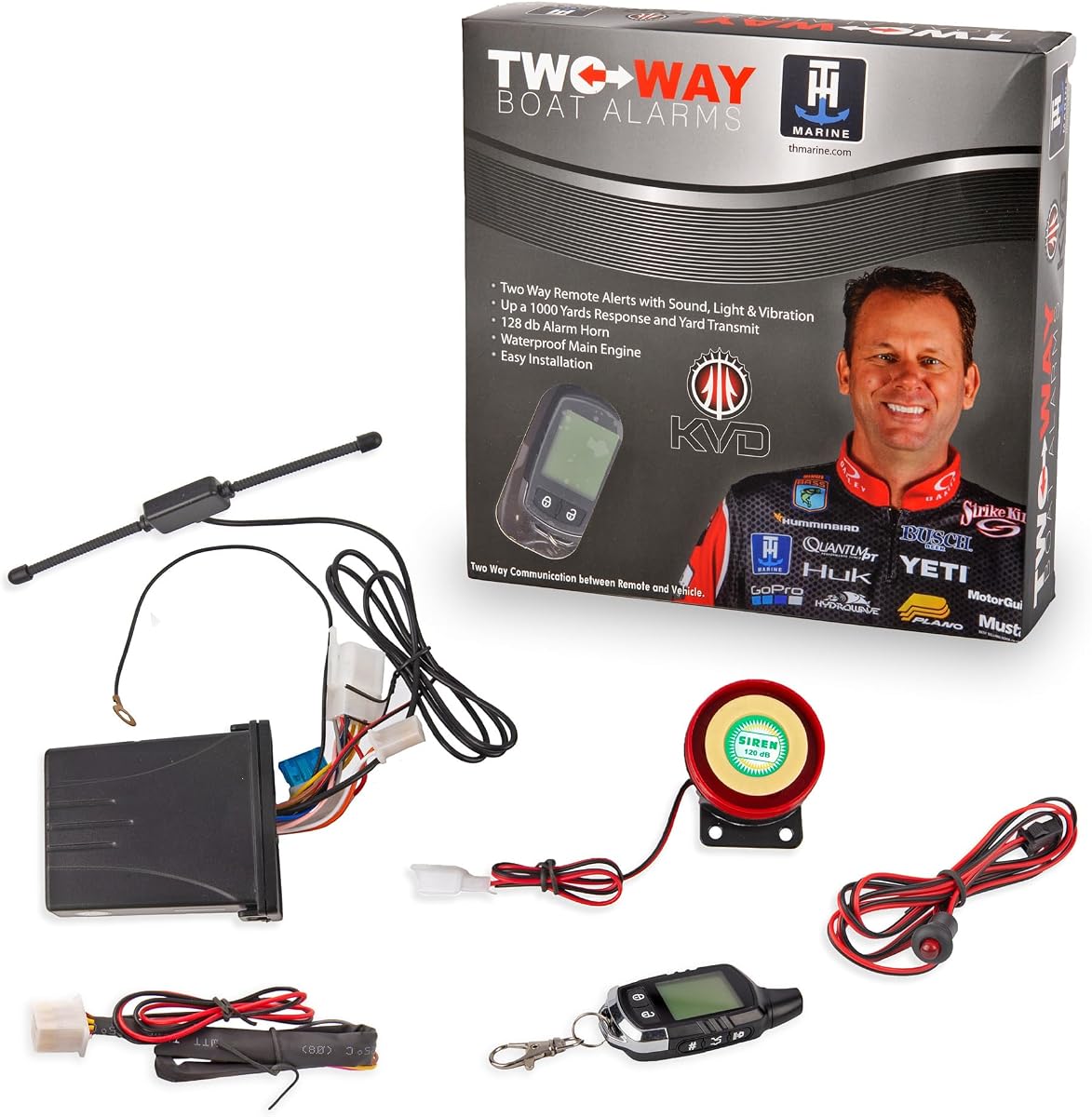
The T-H Marine Two-Way Boat Alarm System has a 2.9 rating, the lowest among the ten products, yet its core specifications distinguish it from simple local alarms. It uses a shock sensor, a 128dB horn, and a two-way remote that can vibrate, flash, and beep when an impact is detected.
We may earn a commission when you buy through this link, at no additional cost to you.
The stated remote range of up to 3000 yards is a major potential advantage for owners who remain nearby but out of earshot. Fine-tuning the shock sensor also allows the system to be adapted to the movement characteristics of a particular hull and dock environment. A sealed engine module and claimed waterproof construction are appropriate traits for marine use.
The rating warrants caution. A lower customer score can reflect installation issues, inconsistent range, false alerts, hardware concerns, or other experiences not explained in the supplied listing. The two-way remote provides awareness but does not offer the location, battery, bilge, or geofence data available from cellular monitoring products. The long advertised range should also be treated as a maximum rather than a guaranteed real-world distance in every marina or storage setting.
This system is worth considering for an owner who wants a loud deterrent and handheld confirmation without a cellular subscription. It may suit a boat kept in a yard, slip, or nearby storage area where an impact should immediately notify someone on site. Confirm the current rating history, check compatibility with the boat’s structure, and test sensitivity in the intended environment before relying on it.
The 128dB horn is designed to deter tampering, while feedback on the two-way remote gives the owner another way to notice a trigger. That combination is useful when the owner is close enough to respond quickly.
An adjustable sensor helps balance sensitivity against the normal movement of a boat. Care is needed because settings that are too sensitive may produce nuisance alerts, while overly conservative settings may overlook gentle tampering.
We may earn a commission when you buy through this link, at no additional cost to you.
BoatSense by BilgeBuddy earns a 4.7 rating and blends theft deterrence with environmental monitoring. It tracks GPS location, monitors high water and low battery voltage, can control a compatible bilge pump remotely, and includes functions for system malfunction, impact, temperature, current, and position monitoring.
We may earn a commission when you buy through this link, at no additional cost to you.
Remote bilge control is the most distinctive feature. Rather than merely reporting that water is present, a compatible owner can potentially operate the pump from a smartphone. Regular bilge pump and float-switch health tests add another layer of protection, while a backup auto-float switch is included to activate the pump when required. Push notifications, SMS, and email alerts provide several ways to receive important information.
The system is not entirely wireless. It is designed for 12-volt systems rated at 15 amps or less and must be installed in a way that protects wiring and connections. The listing describes it as waterproof and ruggedized for the bilge environment, but owners should still follow proper electrical and marine-installation practices. GPS and remote functions also depend on the owner having suitable service coverage and a properly configured account.
BoatSense is a strong all-around option for a modern recreational boat whose owner wants GPS, impact, battery, and water information in one system. It is particularly compelling for owners who value remote bilge-pump control and health checks rather than only an audible tamper alarm. Verify electrical compatibility, installation requirements, and the current notification-service terms before purchase.
High-water alerts become more useful when the owner can also control a compatible bilge pump remotely. This adds a response option that conventional float switches and local buzzers do not provide.
Automatic health tests can reveal problems with the pump or float switch before an emergency. Combined with low-battery and impact monitoring, the system provides a broader view of vessel condition than a simple entry alarm.
We may earn a commission when you buy through this link, at no additional cost to you.
The T-H Marine Loc-R-Bar is a physical boat-security system with a 4.3 rating. Instead of relying on cellular connectivity or onboard sensors, it uses an adjustable stainless steel bar to link deck lockers and rod compartments, along with an integrated motion-activated alarm padlock that creates an audible deterrent.
We may earn a commission when you buy through this link, at no additional cost to you.
Its defining benefit is visible security. A thief who opens one hatch cannot simply remove valuable gear and close the hatch again, because the bar makes multiple compartments function as a connected target. The supplied information says the bar works with included aluminum brackets and is intended for many bass, bay, and walleye-style boats. The alarm padlock operates without external sensors or wiring.
This system does not monitor GPS position, high water, battery status, or entry through the entire vessel. It also depends on whether the boat’s deck geometry and storage compartments allow a secure bar installation. Loose mounting points, an inadequately sized bar, or accessible fasteners could undermine the deterrent, so proper fitting is more important than simply attaching the hardware.
The Loc-R-Bar is an excellent choice for anglers who leave tackle and electronics in a boat at hotels, ramps, or marinas and want a physical barrier against quick opportunistic theft. It can be especially useful when remote monitoring is unnecessary and the concern is someone opening a storage compartment. Confirm deck measurements, mounting positions, and access requirements before buying.
The bar connects several access points so one open hatch does not expose the boat’s contents. The alarm padlock adds an audible layer without requiring a powered control unit or external sensors.
Because it secures individual compartments rather than the entire vessel, the system is particularly relevant to anglers storing high-value gear in a boat away from home. The visible bar also communicates that the storage area has been deliberately protected.
We may earn a commission when you buy through this link, at no additional cost to you.
The Wireless Boat Motion Sensor is a compact PIR sensor for detecting people or animals moving across decks, cabins, salons, and walkways. It has no current customer rating in the supplied data, so its real-world reliability cannot be judged through user feedback. Its specifications make it best understood as one component within the broader Oversea ecosystem.
We may earn a commission when you buy through this link, at no additional cost to you.
The device offers a detection range of up to 16 feet and communicates with the Oversea Hub through long-range RF rather than Bluetooth or WiFi. It uses AA batteries for up to five years of protection and does not need to draw from the boat’s electrical system. Mounting options include screws, hook-and-loop tape, and magnets, while the unit measures 2.75 by 3.75 by 1.15 inches and weighs 5.5 ounces.
The hub requirement is the central trade-off. The sensor cannot provide independent remote phone alerts without the Oversea Hub, and the supplied listing states that a subscription enables full remote alerting. Marine construction, waterproofing, and year-round design are positive qualities, but placement still matters: a PIR sensor can be affected by curtains, sunlight, temperature changes, and moving water.
This sensor is a good choice for an Oversea system owner who wants discrete coverage of an interior salon, cabin, or exterior deck. Its flexible placement and long battery life make it easier to deploy than a wired detector. It should not be selected as a standalone alarm, and boat owners should avoid placing it where reflections, weather, or frequent motion could create nuisance alerts.
A 16-foot PIR range can cover a meaningful portion of a cabin, salon, or walkway without the visual bulk of a larger detector. The compact housing and multiple mounting methods make it adaptable to different interior and exterior surfaces.
The stated five-year battery life removes the need to connect the sensor to the vessel’s battery or shore power. Long-range RF communication allows it to serve as part of a broader marine monitoring system rather than a direct WiFi or Bluetooth accessory.
We may earn a commission when you buy through this link, at no additional cost to you.
The Murphy ST10AS-F Tattletale Annunciator has a 5.0 rating and provides a ten-point remote alarm display in a flange-mount configuration. It is designed for marine pilot houses and can indicate problems developing in engine, gear, bilge, and auxiliary power systems when connected to compatible alarm sources.
We may earn a commission when you buy through this link, at no additional cost to you.
Compared with the less-mount ST10AS-LM version, the ST10AS-F includes a flange in the package. That makes it the more convenient choice for a standard panel installation when the installer wants a dedicated mounting provision. Its 10-point format gives crew a centralized indication of multiple system conditions rather than relying on separate sounders scattered around the helm.
It remains a component of a larger monitoring architecture. The annunciator does not itself detect motion, track GPS position, measure bilge water, or send phone notifications. It must receive suitable inputs, and the installer must understand the boat’s electrical system and alarm priorities. A high customer rating is encouraging, but product fit depends on technical compatibility rather than popularity alone.
The ST10AS-F is recommended for a boat with an integrated helm, multiple monitored systems, and a need for a clear visual alarm panel. It may suit owners of larger recreational or commercial vessels that already use Selectronic-compatible equipment. For a small boat, a consumer-oriented GPS, impact, and high-water system may provide broader standalone coverage with less integration work.
The included flange supports a more finished installation than the less-mount alternative. A ten-point display helps operators see which engine, gear, bilge, or power condition has triggered an alert.
A 5.0 rating indicates strong customer satisfaction with this model, though it should not override compatibility checks. The unit is most useful within a properly engineered marine control system rather than as an aftermarket standalone alarm.
We may earn a commission when you buy through this link, at no additional cost to you.
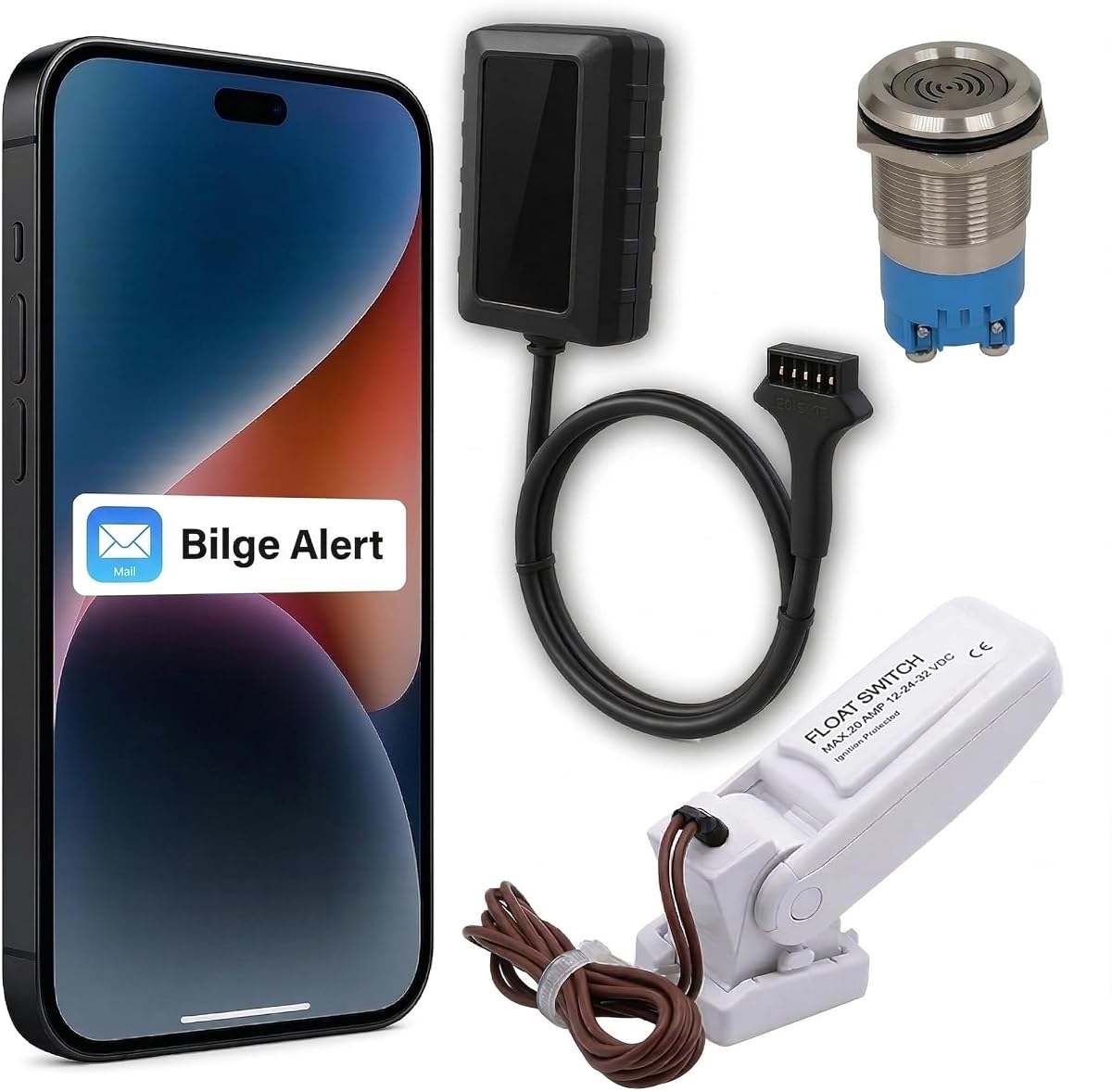
The SPY SPOT GV57 combines a boat GPS tracker with a float switch and dashboard buzzer, and it carries a 5.0 rating. The system is designed for boats kept at marinas, docks, boatyards, seasonal storage, or other unattended locations, where it can monitor movement and rising bilge water.
We may earn a commission when you buy through this link, at no additional cost to you.
GPS tracking provides real-time location information, movement alerts, and geofence notifications. The included float switch automatically detects rising water and activates a loud dashboard-mounted buzzer. Low-power consumption supports extended unattended periods, and the product is described as compatible with standard 12-volt marine electrical systems and common bilge pump setups. The IP67 enclosure is intended to withstand salt water, rain, humidity, and other demanding marine conditions.
The primary drawback is installation. The listing specifically calls for professional marine installation so that wiring, waterproof sealing, and long-term reliability are handled correctly. This is a substantial installation rather than a simple wireless add-on, and improperly integrated equipment can reduce system reliability. Owners should also review the current cellular service and feature terms for the tracker.
The GV57 is an excellent choice for an owner who wants both theft-related location monitoring and active protection against bilge flooding. It is particularly compelling for a boat stored over extended periods, where a small water event can become serious before anyone returns. For boats requiring professional wiring, the added installation discipline is a reasonable trade for a combined, purpose-built marine safety bundle.
Real-time GPS position, movement notifications, and geofence alerts help an owner track a boat from elsewhere. These features are useful for detecting relocation of a vessel stored out of sight.
The included float switch and dashboard buzzer provide an immediate local warning when bilge water rises. Professional installation helps ensure the sensor, wiring, and buzzer operate as a dependable part of the boat’s existing system.
We may earn a commission when you buy through this link, at no additional cost to you.
The right boat alarm may be a local impact deterrent, a connected monitoring hub, a physical compartment lock, or a professional annunciator. The following factors help narrow the field according to the vessel, storage conditions, available electrical systems, and the owner’s desired level of remote control.
Boat security concerns include theft of the entire vessel, entry through a hatch, removal of tackle and electronics, and unnoticed movement while the boat is stored. A shock or vibration sensor addresses impacts, while a physical security bar protects storage compartments. Entry sensors detect activity inside particular zones, and a GPS tracker is better suited to identifying the vessel’s location or alerting the owner to movement. Some connected hubs combine several of these functions, but a simple alarm cannot substitute for a category of protection it was never designed to cover.
Remote awareness is essential when the boat is not near the owner. Cellular hubs can send alerts through an app, while email, SMS, and push notifications offer different levels of immediacy. A two-way handheld remote is useful when someone remains nearby, and a dashboard buzzer provides local awareness without requiring an internet connection. Before choosing a connected product, check cellular coverage at the marina, storage yard, or home area. Also examine what information the service provides, whether remote control is included, and what happens to alerts if the boat temporarily loses signal.
Useful coverage may include impact, high water, bilge pump status, shore power, entry, sound, motion, battery voltage, temperature, current, and position. A complete hub can coordinate several sensor types, while individual accessories focus on a narrow area. Look for compatibility with the vessel’s existing equipment and for sensors that can be placed where they will detect the intended event. PIR motion sensors work well in cabins and salons but may react to reflections, moving water, or changing light. Float switches address flooding, while shock sensors respond to physical disturbance.
A boat alarm must tolerate humidity, spray, changing temperatures, vibration, and extended periods without use. An IP65 housing indicates protection against dust and water ingress, while IP67 supports temporary immersion protection under the conditions defined by that standard. The rating applies to the specified enclosure and does not automatically protect exposed connectors or poorly sealed cable entries. Choose mounting locations that limit direct spray, secure the unit against chafing, and follow all wiring instructions. Professional marine installation is especially valuable for permanently connected systems.
Some systems run from AA batteries, some use replaceable cells, and others draw from the boat’s 12-volt electrical network. Low-power designs are valuable during seasonal storage, while wired systems can provide continuous operation and cleaner integration. A self-powered sensor should still be checked periodically, and a boat-battery-powered system should account for low-battery conditions and drain. Wireless RF, WiFi, Bluetooth, and cellular connections each have different ranges and infrastructure needs. Select the approach that matches the vessel’s wiring, storage duration, and owner’s willingness to maintain it.
A no-wiring system can make installation faster, but it may require additional compatible hubs or sensors. A wired system may offer more stable integration, yet it introduces the need for correct fusing, connections, sealing, and system configuration. Annunciators are designed to work with compatible alarm inputs and existing controls, not to function as independent anti-theft sensors. GPS and bilge bundles may also have limits on supported electrical systems. Check the boat’s voltage, battery arrangement, hull layout, compartment design, and existing electronics before choosing a model.
An effective anti-theft system can provide a loud local alarm, a visible physical barrier, remote alerts, or location information. Different deterrents address different levels of risk. A portable vibration alarm is inexpensive and simple but offers no off-site information. A GPS system can identify movement but does not necessarily stop someone from removing gear. A physical bar makes a quick grab more difficult, especially when valuable equipment remains in lockers. For a comprehensive approach, consider combining one of the physical or audible deterrents with a connected tracker or environmental monitor.
Connected marine systems require ongoing attention even when the boat is not in use. Review cellular service terms, battery replacement intervals, app compatibility, and whether alerts remain available in the intended monitoring mode. Local alarms need test routines, clean sensor surfaces, secure mounts, and fresh batteries. Professional systems should be inspected for corrosion, loose connections, and changed sensor conditions. Create a simple check schedule that includes testing alerts before a long trip, storm, or period of unattended storage. A maintenance plan converts an impressive feature list into dependable protection.
Start by identifying the primary protection goal and the exact locations where the boat is stored. Install the central unit, sensors, and remote components where they can detect the intended event without being easily concealed or damaged. Follow the manufacturer’s polarity, mounting, pairing, and configuration instructions, particularly for systems connected to the boat’s 12-volt electrical network. A quick test should confirm that movement, water, entry, impact, or geofence events produce the expected local and remote notifications.
After installation, establish a routine for checking the app or control panel. Review battery levels, sensor status, GPS location, and any alerts for high water, low voltage, or entry. Test the audible horn and remote vibration where appropriate, and make sure backup bilge equipment remains operational. If the boat will sit for weeks or months, inspect it more frequently before severe weather, and arrange checks through a trusted person or qualified marine technician when the owner cannot visit personally.
Care for the system by keeping housings clean, seals free of debris, and wiring connections secure. Replace batteries on a schedule appropriate to the manufacturer’s guidance, especially for AA-powered sensors and hubs. Inspect adhesive and strap mounts on portable vibration alarms, tighten physical security hardware, and confirm that sensors have not shifted after rough transport. For professionally wired systems, use a marine technician for repairs and never open sealed connections in unsuitable conditions.
Not exactly. A GPS tracker primarily reports a vessel’s position and can alert the owner to movement or geofence events. A boat alarm may detect impacts, entry, high water, or other conditions and can include a siren, sensors, or remote control. Some integrated hubs combine GPS tracking with environmental and security monitoring, so buyers should compare features rather than treating GPS as the only sign of a complete alarm system.
The best choice depends on the marina’s coverage and the owner’s priorities. A cellular hub with entry, impact, high-water, battery, and GPS monitoring offers broad off-site awareness, while a local horn and physical compartment lock can discourage quick theft. Check cellular coverage at the exact slip, assess whether valuable gear is easily accessible, and consider combining remote monitoring with visible physical protection.
Yes, but only if the chosen system includes those specific functions. The LocMarine, Skyhawk Oversea, BoatSense, and SPY SPOT products in this guide have stated high-water, bilge, or float-switch capabilities, although their levels of control differ. A basic impact alarm does not monitor water unless it is paired with a separate float switch and compatible hub.
Not always. The Skyhawk Oversea Hub and Wireless Boat Motion Sensor use replaceable AA batteries, while other systems such as the SPY SPOT bundle are designed around compatible 12-volt marine electrical systems. Battery-free drain is useful for storage, but owners still need a replacement schedule and should test devices before leaving a boat unattended for long periods.
Generally, no. The Murphy ST10AS-LM and ST10AS-F are designed to display remote alarm and annunciation signals from engine, gear, bilge, or auxiliary power systems. They are valuable components of a marine control system but do not independently provide GPS tracking, motion sensing, phone alerts, or a built-in anti-theft siren.
Start with a lower sensitivity setting, then adjust it after observing the boat’s normal movement in its storage environment. Avoid placing PIR sensors where sunlight reflections, loose curtains, animals, or moving water can trigger them. For impact sensors, select a stable mounting surface and test the setting during different wind, wave, and traffic conditions.
It depends on the system. Wireless, self-contained devices may be suitable for a careful owner, but permanently wired GPS, bilge, and dashboard components should generally be installed by a qualified marine technician. Professional installation supports correct wiring, waterproof sealing, reliable connections, and integration with the boat’s existing electrical and control systems.
Test it before leaving the vessel unattended for an extended period, before a major trip, and at regular maintenance intervals. The test should confirm sensor response, audible output, app or remote notifications, battery condition, and any GPS or geofence status. Seasonal storage deserves especially careful checks because a small battery, loose connection, or disconnected sensor can remain unnoticed for months.
The LocMarine Global LTE Hub is the strongest all-around choice for owners who want an integrated platform spanning location, entry, high water, bilge, shore power, and battery monitoring. BoatSense by BilgeBuddy is especially compelling when remote bilge control, health tests, and multiple notification channels matter, while the SPY SPOT GV57 combines GPS tracking with local high-water warning in a marine-oriented bundle.
For simpler needs, the WSDCAM vibration alarm offers a portable and uncomplicated deterrent, while the T-H Marine Loc-R-Bar protects valuable compartments with visible physical security. The T-H Marine Two-Way Alarm serves owners who need immediate handheld notification nearby, and the Murphy annunciators fit boats with established marine control systems. Prioritize the risks present at the actual storage site, then confirm connectivity, electrical compatibility, installation requirements, sensor placement, and ongoing maintenance before selecting a system.
The best alarm is not necessarily the one with the longest specification list. It is the system that provides the right information, alerts the owner in a useful way, survives marine conditions, and can be maintained reliably. Review the current listing, included components, service requirements, and product details before ordering, as specifications and prices can change over time.