
Hyperkin Scout Premium Wired Controller
4.6Editor score
Compatible with all SNES models
Comfortable ergonomic construction
Ten-foot wired cable
Premium controller build
An SNES controller replacement can range from a tiny conductive repair pad to a complete wired or wireless gamepad. The right choice depends on whether your original controller needs a button repair or whether you want a modern controller for an original console, PC, Mac, Linux system, or Raspberry Pi retro-gaming setup.
We compared the listed products by platform compatibility, connection method, controller layout, repair scope, and available user feedback. The roundup includes two conductive silicone pad sets, wired and wireless replacement gamepads, and multi-controller packages, with particular attention to what each model can and cannot connect to.
Each pick reveals a different route to restoring or replacing the SNES experience, from a targeted internal fix to a full wireless setup. Ratings and specifications reflect the supplied product information, while prices and availability can change, so confirm the current listing before purchasing.
4.6Editor score

4.4Editor score

4.4Editor score
As an Amazon Associate we earn from qualifying purchases.
The table below compares all ten options by their primary purpose, supported platforms, connection type, and most important limitation.


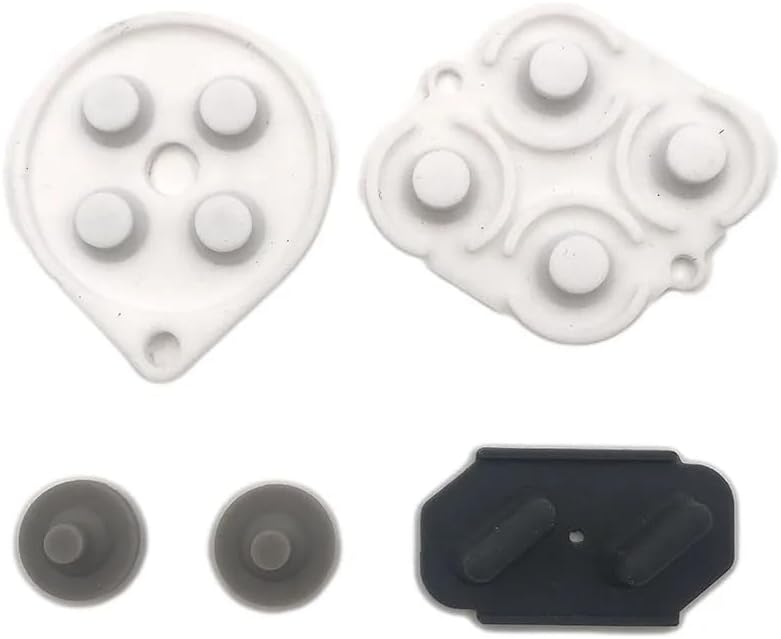


This conductive silicone button pad is a focused internal repair part for an original Nintendo SNES or SFC controller. With a supplied rating of 3.7, it is best suited to owners whose controller has worn, missing, or unresponsive button contacts but whose casing, cable, and shell remain in good condition. It does not replace the entire gamepad, but it targets a common failure point with a small set of conductive pads.
We may earn a commission when you buy through this link, at no additional cost to you.
The pads are described as soft, conductive silicone pieces that sit beneath the controller buttons and provide the electrical contact when pressed. The package includes one set of conductive rubber silicone pads. Because the part is designed specifically for SNES and SFC controllers, it offers a more focused solution than a general-purpose USB gamepad. That platform specificity is also a reminder to compare the controller model and internal layout before ordering.
The main trade-off is that this is not a complete controller and provides no new cable, housing, D-pad, or wireless functionality. Installation also requires opening the controller, so it suits someone comfortable with basic electronics and careful disassembly more than a user seeking a plug-and-play replacement. The modest 3.7 rating may reflect the limited scope of the product or the consistency of individual repair experiences, but the underlying approach remains appropriate for a targeted conductive-pad failure.
Buy this option if your original controller is otherwise structurally sound and only the button response has deteriorated. Confirm that the controller is an SNES or SFC model, inspect the existing pad layout, and compare the product photographs carefully before purchase. It is best regarded as a repair-focused SNES controller replacement rather than a general gaming controller.
When the shell and cable remain usable, replacing the conductive contact layer can restore button response without replacing every part of the controller. This makes the pad set a practical choice for preserving a familiar original controller.
The repair depends on careful disassembly and correct pad placement. Anyone unfamiliar with controller internals should review a suitable repair process and work slowly to avoid damaging the membrane or button assembly.
We may earn a commission when you buy through this link, at no additional cost to you.
The KIWITATA two-pack wireless controller is our Editor's Choice for a full replacement setup on an original SNES console. Its supplied rating of 4.4 reflects a broadly capable approach: the controllers use 2.4GHz wireless technology, include a pairing adapter for original SNES hardware, and eliminate the need to sit directly beside the console with a fixed cable.
We may earn a commission when you buy through this link, at no additional cost to you.
Its standout feature is the combination of original-console compatibility and a rechargeable 3.7V lithium-ion battery. The manufacturer states a continuous runtime of more than 10 hours and a wireless range of up to 30 feet. The cross-shaped directional pad uses a frosted concave design intended to resist sweat and slipping, while the overall shape follows the contours of a classic controller for familiar handling.
There are important platform limitations. The package is designed for the original SNES and old-school SNES games displayed on a television, but it does not support two controllers being used simultaneously for Super Famicom games, and only one-player games are supported. It also does not work with the SNES Mini or SNES Classic, and the stated 2.4GHz connection is not Bluetooth. It is a third-party controller rather than an original Nintendo product.
This is the best fit for someone who owns an original-style SNES console, wants a wireless controller experience, and values a two-controller package. It is less suitable for SNES Classic Edition, SNES Mini, or Super Famicom owners. For those platforms, check the console label carefully and select a more specialized controller.
A 2.4GHz connection removes the fixed-cable limitation of an original controller. The stated 30-foot range provides more flexibility than a standard wired pad without requiring a Bluetooth-enabled device.
Although the package includes two controllers, the listed product information restricts it to one-player games. Multiplayer buyers should not assume the two-pack can drive two original SNES controller ports at the same time.
We may earn a commission when you buy through this link, at no additional cost to you.
The KIWITATA two-pack USB controller targets retro emulation on computers and compatible single-board devices rather than an original Nintendo console. Its 4.3 supplied rating makes it a strong option for a two-player PC, Mac, Linux, or Raspberry Pi setup. The controllers use a standard USB 2.0 plug and a 1.5-meter cable, making them straightforward to connect to a desktop or laptop.
We may earn a commission when you buy through this link, at no additional cost to you.
Compatibility extends across Windows versions from XP through Windows 11, Mac OS X 10.0 or later, Linux, and Raspberry Pi. The listing mentions broad emulator support, including RetroArch and several classic emulators. Its concave directional pad and classic button arrangement aim to provide a comfortable retro feel, and the absence of driver installation simplifies the initial connection process.
The critical distinction is that this is not an original SNES controller replacement for a physical SNES console. It has a USB plug rather than the original console connector. In addition, users must manually assign the buttons and directional axes inside the emulator because the controller does not configure itself automatically. The emulator and appropriate game files must also be obtained separately.
Choose this controller if your goal is a reliable, wired two-player experience on a computer or Raspberry Pi and you already understand emulator setup. Avoid it if you need a controller that plugs directly into an original SNES, Super Famicom, SNES Classic, or SNES Mini. Its value comes from flexibility across modern retro-gaming platforms rather than console compatibility.
The two-controller format is especially useful for cooperative retro games. It removes the need to locate matching USB pads separately when setting up a couch-gaming or desktop emulator library.
A standard USB connection does not automatically translate every retro layout. Players should open the emulator's input settings, assign the directional pad and face buttons, and confirm the mapping before launching a game.
We may earn a commission when you buy through this link, at no additional cost to you.
The Hyperkin Scout Premium Wired Controller is the strongest premium-style complete replacement in this guide, carrying the highest listed controller rating at 4.6. It is explicitly designed for SNES use and is stated to be compatible with all Super NES models. Unlike the repair pads and emulator-only gamepads in the list, it offers a straightforward console replacement with a familiar wired approach.
We may earn a commission when you buy through this link, at no additional cost to you.
Premium build quality and an ergonomic design are the product's main selling points. The controller is shaped for comfortable handling, and the 10-foot cable gives a player more freedom to sit at a reasonable distance from the television than a very short cord. A wired design also removes concerns about radio interference, battery charging, and receiver pairing during a retro session.
The limitation is its deliberately focused scope. There is no stated wireless functionality, PC compatibility, or emulator support, and the product listing describes a single controller rather than a multi-controller set. Buyers who need access to a computer or Raspberry Pi should verify their requirements elsewhere rather than assuming this SNES-specific controller will work as a generic USB gamepad.
This is a strong recommendation for someone who wants a dependable, well-finished wired controller for an original-style SNES system and values comfort and cable length. It is also a sensible alternative to a repair if the original controller's buttons, cable, or housing have all deteriorated. The 4.6 rating and stated premium construction make it the clear front-runner for console-focused replacement.
The ergonomic shape is important for a controller intended to replace an original pad. A familiar grip and balanced control layout can make extended classic-game sessions more comfortable than a cramped third-party alternative.
The ten-foot cable provides practical movement around a television area. A wired controller also starts working without a pairing process, making it a straightforward choice for traditional console gaming.
We may earn a commission when you buy through this link, at no additional cost to you.
The GUANKE conductive rubber pad set is another repair-oriented option for SNES controller owners. It includes one set of conductive rubber button pads intended to restore the contact layer beneath the controller's buttons. Unlike the first pad product in the guide, no numerical user rating was supplied, so the decision should rest more heavily on fit, material, and the condition of the existing controller.
We may earn a commission when you buy through this link, at no additional cost to you.
Its silicone membrane and gasket format directly addresses failures involving worn or ineffective button contacts. The listing describes the set as new and intended for SNES controllers, offering a way to make a worn unit feel responsive again while retaining its original exterior. A repair can be especially appealing when the controller's shape, cable, and housing are already comfortable.
Fit is the central concern. The manufacturer specifically asks buyers to compare pictures and descriptions, check the controller model, and confirm that the part matches what they need. As with any internal controller pad, installation requires opening the controller and positioning each piece correctly. A mismatch or careless placement could prevent buttons from registering consistently.
Choose the GUANKE set when a conductive-pad or membrane problem is the diagnosed issue and you want to restore a usable original controller. Do not choose it for a broken cable, cracked housing, missing directional control, or a complete wireless upgrade. Because no rating is available, buying with careful attention to the controller model and supplied images is essential.
A membrane replacement can extend the useful life of a controller whose enclosure and electronics remain intact. It also retains the dimensions and handling characteristics of the original unit.
Compare the controller model, button layout, and reference photographs before opening the shell. The product is specific to SNES controllers, so a visually similar third-party gamepad may not have a matching contact arrangement.
We may earn a commission when you buy through this link, at no additional cost to you.
The ZAMPAM two-pack combines an SNES-inspired layout with broad support for modern retro-gaming platforms. Its supplied rating is 4.0, and the product is aimed at Nintendo Switch model one, Windows, Mac OS, Linux, Raspberry Pi, RetroPie, Recalbox, and other systems that can accept a standard USB controller.
We may earn a commission when you buy through this link, at no additional cost to you.
Its 2.4GHz technology provides a stated range of up to 10 meters, or 32 feet, and the controllers connect through a USB receiver. No drivers or software are required for compatible devices, which simplifies setup. The package includes a built-in 240mAh rechargeable battery, a battery-level indicator, and a charging time of about one hour. The face buttons are described as sensitive and responsive for emulator and retro-game use.
The main compromise is battery life. The stated maximum of three hours is shorter than the ten-hour or longer runtimes listed by several other wireless products in this guide. Compatibility also requires care: the listing specifically says the controllers are not compatible with Nintendo Switch 2, and support for the original Switch is limited to model one.
This two-pack is best for a multi-device retro setup where a single familiar controller style should work across a PC, Mac, Linux system, Raspberry Pi, or supported software. It does not claim direct support for an original SNES console. Buyers should therefore treat it as an SNES-style gamepad rather than a drop-in original-console replacement.
The broad platform list makes this pair useful for users who alternate between desktop emulators and Raspberry Pi-based retro systems. A consistent controller shape reduces the learning curve when changing platforms.
A visible battery indicator helps prevent an unexpected shutdown during play. The short charging period also makes it practical to top up the controllers between retro-gaming sessions.
We may earn a commission when you buy through this link, at no additional cost to you.
The ZAMPAM wireless USB controller provides a cable-free alternative for PC and Android emulator use. Its supplied rating is 4.2, and the product uses a USB receiver with 2.4GHz wireless technology. It is explicitly not compatible with the Mini SNES, the Super Nintendo, or the SNES Classic, making platform verification essential before purchase.
We may earn a commission when you buy through this link, at no additional cost to you.
The controller offers an approximately 24-foot range and a rechargeable lithium-ion battery stated to last around 100 hours. That long advertised runtime is useful for players who want to avoid frequent charging. The familiar retro layout includes a directional pad and face buttons, while a programmable turbo function can assign the A, B, X, or Y buttons as the turbo key in USB mode.
Initial configuration may require more than plugging in the receiver. The listing recommends software such as Joystick Mapper to configure keys on a Mac or Windows gadget, and it advises checking the setup video for the selected device. This makes the product less effortless than options that present themselves as universally automatic, although the resulting flexibility can help users adapt the controller to different emulators.
This controller suits an emulator user who wants wireless freedom and does not need original console compatibility. It is less appropriate for a physical SNES owner, a SNES Classic owner, or anyone who wants a controller that works automatically with every device. Confirm the operating system and emulator input method before buying.
The programmable turbo function adds an option that can be useful for games supporting rapid button input. Its selected-button approach lets users choose which face control becomes the turbo input rather than relying on one fixed assignment.
Users should complete the receiver and button-mapping steps before attempting a full game session. Testing every direction and face button in the target emulator helps identify a misassigned control early.
We may earn a commission when you buy through this link, at no additional cost to you.
This two-pack of wireless USB SNES controllers is designed for retro emulators on Windows, macOS, and Linux, with Raspberry Pi also mentioned in the product information. Its 4.2 rating places it among the stronger-rated complete controller options here, and the inclusion of two controllers supports local multiplayer play on compatible systems.
We may earn a commission when you buy through this link, at no additional cost to you.
The controllers use 2.4GHz wireless communication through standard USB receivers. A stated range of 10 meters, or 33 feet, provides ample movement for a couch or desk, while sensitive buttons are intended to support precise control. The built-in rechargeable batteries are stated to deliver up to 10 hours of runtime. For compatible devices, the setup is plug-and-play and does not require drivers.
Compatibility needs careful attention. The listing specifically excludes Android TV boxes, Fire TV, Chromebook, SteamOS, Tesla, C64, and Nintendo Switch. The lack of Switch support is attributed to the required button configuration, and the product is not a replacement for an original SNES console. These restrictions make the platform list less universal than the simple product title might imply.
The two-pack is a good choice for households with two players who want wireless retro controllers on a supported computer system. It combines a long stated runtime with straightforward receiver setup. Before purchasing, confirm that the intended device is not among the excluded platforms, then check the emulator's expected input format.
Two receivers and two controllers allow both players to sit away from the computer. That can improve comfort during cooperative sessions while retaining a recognizable retro control layout.
Compatibility is not universal despite the familiar SNES-style design. Buyers using an Android TV box, Fire TV, Chromebook, SteamOS, Tesla, C64, or Nintendo Switch should choose a controller specifically designed for that platform.
We may earn a commission when you buy through this link, at no additional cost to you.
The miadore two-pack is our Best Budget recommendation for a straightforward two-player emulator setup. Its supplied 4.4 rating is strong, while the standard USB format works with Windows, Mac, Linux, Raspberry Pi, RetroPie, and other compatible environments. The controllers are third-party products rather than replacements for an original SNES or NES console.
We may earn a commission when you buy through this link, at no additional cost to you.
The installation process is simple: plug in the USB controller and launch the emulator. The listing notes that no drivers or additional software are required, although input settings may still need to be checked and buttons mapped. Its eight-way directional pad, six digital buttons, concave X and Y buttons, convex A and B buttons, and rubber Start and Select buttons reproduce a familiar retro arrangement.
The trade-offs are straightforward. Each attached cable is approximately five feet long, so the controllers are less flexible than wireless models and may provide less room around a large television. A physical SNES console cannot use this USB plug directly. Players also need compatible emulator software and game files, and the controller's labels describe a broad range of classic systems rather than a single console.
This two-pack is an excellent value-oriented choice for desktop and Raspberry Pi retro gaming when affordability and multiplayer readiness matter most. It is also a better fit than a premium console controller for users interested in emulators on modern platforms. Confirm the intended platform, perform the button mapping, and use an appropriate cable-management solution if five feet is restrictive.
The standard USB connection removes receiver pairing and battery management from the setup process. Once the emulator recognizes the controller, assigning inputs is typically the only significant configuration step.
Two matching controllers in one package simplify cooperative and competitive retro play. They are particularly useful for a Raspberry Pi or desktop system shared by two people.
We may earn a commission when you buy through this link, at no additional cost to you.
The KIWITATA wireless controller combines support for an original SNES console with computer and Raspberry Pi use. No numerical user rating was supplied, but its inclusion of both a seven-pin SNES pairing adapter and a 2.4GHz USB dongle distinguishes it from the two-pack in the same product family, which focuses more heavily on original-console use.
We may earn a commission when you buy through this link, at no additional cost to you.
The original-console configuration uses the included 7-pin connector adapter, while the USB dongle provides a route to compatible Windows, Mac, and Raspberry Pi systems. The rechargeable 3.7V lithium-ion battery is stated to operate continuously for more than 10 hours, and the 2.4GHz signal has a stated range of up to 30 feet. The concave directional pad is designed to resist sweat and improve grip.
Compatibility still needs care. The product lists Windows systems ranging from Windows 98 through Windows 11, Mac OS X 10.0 or later, and several Raspberry Pi models. It is a third-party controller, not an original Nintendo product, and its 2.4GHz connection should not be confused with Bluetooth. The different console and USB modes may also require separate setup or pairing steps.
This is a versatile choice for someone who wants one controller to bridge an original SNES and a modern computer-based retro setup. It is less compelling for multiplayer because only one controller is listed, and the lack of a numerical rating calls for extra attention to recent customer feedback. Verify the console or computer platform, use the correct included adapter, and test all buttons before relying on it for a long session.
The included SNES adapter and USB dongle let the controller serve different retro-gaming environments. That versatility is useful for users who alternate between console games and computer-based emulators.
The stated battery runtime exceeds ten hours, reducing the likelihood of an interruption during extended play. Recharging between sessions helps keep the controller ready without changing the original-console experience.
We may earn a commission when you buy through this link, at no additional cost to you.
The right SNES controller replacement depends first on the platform you need to control and second on the failure you want to solve. Use the following factors to separate a repair part from a complete wired, USB, or wireless controller.
An original SNES console requires a controller with a compatible console connection, while a PC, Mac, Linux computer, or Raspberry Pi generally uses USB. Some wireless products include both an SNES adapter and a USB dongle, allowing one controller to serve multiple roles. Other products look like SNES controllers but connect only through USB and cannot be inserted into an original console. Check the platform statement before considering the button layout or aesthetics.
Choose based on the device you actually own. An emulator user should select a standard USB controller, while an original-console owner should look for an SNES-compatible plug or included seven-pin adapter.
A conductive silicone pad set is not a controller in the conventional sense. It is intended to replace the internal contact layer beneath an SNES controller's buttons. This approach can restore responsiveness while keeping the original shell and cable, but it requires disassembly and correct placement. A complete gamepad replaces the entire controller experience and is more convenient when the cable, housing, D-pad, or multiple controls have deteriorated.
Opt for a repair pad when only the contact membrane is faulty. Select a complete replacement when several physical parts are unreliable or when you want a new connection method.
Wired controllers offer immediate operation, consistent input, and no charging routine. They are generally the simplest choice for an original console, especially when a long cable provides sufficient freedom. Wireless controllers remove the fixed cable and may support computer platforms through a USB receiver, but they introduce pairing, charging, battery life, and radio-range considerations. The listed wireless products use 2.4GHz technology, which should not be confused with Bluetooth compatibility.
Prioritize wired simplicity for a dedicated SNES setup. Consider wireless when untethered play or cross-device use is more important than maintenance-free operation.
A two-controller package is not automatically a two-player solution. Some original-SNES wireless products explicitly support only one-player games, even though the box contains two controllers. Computer-oriented two-packs are better positioned for local multiplayer because both controllers connect to the same system through USB receivers. Confirm that the system supports multiple controllers and that the emulator recognizes each input device independently.
For two-player computer gaming, choose a matched USB two-pack. For an original console, verify multiplayer support explicitly rather than relying on the number of controllers in the package.
Most USB controllers do not automatically assign every SNES-era control to the correct emulator command. You may need to open the emulator's input settings and manually map the directional pad, Start, Select, A, B, X, and Y. A product that specifically mentions mapping software may offer more configurability, but it can also require extra setup. A simple standard USB controller can still work well when its configuration options are clear.
Budget a few minutes for mapping and test every control before playing. This step is essential for both wireless receiver models and wired USB gamepads.
Wireless controller runtime varies substantially across the listed products. Stated figures range from approximately three hours for the ZAMPAM two-pack to around 10 hours for the multi-color-key two-pack and more than 10 hours for the KIWITATA models. One product advertises a much longer runtime of around 100 hours. Consider how long your typical sessions last, whether a battery indicator is present, and how often you are willing to recharge the controller.
For marathon sessions, favor a longer stated runtime. For shorter play periods, a compact battery with a visible indicator may be sufficient.
An authentic-feeling layout is not limited to appearance. Look for an eight-way directional pad, six main face buttons, and separate Start and Select controls. A concave directional pad may improve grip and reduce slipping, while a controller shaped around the hand can help during longer sessions. The 10-foot Hyperkin cable and approximately five-foot miadore cable also affect freedom of movement around a television or desk.
Choose a familiar shape that feels comfortable and offers the controls your games require. Cable length matters as much as button layout for a couch-gaming setup.
A complete controller should be assessed for build quality, included receiver, adapter, charging cable, and documentation. Repair pads need a different checklist: confirm the number of pads, material, controller model, and reference photographs. Some wireless packages include receivers, charging cables, and a manual, while the original-SNES-focused products include a seven-pin adapter. A USB dongle may also be supplied for computer use.
Match the box contents to the connection method and platform. A missing receiver, adapter, or charging cable can prevent an otherwise suitable controller from being used as intended.
Begin by identifying the exact device the controller or repair pad is designed for. For a complete controller, read the included instructions, install any batteries if required, and connect the appropriate SNES adapter or USB receiver before pairing. For an emulator, launch the software first, enter its controller settings, and map each direction and button manually rather than assuming the labels will be assigned automatically.
When installing a conductive pad set, power off and disconnect the controller, remove the shell carefully, note the original position of every pad, and transfer the new silicone pieces into the matching locations. Reassemble the buttons carefully so each contact remains unobstructed. Test every input after the controller is connected and before reinstalling the shell or beginning a game.
Care for wired controllers by avoiding sharp bends and strong pulling at either connector. Keep wireless controllers charged within the manufacturer's guidance, clean the receiver contacts when connection quality declines, and keep the battery compartment dry. Use a lightly dampened cloth for the exterior, never flood the seams, and allow the controller to dry completely before reconnecting it. For pads, keep replacements in a dry, dust-free container until they are needed.
A conductive pad set replaces the soft contact layer inside an existing SNES controller. It is intended to fix unresponsive or worn buttons while keeping the original casing, cable, and other components. A complete controller replaces the entire gamepad and may use a wired console plug, a USB connector, or a wireless receiver.
No. A controller with a standard USB plug is intended for computers and compatible emulators, not for the proprietary ports on an original SNES console. Original-console models need the correct SNES connection or an included seven-pin adapter. Always check the platform compatibility statement before purchasing.
The listed wireless models primarily use 2.4GHz technology rather than Bluetooth. Some connect to an original console through a seven-pin adapter, while others use a USB receiver. A 2.4GHz controller should not be assumed to work with a Bluetooth device merely because both methods are wireless.
Many of the USB and wireless products list Raspberry Pi compatibility, including the KIWITATA USB pair, the ZAMPAM wireless pair, and the miadore two-pack. The connection is generally through USB, so a suitable port or adapter may be needed. Verify the Raspberry Pi model and your chosen emulator's input support before playing.
Usually, yes. Standard USB controllers are not always assigned automatically, so the emulator may require manual mapping for the directional pad and face buttons. Some products also recommend configuration software for particular systems. Assign and test every control before launching a game to avoid incorrect inputs during play.
That depends on the platform. The computer-oriented two-packs are intended for two-player emulator sessions and include separate USB connections. The KIWITATA original-SNES two-pack explicitly supports only one-player games, so two controllers in the package do not guarantee simultaneous multiplayer support.
Conductive pads are appropriate when the controller shell, cable, and physical buttons remain intact but one or more inputs are intermittent, unresponsive, or require excessive pressure. If the cable is damaged, the housing is cracked, the directional pad is broken, or several components have failed, a complete replacement may be more practical.
Choose a wired model for simple, consistent console operation without charging or pairing. Choose a wireless model for cable-free play or when you also want to use the controller with a computer through a USB receiver. Consider the stated battery life, supported platforms, and whether you need more than one player.
The Hyperkin Scout stands out as the premium complete controller for original SNES systems, combining a 4.6 rating, broad model compatibility, an ergonomic design, and a long wired cable. The KIWITATA two-pack is the Editor's Choice for a wireless original-console upgrade, while the miadore two-pack offers the strongest budget-oriented route to two-player USB retro gaming.
Prioritize the platform and failure point before focusing on design. Use conductive silicone pads for a targeted internal membrane repair, choose a wired SNES-compatible controller for straightforward console play, and select a USB gamepad for emulators on computers or Raspberry Pi. If wireless convenience matters, verify the adapter, receiver, battery runtime, and multiplayer restrictions.
Ratings, availability, and prices can change over time, and the details of each listing may evolve as sellers revise product pages. Check the current product listing, included components, platform limitations, and recent customer feedback before making a final purchase, especially when a controller is being used for a particular console or emulator setup.