
SAMSUNG BAR Plus 3.1 128GB
4.7Editor score
Rugged metal body
Water and shock resistance
Five-year limited warranty
Our Metal USB Flash Drive guide compares ten durable USB-A, USB-C, and dual-interface models for speed, capacity, portability, security, and everyday reliabilit
A metal USB flash drive combines portable file storage with a housing designed to withstand daily handling, travel, and frequent insertion. The right model should match your devices, provide sufficient capacity, and deliver useful transfer speeds without sacrificing security or convenience.
This guide compares ten metal USB flash drives based on the supplied specifications, including capacity, connector type, read speed, durability, compatibility, password protection, and physical design. It covers USB-A, USB-C, and dual-interface options for everyday storage, media transfer, backups, and expanding compatible mobile devices.
Each review explains who the drive is best suited for, along with its strongest features and practical limitations. Speeds and compatibility depend on the host device, so the listed figures are reference points rather than guaranteed results. Prices and availability can change, making a final check current listings advisable.
4.7Editor score

4.6Editor score

4.5Editor score
The comparison below highlights the major differences among all ten drives, including capacity, connector design, claimed read speed, portability, and protection features, helping readers narrow the field before considering individual product details.
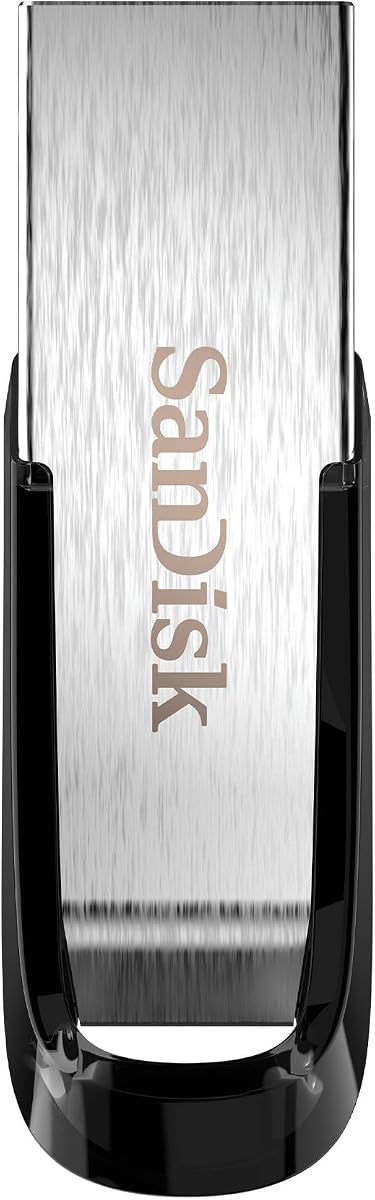


The SanDisk Ultra Flair 128GB is a well-rounded metal USB flash drive for people who want more speed than a basic USB 2.0 model without moving to a premium USB-C design. It carries a 4.6 rating and offers claimed read speeds of up to 150MB/s, making it a practical option for documents, photos, presentations, and moderately large media collections.
We may earn a commission when you buy through this link, at no additional cost to you.
Its main strength is the balance between performance and useful protection. The drive uses USB 3.0 and is advertised as writing up to 15 times faster than standard USB 2.0 drives. SanDisk also provides password protection based on 128-bit AES encryption, allowing private files to remain separate from content that others may need to access.
The main compromise is its USB-A connector. That format remains broadly useful with traditional computers, but it cannot plug directly into a USB-C-only device. Performance also depends on the host, and the supplied specification notes that a USB 3.0 port is required to achieve the highest stated transfer rate. Mac users must download the relevant SanDisk SecureAccess software to use password protection.
This is a strong recommendation for students, office workers, and general travelers who use a laptop with USB-A support and want a durable, familiar drive with encryption. It is less appropriate when a modern USB-C connector or dual-interface design is the priority. For those needs, the Ultra Luxe or Ultra Dual Drive Luxe may be easier to use across contemporary devices.
With claimed read speeds reaching 150MB/s, the Ultra Flair is intended to reduce waiting during larger transfers. A USB 3.0 host is needed for the best results, so buyers should use the most capable port available on their computer.
The included password-protection function uses 128-bit AES encryption. It adds a convenient way to separate sensitive documents from shared folders without requiring a separate hardware security key.
We may earn a commission when you buy through this link, at no additional cost to you.
The ABLAZE 128GB two-pack is designed for buyers who want multiple portable drives rather than a single premium device. It includes two capless metal USB 2.0 thumb drives and two keychains, creating a practical bundle for sharing files, separating work from personal storage, or distributing media among several people.
We may earn a commission when you buy through this link, at no additional cost to you.
Its 4.4 rating reflects a generally useful package, and the sealing of the internal components gives the housing a waterproof and durable character. The slim form should fit narrow USB ports more easily than many larger drives. A grade A+ chip and plug-and-play support for numerous Windows, Mac, Linux, and Chrome environments add convenience.
The important limitation is USB 2.0 performance. That interface is suitable for documents, small photo collections, and modest media transfers, but it will feel slow when moving large video files or extensive photo libraries. No hardware encryption or password-protection feature is listed, so sensitive material requires separate encryption software if it must remain private.
This bundle is a good fit for schools, events, teams, and households that value quantity and simple keychain portability. It is less suitable for users who regularly transfer gigabytes of 4K video or need modern USB-C connectivity. For those jobs, a faster single drive or a dual-interface design offers a more useful combination of speed and convenience.
Having two separately usable drives makes it easy to divide storage between different purposes or people. The included keychains also reduce the likelihood of leaving a small drive behind in a pocket, bag, or travel organizer.
The metal shell and vacuum-sealed components are designed to resist water and everyday impact. Eliminating the removable cap also removes a common weak point, since there is no loose piece to lose or leave open during transport.
We may earn a commission when you buy through this link, at no additional cost to you.
The Lexar D40E 256GB is built for people who move between USB-C and USB-A devices. Its dual 2-in-1 design combines a Type-A plug and a Type-C connector in a slim, lightweight body, reducing the need to carry separate adapters when moving files among phones, tablets, laptops, and traditional computers.
We may earn a commission when you buy through this link, at no additional cost to you.
It earns a 4.3 rating and offers claimed read speeds of up to 100MB/s. The 256GB capacity provides ample room for a working library of documents, photographs, music, and compressed media. A 360-degree swivel mechanism exposes the chosen connector while eliminating the possibility of misplacing a separate cap.
Security is another strength. The drive is described as supporting advanced security software with 256-bit AES encryption, which is more substantial than a simple password-protected partition. The metal enclosure is rated to withstand temperatures from 0° to 50° C, and its stated dimensions of 70.4 by 16.9 by 11.7 millimeters keep it easy to carry.
The compromise is speed. A claimed maximum of 100MB/s is below the 150MB/s and 300MB/s to 400MB/s figures associated with several other choices. This model is therefore best for everyday file transfer, device expansion, and cross-platform convenience rather than rapid movement of very large video files. It is particularly suitable for anyone who values one drive that can work with both connector generations.
The reversible USB-C end and traditional USB-A end cover a broad device mix without a separate adapter. This is particularly helpful for users who alternate between a modern notebook and an older desktop or peripheral.
Support for 256-bit AES encryption through advanced security software gives this model a clear advantage for confidential documents. The three-year limited warranty adds additional confidence for regular use.
We may earn a commission when you buy through this link, at no additional cost to you.
The Samsung BAR Plus 128GB in Titan Grey combines a refined metal appearance with unusually broad physical protection. Its 4.7 rating is the highest among the products in this guide, and its rugged enclosure is described as waterproof, shock-proof, temperature-proof, magnet-proof, and X-ray-proof.
We may earn a commission when you buy through this link, at no additional cost to you.
Performance is a central selling point. Although the product title references 400MB/s, the supplied bullet points state read speeds up to 300MB/s with the latest USB 3.1 standard. It also advertises transferring a 3GB 4K UHD video file to a PC in approximately 10 seconds under the stated test conditions. Real results will vary with the host and files.
The integrated keyring is a thoughtful addition because it reduces accidental misplacement without requiring a separate accessory. Samsung backs the drive with a five-year limited warranty, and the listing notes that its firmware and components, including DRAM and NAND, are produced in-house. These details make it feel more like a durable everyday tool than a disposable storage device.
This is an excellent choice for users who want a fast, refined USB-A drive for media, backups, or expanding a computer with limited storage. Its premium position may be unnecessary for basic office documents, but the combination of speed, metal construction, environmental resistance, and warranty makes it the most comprehensively protected traditional flash drive in this group.
The enclosure's resistance to water, shock, temperature changes, magnets, and X-ray exposure makes it suitable for commuting, travel, and storage in frequently handled bags. It is designed to tolerate conditions that would concern a bare plastic drive.
The stated read speed of up to 300MB/s suits users who regularly move sizeable photo collections, music libraries, and compressed video. A modern USB 3.1 host is important for obtaining the best transfer experience.
We may earn a commission when you buy through this link, at no additional cost to you.
This 32GB FAT32 USB 3.0 flash drive is aimed at buyers who need broad compatibility, a small format, and an included USB-C adapter. It has a 4.5 rating and advertises read speeds of 90MB/s to 105MB/s and write speeds of 30MB/s to 40MB/s.
We may earn a commission when you buy through this link, at no additional cost to you.
Its default FAT32 format can be useful for systems that recognize that file system more readily than others. The listing identifies compatibility with USB 3.0, 2.0, and 1.1 devices, along with Windows, Mac OS, Linux, televisions, cars, and cassette players. The small USB-C adapter gives USB-A-equipped users access to a USB-C port without buying a separate accessory.
The textured metal housing is designed to dissipate heat and includes an anti-slip surface. The manufacturer also states that each unit is checked twice before shipping. However, capacity is the clear constraint at 32GB, and FAT32 imposes a 4GB maximum file size for individual files. It is better for essential documents, presentations, compact media folders, and system-transfer files than for extensive archives.
This is a sensible choice when compatibility matters more than capacity, particularly for older or mixed-device environments. The supplied instructions recommend formatting the drive on the intended device before use, which can help avoid recognition problems. Buyers planning to store large video files should choose another model and confirm the file-system requirements of every device that will access the drive.
FAT32 is recognized across many Windows, Mac, Linux, and media-device environments. Its broad support makes the drive convenient for users who cannot control the formatting of every destination device.
The included compact adapter provides a USB-C connection while the main drive retains a USB-A plug. This is a practical alternative to choosing a permanently dual-interface model when a USB-C device is used only occasionally.
We may earn a commission when you buy through this link, at no additional cost to you.
The 256GB version of the SanDisk Ultra Flair is a high-capacity traditional flash drive for users who want more room than a 128GB model. It retains the series' sleek metal housing, USB 3.0 interface, claimed read speed of up to 150MB/s, and password-protection option.
We may earn a commission when you buy through this link, at no additional cost to you.
The 4.6 rating places it among the stronger-rated products here. Its extra capacity is meaningful for full-resolution photographs, presentation collections, compressed films, and several generations of documents. SanDisk states that a full-length movie can be transferred in less than 30 seconds with a USB 3.0 host under the described test conditions, although actual results depend on the source device and file attributes.
As with the 128GB model, a major benefit is easy separation of private files through 128-bit AES password protection. The sturdy metal case supports a refined appearance and regular portability. A USB 3.0 port is required for the highest stated speed, and users should not expect USB 3.0 performance when plugging the drive into an older USB 2.0 port.
This drive is a strong recommendation for USB-A computer owners who need a generous amount of portable storage but do not require the newest connector format. It is particularly useful as a media library, working archive, or offline backup. If you regularly use USB-C laptops or phones, however, a native USB-C or dual-interface drive will eliminate the need for an adapter.
The 256GB capacity offers useful breathing room for photographers, students, and media workers compared with smaller drives. It allows related files to remain together without constantly moving them to a computer.
Password protection gives the larger-capacity model a way to secure sensitive documents while keeping the drive physically simple. Mac users need the specified software download, while supported Windows versions can use the protection feature directly.
We may earn a commission when you buy through this link, at no additional cost to you.
The SanDisk Ultra Luxe 128GB is an elegant, high-performance choice for modern devices with USB-C ports. It has a 4.6 rating and a claimed read speed of up to 400MB/s, making it one of the fastest models in this guide. The all-metal exterior gives it a premium appearance suited to a bag, pocket, or keyring.
We may earn a commission when you buy through this link, at no additional cost to you.
Its retractable connector is a major practical advantage over a fixed plug or removable cap. Users can push the USB-C connector into the body when the drive is not in use, reducing the chance of bending the plug or losing a protective cap. A keyring hole is integrated into the design, making it easy to keep the drive attached to keys or a bag.
The drive uses USB 3.2 Gen 1 performance and carries up to 128GB of nominal storage. The supplied information notes that actual usable capacity is lower because of the way storage capacity is measured. Transfer results vary with the host device, operating conditions, drive capacity, and other factors, so a USB-C port supporting the same standard is needed for top performance.
This is our Editor's Choice because it combines the strongest stated read-speed figure, native USB-C convenience, and a refined retractable metal design without requiring a separate adapter. It is best for MacBook users, modern Windows laptops, tablets, and compatible phones. The absence of USB-A is the key limitation, while the 128GB capacity favors active working files over massive archives.
The stated 400MB/s read capability makes the Ultra Luxe attractive for large photos, compressed video, and rapid working backups. Use a compatible USB 3.2 Gen 1 host to give the drive the opportunity to achieve its highest listed performance.
The smooth retractable mechanism keeps the plug tucked away when the drive is carried. Combined with the metal enclosure, it creates a durable and visually polished option for frequently used portable storage.
We may earn a commission when you buy through this link, at no additional cost to you.
The champagne-silver Samsung BAR Plus 128GB combines the strongest rating in the group with a rugged metal design and fast USB 3.1 performance. Its stated read speed reaches 300MB/s, and the listing advertises moving a 3GB 4K UHD video file to a PC in about 10 seconds under specified conditions.
We may earn a commission when you buy through this link, at no additional cost to you.
The body is built to withstand water, shock, temperature changes, magnets, and X-ray exposure. That broad protection makes it well suited to commuting, field work, and travel. An integrated keyring helps prevent the small drive from disappearing into a bag, while the smooth metal appearance makes it suitable for professional or personal settings.
Samsung also backs the drive with a five-year limited warranty, one of the strongest support commitments listed. The product information states that Samsung produces its firmware and components, including DRAM and NAND, in-house. These are manufacturer-provided details rather than independent test findings, but they indicate a vertically controlled design.
Compared with the Titan Grey BAR Plus, the functional specifications are essentially the same, so the important distinction is color and current availability. This champagne-silver version is our Best Budget pick because it delivers a high rating, strong performance, exceptional physical protection, and a long warranty in one package. It remains best suited to USB-A systems rather than modern USB-C-only workflows.
Waterproof, shock-proof, temperature-proof, magnet-proof, and X-ray-resistant construction make the BAR Plus a dependable companion in bags and travel kits. The metal housing also gives it a reassuring, premium feel.
The five-year limited warranty gives this model a notable advantage over drives with shorter support periods. It is a meaningful consideration for a flash drive that may remain in service as file sizes and personal storage needs continue to grow.
We may earn a commission when you buy through this link, at no additional cost to you.
The SanDisk Ultra Dual Drive Luxe is designed to bridge newer and older devices without an adapter. It combines a reversible USB Type-C connector with a traditional Type-A plug inside an all-metal housing, allowing it to move between compatible phones, tablets, Macs, and conventional computers.
We may earn a commission when you buy through this link, at no additional cost to you.
It has a 4.3 rating and claimed read speeds of up to 400MB/s using USB 3.2 Gen 1. The speed requires a compatible USB-C port with USB 3.2 Gen 1 support; otherwise, performance will be constrained by the host and its connection. The reversible connector is convenient because it can be inserted without checking the orientation.
For compatible mobile devices with USB-C and On-The-Go support, the drive can provide extra storage and transfer content directly. The SanDisk Memory Zone app also supports automatic photo backup, although the app must be downloaded and installed. The listing advises consulting SanDisk's official compatibility list for mobile devices, making model-specific checking important.
This drive is a good choice for users who want one attractive storage device that can connect to both modern and traditional ports. It is especially useful for expanding a compatible phone or moving between a USB-C laptop and USB-A desktop. The trade-offs are its smaller 128GB capacity and the need to verify mobile compatibility rather than assuming every USB-C phone supports external storage.
Having both Type-C and Type-A connectors on the body removes a frequent source of friction. It is especially convenient when files must move between a newer notebook and an older desktop in the same work session.
OTG support allows compatible USB-C phones and tablets to use the drive for extra space. Because mobile operating systems and ports vary, buyers should confirm the listed device is supported before relying on the function for regular transfers.
We may earn a commission when you buy through this link, at no additional cost to you.
The Lexar JumpDrive M400 is a straightforward, balanced flash drive for everyday computing. It carries a 4.5 rating, offers claimed read speeds of up to 150MB/s, and uses USB 3.2 Gen 1. Its metal styling and understated design make it suitable for work, school, or general-purpose portable storage.
We may earn a commission when you buy through this link, at no additional cost to you.
One of its most useful traits is broad backwards compatibility. The drive works with USB 3.2 Gen 1 devices and remains compatible with USB 3.1, USB 3.0, and USB 2.0 hardware. It also supports both PC and Mac systems, reducing the chance that a buyer will encounter a basic connection problem when moving between systems.
Lexar DataShield provides file protection, adding a security layer for documents that should not be accessible to anyone who finds the drive. The 128GB capacity is a practical middle ground for daily files, photo collections, and a portable working library. The claimed 150MB/s read rate is fast enough for routine transfers but considerably below the top speeds of the Ultra Luxe, Dual Drive Luxe, and BAR Plus.
This is a well-rounded recommendation for anyone who values simplicity, cross-platform use, and protection more than the highest available transfer rate. It works particularly well as a general-purpose drive for a laptop that includes USB-A ports. Users who need USB-C, mobile expansion, or rapid transfers of very large media files may receive better overall value from a dual-interface or premium high-speed model.
Backwards compatibility with older USB generations makes the M400 easy to introduce into mixed-device environments. It is also listed for both Windows-style PCs and Mac systems, supporting a simple plug-and-play workflow.
Lexar DataShield offers a practical way to protect selected content on a portable drive. This adds value for work documents and personal archives that may be carried outside the home or office.
We may earn a commission when you buy through this link, at no additional cost to you.
Choosing a metal USB flash drive requires balancing connector compatibility, capacity, transfer speed, protection, and durability. The most useful purchase is not necessarily the fastest or most rugged option, but the one that matches your devices and the kinds of files you expect to store.
Begin by identifying the ports available on every computer, phone, tablet, camera, television, or car you expect to use. USB-A is still common on many desktop and laptop computers, while USB-C is increasingly standard on modern portable devices. A dual-interface drive is the most adaptable option when your equipment mix includes both connector types, while a native USB-C model avoids the need for an adapter. Compatibility is more than physical shape: the host must support the drive's USB generation and, for phones or tablets, may require On-The-Go support.
Choose the connector that works with your most-used device, then check the full device list. For mixed equipment, favor USB-C plus USB-A.
Capacity should reflect both current files and expected growth. A 32GB drive is adequate for essential documents, presentations, and a small photo selection, but it fills quickly when storing high-resolution pictures or video. The 128GB models in this guide provide a more versatile balance for active working files, music, and compressed media. A 256GB drive is better suited to larger archives, extended photo libraries, and users who want to avoid frequent file management. Actual free space may be lower than the nominal capacity because of formatting and the way storage manufacturers report gigabytes.
Select enough room for your working set, not merely the files you have today. More capacity reduces the need to delete and replace files frequently.
Read speed determines how quickly a device can open or copy stored files, while write speed affects how long it takes to place new files onto the drive. The products here range from a USB 2.0 model to claimed USB 3.2 Gen 1 performance of up to 400MB/s. Faster speeds are most useful for large video files, extensive photo libraries, and frequent backups; they matter less for spreadsheets, documents, or occasional transfers. The host connection can be the limiting factor, so a high-rated drive inserted into a USB 2.0 port will not deliver its maximum performance.
For routine use, 100MB/s to 150MB/s is a practical range, while premium options suit larger media. Always use a compatible modern port.
Metal enclosures improve rigidity and can better protect the electronics than thin plastic shells, but not every metal drive offers the same level of protection. Some products in this guide have additional claims involving water, shock, temperature, magnets, and X-rays. These attributes matter when a drive is carried in a pocket, travels in luggage, or is used in work environments where drops and temperature changes are plausible. A capless design also removes the risk of losing a small protective cap. Durability claims should complement, rather than replace, sensible handling and regular backups.
Choose a rugged model for travel or frequent use. A sealed, capless design is especially convenient for daily carry.
Portable storage can be lost easily, making built-in protection valuable for work documents, identity records, and private media. The options here include 128-bit AES password protection on the SanDisk Ultra Flair models, 256-bit AES security through software on the Lexar D40E, Lexar DataShield on the M400, and SanDisk Memory Zone backup features on the dual-drive model. Encryption does not necessarily protect every file automatically, and some features require a software download. Check the operating system requirements and test the protection setup before storing important information.
Use encryption for sensitive content and verify the software works on your systems. Protection is more valuable on a frequently carried drive.
A useful flash drive should be easy to carry without becoming easy to lose. Retractable connectors, swivel bodies, integrated keyrings, and included keychains all address this problem in different ways. A compact model is easier to fit into a narrow port and can remain inserted without blocking neighboring sockets, while a textured surface may improve grip during removal. Consider where you intend to keep the drive and whether it will be attached to keys, placed in a wallet pouch, or stored in a laptop sleeve.
Prioritize a connector style that reduces lost parts. Integrated attachment points are helpful for a drive carried every day.
The starting file system affects which systems can read the drive and which files can be stored. The 32GB option defaults to FAT32, which offers broad device recognition but limits individual files to 4GB. Other drives may use a file system better suited to larger files, though compatibility can vary when moving them to cameras, televisions, or cars. Formatting can also affect recognition. The product information for the FAT32 drive recommends formatting it on the intended device before use, and this general step can help resolve problems on some systems.
Check the device's file-system requirements before formatting. FAT32 is broadly compatible but unsuitable for very large individual files.
A warranty can be valuable for portable electronics that are used frequently and stored for years. The Samsung BAR Plus models include a five-year limited warranty, while the Lexar D40E includes a three-year limited warranty. Warranty terms and regional procedures can change, so buyers should review the current coverage and understand whether it covers manufacturing defects, normal wear, or accidental damage. Reliable support and clearly stated capacity also make a drive more suitable as a long-term companion for important files.
Longer coverage adds reassurance, especially for frequently used storage. Read the current warranty terms before making a final choice.
Before transferring important files, identify the file system and format required by each destination device. If the drive is new, check it in Windows, macOS, or Linux and use the computer's standard formatting tool when needed. For broad compatibility with media devices, the supplied FAT32 option is relevant, but remember that FAT32 cannot contain a single file larger than 4GB. Always eject the drive through the operating system before unplugging it.
Store the drive in a dry, protected place and avoid pulling it directly from the port. Its metal housing resists everyday impact, but bending the connector, exposing the drive to moisture, or using it in equipment that supplies inconsistent power can still cause problems. Keep the connector covered or retracted when possible, and do not leave the drive inserted in a frequently handled laptop where it could be knocked sideways.
Treat even a durable flash drive as a portable copy rather than the only copy of important data. Periodically check that files open correctly, retain recovery copies on a computer or cloud service, and replace the drive if it becomes unusually slow or reports errors. Password-protected areas should be configured before important data is placed on the drive, and any companion security or backup app should be updated when an update is available.
A metal shell generally provides better rigidity and can resist scratches, minor impacts, and everyday wear more effectively than a thin plastic housing. It does not guarantee protection from every kind of damage, however, and connector stress, moisture, power problems, or sudden impacts can still harm a drive. Products with specific water, shock, and temperature claims provide a clearer durability advantage than metal material alone.
Usually, yes, because modern USB flash drives are generally designed to work with earlier USB interfaces, although the older port will limit transfer speed. The Lexar M400 is explicitly listed as compatible with USB 3.1, USB 3.0, and USB 2.0 devices, while the 32GB FAT32 model is listed for USB 3.0, 2.0, and 1.1 support. Check the specific product specifications before purchasing for legacy equipment.
Choose USB-C if your main devices use that connector or if you want to avoid carrying an adapter. Choose USB-A when your computer has a traditional rectangular port and you have no need for USB-C connectivity. A dual-interface drive is often the most convenient for users who move between both types, while a USB-C adapter can provide a lower-cost alternative when USB-C is needed only occasionally.
The required amount depends on the resolution, number, and format of your files as well as the types of documents involved. A 32GB drive works well for essentials and smaller collections, 128GB provides comfortable room for a broader working library, and 256GB is better for large media archives. Always leave additional free space and remember that the available capacity displayed by a device may be slightly below the nominal capacity.
The connected device, USB port generation, file size, file system, and usage conditions can all limit performance. A USB 3.2 drive connected to a USB 2.0 port will be constrained by the slower interface, while host-device processing and fragmented files can reduce real-world results. The fastest stated figures are based on specific testing conditions and should be treated as upper limits rather than guaranteed speeds.
A dual-interface model is the simplest choice when the phone supports USB-C On-The-Go and the laptop uses either USB-C or USB-A. Native USB-C drives are also suitable for compatible modern phones, while a USB-A drive may require an adapter. Mobile support is not universal, so consult the manufacturer's compatibility list and confirm that your specific phone or tablet supports external storage.
FAT32 is frequently used for broad compatibility with computers, cameras, televisions, and other media devices, but it limits individual files to 4GB. exFAT supports larger files and works with many modern Windows and macOS systems, although some embedded devices may not recognize it. NTFS is widely supported by Windows but may require additional steps on macOS. Always check the requirements of the destination device before reformatting.
Encryption is advisable when the drive contains work documents, personal records, financial information, or other sensitive material because losing the drive can expose its contents. Password protection, AES encryption, and software-based vaults work differently, so verify which files or partitions are protected. Set up and test the security feature before relying on it, and keep the password or recovery information somewhere safe.
The SanDisk Ultra Luxe 128GB stands out for modern design and a claimed read speed of up to 400MB/s, making it our Editor's Choice for USB-C users. The Samsung BAR Plus 128GB in Titan Grey takes the premium position because of its rugged metal construction, fast USB 3.1 performance, and five-year warranty, while the champagne-silver version earns Best Budget by combining similar protection with a high rating.
Prioritize the connector that your main devices use, then choose capacity according to the size and growth of your file library. USB-A remains suitable for many computers, USB-C is increasingly important, and a dual-interface design provides the most seamless transition. Pay attention to host compatibility, file-system restrictions, and whether your files require encryption rather than focusing only on a headline speed figure.
Performance figures are most meaningful when the host device supports the same USB standard, and availability can change over time. Before purchasing, verify the current product details, connector support, warranty terms, and file-system needs. A final check of current listings will help ensure the selected metal USB flash drive remains a practical fit for your devices and storage needs.