
DJI Mini 4K
4.5Editor score
Under 249 g design
Three-axis gimbal stabilization
Up to 31-minute flight time
A lightweight DJI drone should make aerial photography feel spontaneous rather than complicated. The strongest choices combine a highly portable body, dependable stabilization, useful automated flight modes, and enough battery life to cover a meaningful portion of a trip. For beginners, simpler controls and obstacle detection can matter more than maximum imaging capability.
This guide compares ten DJI options across weight class, camera performance, stabilization, flight duration, transmission range, obstacle sensing, subject tracking, storage, and ease of use. It includes the compact Mini and Neo families for maximum portability, as well as larger Air and Mavic bundles for buyers who prioritize imaging, control, or professional features over the smallest possible body.
Each pick reveals what it is best suited for, from pocketable travel footage and hands-free social videos to higher-resolution landscapes and low-light operations. Product availability and bundle contents can change, so confirm the current listing, included controller, batteries, accessories, app compatibility, and local flight rules before ordering.
4.5Editor score

4.4Editor score

4.4Editor score
As an Amazon Associate we earn from qualifying purchases.
The comparison below highlights the major differences in portability, imaging, safety systems, flight endurance, tracking, and included equipment. Smaller Mini and Neo models lead the category for easy packing, while the Air 3S and Mavic 4 Pro offer more advanced cameras and professional flight capabilities.



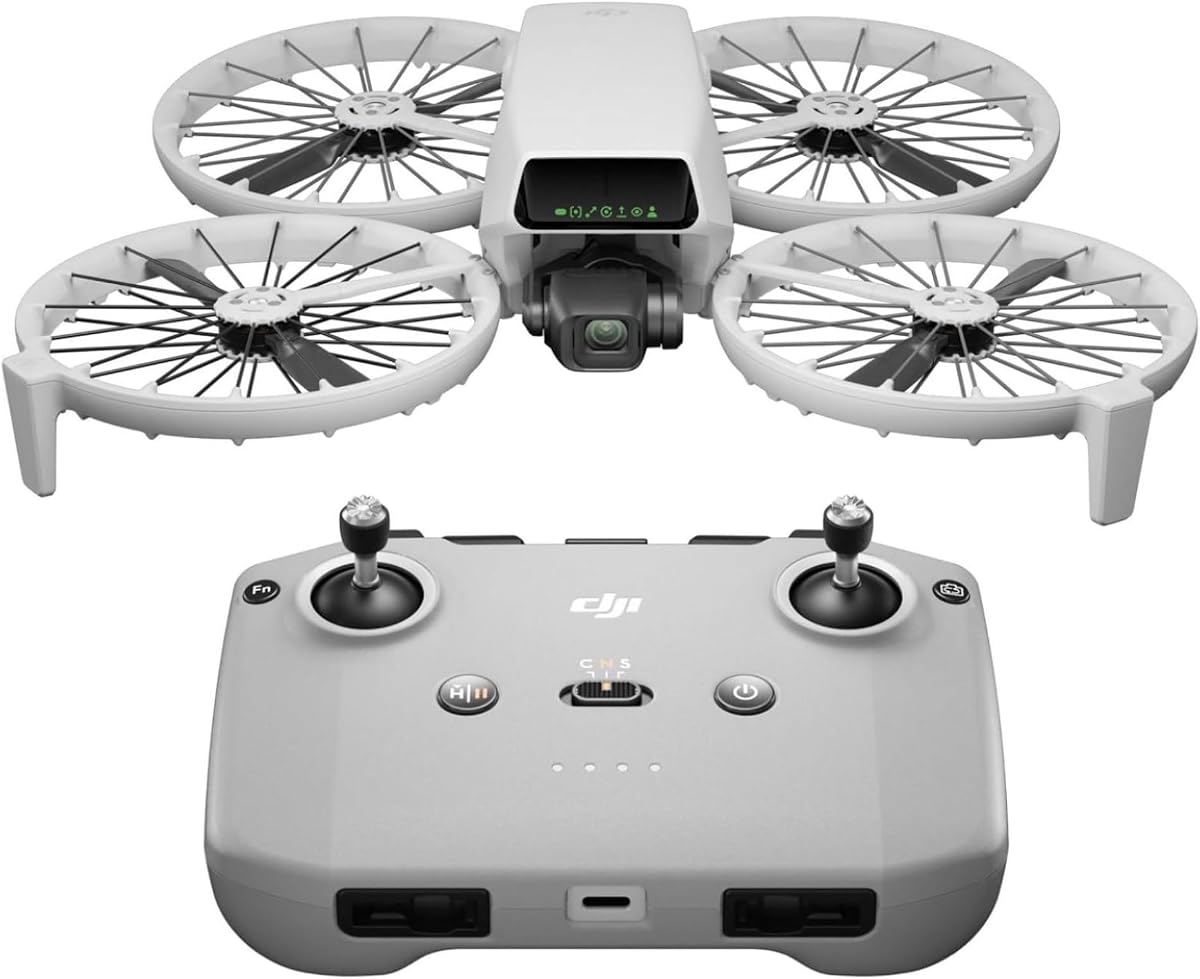
The DJI Mini 4K is a compelling all-around choice for travelers and first-time drone buyers who want a genuinely portable aircraft without giving up a stabilized 4K camera. It carries a 4.5 rating and weighs under 249 grams, placing it within the compact category commonly favored for travel. Its main appeal is the balance between a small folding design, a three-axis gimbal, intelligent flight features, and up to 31 minutes of flight time on the base battery configuration.
We may earn a commission when you buy through this link, at no additional cost to you.
The camera system records 4K ultra HD footage, while the three-axis gimbal helps smooth out movement and small corrections during flight. QuickShots automate Helix, Dronie, Rocket, Circle, and Boomerang-style movements, giving beginners a direct way to produce polished-looking clips without manually choreographing every flight path. GPS Return to Home, stable hovering, one-tap takeoff and landing, and in-app learning resources make the aircraft approachable while retaining useful safeguards.
Its primary limitation is the absence of the sophisticated obstacle sensing found in newer Mini 5 Pro listings. That means the pilot must pay particularly close attention to trees, wires, buildings, and other surroundings. The app note is also worth considering: the product information says the DJI Fly app has been removed from Google Play because of a platform compatibility issue and directs buyers to download the latest version through DJI's official website.
The Mini 4K is best for vacationers, beginners, and buyers who want dependable aerial video in a small package. It may be less ideal for a pilot who regularly flies at night or needs automatic subject tracking and omnidirectional detection. Even so, its balance of imaging, stabilization, intelligent modes, and low carrying burden makes it an excellent entry point into lightweight DJI flying.
The under-249-gram body and folding design reduce the space required in a day bag, while the stabilized 4K camera is capable of producing more polished footage than a casual phone snapshot. QuickShots add visual variety without demanding advanced stick control.
Return to Home, stable hover, one-tap controls, and app-based learning resources shorten the learning curve. Because advanced obstacle detection is not listed, new pilots should still maintain a clear flight path and avoid confined environments.
We may earn a commission when you buy through this link, at no additional cost to you.
The DJI Mini 5 Pro is the strongest overall choice for a buyer who wants flagship-style imaging and safety technology in a remarkably portable package. It has a 4.4 rating, an approximately 249.9-gram weight, and a folding palm-sized design. Its one-inch CMOS sensor records 4K/60fps HDR video, while a 42 GB internal storage area offers a convenient alternative to relying entirely on removable memory cards.
We may earn a commission when you buy through this link, at no additional cost to you.
The gimbal can rotate 225 degrees and supports true vertical filming, which is especially useful for social content. Omnidirectional obstacle sensing combines forward-facing LiDAR with vision sensors, adding valuable detection coverage for Return to Home and night operations when local rules permit. Upgraded ActiveTrack 360 provides customizable tracking modes and enhanced stability, making the drone well suited to following active subjects such as cyclists.
This is not merely a Mini-series flight upgrade. The larger sensor, flexible gimbal, internal storage, and obstacle detection create a more complete creative tool. The trade-off is that this standard package includes only one battery and the RC-N3 controller, so pilots who regularly work away from an outlet may prefer a larger battery bundle. The information also notes that DJI Fly has been removed from Google Play and should be obtained from DJI's official website.
Choose the Mini 5 Pro if you want high-quality 4K footage, vertical-ready framing, reliable tracking, and stronger obstacle awareness without moving to a much larger aircraft. It is ideal for content creators, travel shooters, and careful beginners who value the combination of compact dimensions and advanced functionality.
The one-inch CMOS sensor is the Mini 5 Pro's defining feature, providing 4K/60fps HDR capture with a 225-degree gimbal and true vertical framing. It is a meaningful step up for creators who want more detail and creative framing without carrying a large drone.
Omnidirectional sensing, forward-facing LiDAR, and ActiveTrack 360 add useful protection and automation. They do not replace pilot judgment, but they can provide better information than models without advanced detection systems.
We may earn a commission when you buy through this link, at no additional cost to you.
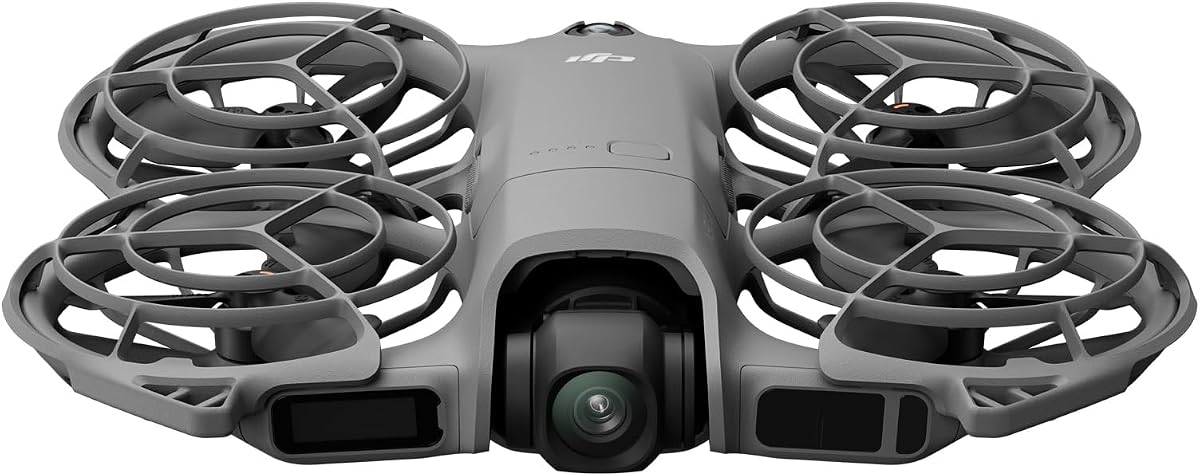
The DJI Neo 2 stands apart as one of the smallest and lightest choices in this guide, weighing 151 grams and earning the highest listed rating among the included products. It is built for spontaneous shooting, social videos, and travelers who would rather carry a small aircraft than manage a larger folding drone. The standard configuration is drone only, which means buyers need to consider the required control setup separately.
We may earn a commission when you buy through this link, at no additional cost to you.
Palm takeoff and landing make launching feel approachable, while gesture control provides a hands-free way to begin certain capture actions. ActiveTrack keeps a selected subject in frame, and compatibility with Apple Watch allows users to view the live feed, check flight status, or use voice control for tracking adjustments. SelfieShot streamlines quick selfie-style captures, and full-coverage propeller guards improve protection around people and obstacles.
Despite its tiny size, the Neo 2 includes omnidirectional obstacle sensing and 4K image capture, making it more than a novelty. The trade-off is that the product information does not describe a three-axis gimbal or the same one-inch imaging system found in the Mini 5 Pro. It is therefore better suited to convenient social content and active tracking than to creators whose priority is maximum image quality and flexible low-angle cinematography.
The Neo 2 is a compelling option for casual users, families, and short-video creators who value effortless operation above all else. Check the exact controller and accessories needed for your preferred flying style, obtain the current DJI Fly app from the official site, and confirm local requirements before using the aircraft outdoors.
At 151 grams, the Neo 2 is one of the easiest choices to carry for an entire day. Its compact frame and full-coverage propeller guards also make it more approachable for flights around people, provided the pilot observes local safety rules.
ActiveTrack, palm operations, gestures, and SelfieShot reduce the number of steps needed to create social-ready footage. Apple Watch support extends the live view and control options, although the drone-only package requires careful accessory planning.
We may earn a commission when you buy through this link, at no additional cost to you.
The original DJI Neo is built around simplicity. At 135 grams, it is the lightest aircraft in this comparison, and its controller-free design makes it possible to launch from a palm and fly without carrying a conventional remote. It has a 4.4 rating and is especially relevant to beginners, travelers, and creators who want automatic tracking and QuickShots without a complicated piloting setup.
We may earn a commission when you buy through this link, at no additional cost to you.
Subject tracking keeps a person or selected activity centered, while eight QuickShots modes help users create polished movements with little manual input. Video can also be captured at 4K ultra HD with DJI stabilization and level-four wind resistance. Full-coverage propeller guards offer a reassuring visual barrier and useful protection during close-range recreational flights.
The product supports controller-free flight, English or Chinese voice control, a mobile app, and an RC controller. That flexibility is useful, but activation is required in DJI Fly, and the supplied information says the app is no longer available through Google Play because of a compatibility issue. Buyers should download the latest version from DJI's official website before their first flight.
The Neo is best for casual social content, family gatherings, and users who prioritize mobility and approachability. It is less suitable for demanding professional imaging or long commercial sessions because its listed camera and flight specifications are more modest. Even so, its combination of palm launch, tracking, automated shots, and 135-gram weight remains exceptionally practical.
Palm takeoff and controller-free operation remove several barriers for casual users. A smartphone app or optional RC provides alternative control paths, so the aircraft can suit both quick social clips and more deliberate flying.
Subject tracking and eight QuickShots modes simplify common social-video movements. The 4K stabilized camera helps produce clean results, while the prop guards provide extra protection around people.
We may earn a commission when you buy through this link, at no additional cost to you.
This DJI Mini 5 Pro Fly More Combo is the most complete lightweight option in the guide, pairing the Mini 5 Pro platform with four batteries, the RC 2 controller, a charging hub, spare propellers, storage, and several travel accessories. It has a 4.4 rating and is aimed at creators who want the camera, safety, and tracking performance of the Mini 5 Pro without assembling every component separately.
We may earn a commission when you buy through this link, at no additional cost to you.
The one-inch CMOS sensor supports 4K/60fps HDR video, 50 MP stills, vibrant 10-bit color with D-Log M and HLG support, and a wide f/1.8 lens. True Vertical Shooting and 225-degree gimbal rotation provide flexible framing for social media. Omnidirectional obstacle sensing combines vision systems with forward-facing LiDAR, while ActiveTrack 360 is designed for stable subject tracking during movement such as cycling.
The advantage over the standard Mini 5 Pro is operational rather than photographic. Four intelligent flight batteries and a two-way charging hub support longer sessions, while the RC 2's integrated display reduces reliance on a phone screen. The listed accessories add a backpack, memory card, landing pad, and a 26-month protection pack, making the package particularly useful for buyers building a travel kit.
Those extras also create the main trade-off: the full bundle occupies more luggage space than a single-aircraft package. Nevertheless, this is an excellent premium choice for a content creator who wants a compact drone, dependable batteries, a screen-equipped controller, and high-quality optics in one coordinated setup.
Four batteries, a two-way charging hub, spare propellers, a memory card, backpack, and landing pad cover the most common needs. The RC 2 display also makes the package more self-contained for travel and extended shooting days.
The one-inch sensor, 50 MP stills, HDR video, and professional color options give the bundle broad creative potential. LiDAR-assisted omnidirectional sensing and ActiveTrack 360 add practical support for safer, more automated filming.
We may earn a commission when you buy through this link, at no additional cost to you.
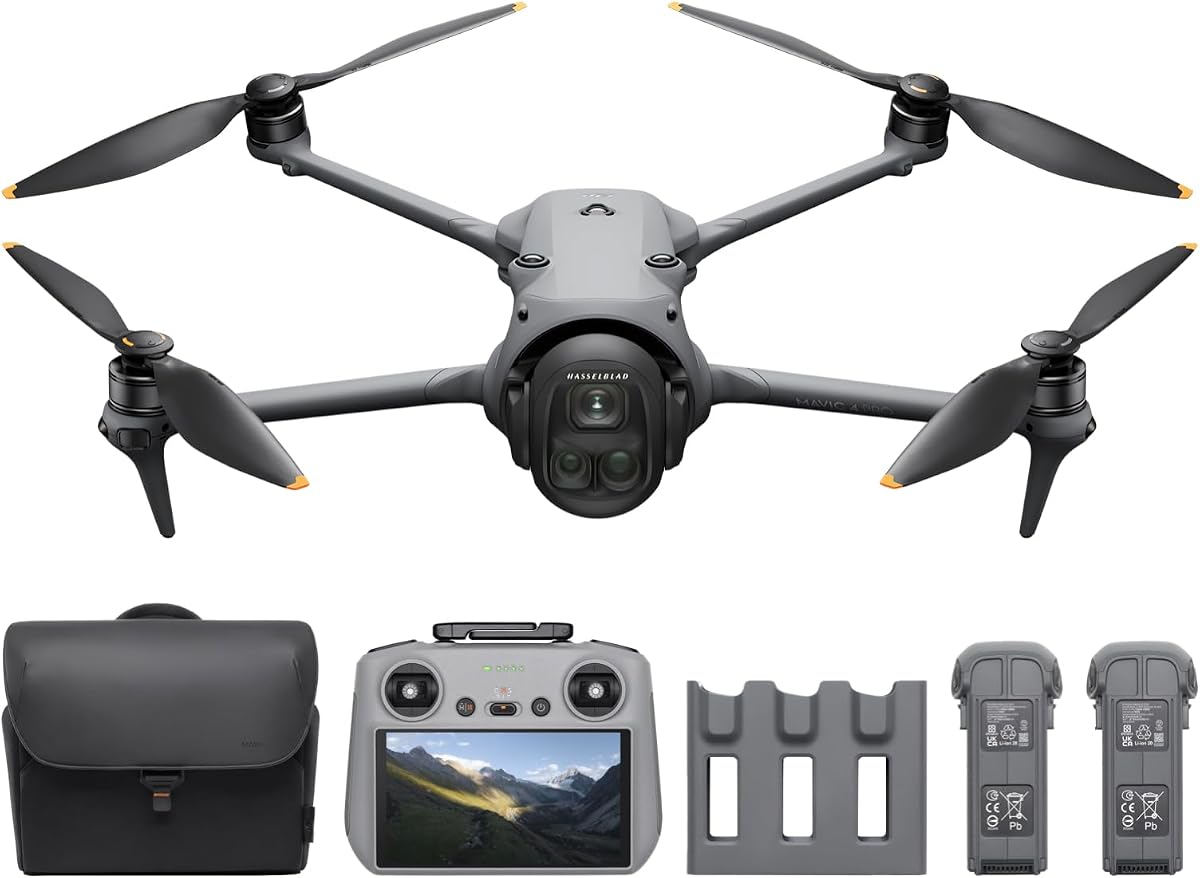
The DJI Mavic 4 Pro Fly More Combo is the flagship choice in this lineup, bringing a 100 MP Hasselblad main camera, multiple telephoto options, long-range transmission, and an extended professional flight package. Although it belongs in a guide to lightweight DJI drones because it remains a relatively portable folding system, it offers a very different proposition from the sub-250-gram Mini and Neo models.
We may earn a commission when you buy through this link, at no additional cost to you.
The main camera captures 6K/60fps HDR video, while dual tele cameras provide detailed zoom perspectives for professional aerial photography. A 360-degree Infinity Gimbal adds dynamic camera movement, and the three-camera arrangement allows a creator to switch between wide and telephoto compositions without changing aircraft. The 7-inch rotatable high-brightness RC Pro 2 display provides a large control and monitoring interface that folds for transport.
Safety and operational specifications are aimed at advanced work. Nightscape omnidirectional obstacle sensing can detect obstacles at 0.1 lux, the O4+ system supports 30-kilometer, 18.6-mile video transmission, and the listed maximum flight time reaches 51 minutes. The combo includes the aircraft, RC 2, three batteries, a charging hub, and additional components for extended shooting.
The trade-off is size and complexity. Buyers focused on the smallest possible travel drone should favor the Mini 4K, Mini 5 Pro, or Neo 2. Those who need the best optics, zoom versatility, professional controls, and long-duration operation will find the Mavic 4 Pro substantially more capable. It is a strong choice for commercial creators, advanced hobbyists, and established production workflows.
The 100 MP Hasselblad main camera records 6K/60fps HDR footage, while the dual tele cameras add detail and compressed perspectives. This flexibility reduces the need to reposition the aircraft for every type of shot.
A 51-minute listed flight time, three batteries, a charging hub, and long-range O4+ transmission support professional sessions. The bright folding display helps manage framing and flight information without depending entirely on a phone.
We may earn a commission when you buy through this link, at no additional cost to you.
The DJI Air 3S Fly More Combo is a strong travel-oriented option for pilots who want more imaging flexibility and flight capability than a compact Mini drone offers. It has a 4.5 rating, a one-inch CMOS primary camera, a dual-camera system, three intelligent flight batteries, and a package built for extended travel shoots.
We may earn a commission when you buy through this link, at no additional cost to you.
The primary camera records 4K/60fps HDR video with up to 14 stops of dynamic range, which is useful for retaining detail in bright skies and shadowed landscapes. Wide and medium telephoto panorama modes add further composition choices. Forward-facing LiDAR and additional sensors support nightscape omnidirectional obstacle sensing, while upgraded Return to Home algorithms can select a better route even when the GPS signal is weak.
The listed maximum flight time is 45 minutes, and video transmission extends to 20 kilometers, giving pilots more room to scout and capture distant scenes. The bundle includes the RC-N3 controller, three batteries, one charging hub, an ND filter set, and other components. A separate DJI 65W Portable Charger is recommended because the battery charger is not included.
Compared with the Mini 5 Pro, the Air 3S provides greater camera, range, and endurance options but occupies more space. It is therefore best for creators who still want travel portability while retaining advanced features. Anyone choosing it should budget for the missing charger and verify that its larger kit fits the intended travel setup.
The one-inch primary camera and 4K/60fps HDR recording preserve more detail across bright and dark areas. Panorama options and a dual-camera system make it easier to vary framing without carrying a separate aircraft.
A 45-minute maximum flight time and smart Return to Home provide useful margins for scouting distant locations. The three-battery configuration reduces downtime, while the recommended separate charger needs to be included in the purchase plan.
We may earn a commission when you buy through this link, at no additional cost to you.
The DJI Mini 3 bundle combines a folding, under-249-gram aircraft with a broad collection of travel accessories. It includes the DJI RC remote, a 64 GB microSD card, sling backpack, landing pad, card reader, cleaning kit, and memory card wallet. That makes it appealing to a first-time owner who wants the supporting equipment needed for field use rather than only the aircraft and controller.
We may earn a commission when you buy through this link, at no additional cost to you.
The 1/1.3-inch CMOS sensor records 4K HDR video and is described as producing sharp imagery with accurate color and balanced highlights and shadows. Maximum flight time reaches 38 minutes, and video transmission is listed up to 10 kilometers. The folding body fits easily into a bag for hiking, beach, city, and weekend travel, while the included landing pad provides a designated area for takeoff and recovery.
Its 3.8 rating is the lowest in the guide, and it does not offer the LiDAR-assisted omnidirectional sensing or ActiveTrack 360 functionality of the Mini 5 Pro. The RC remote also places it below the newest models in control sophistication. Prospective buyers should compare the bundle's accessories with the benefits of a newer Mini 5 Pro rather than assuming extra bundled items necessarily create a better overall product.
The Mini 3 bundle is a sensible choice for travelers who value accessories, storage, and up to 38 minutes of flight time in a compact package. It is less compelling for advanced safety, subject tracking, or higher-end image work. Its strongest appeal is the convenience of a ready-to-travel kit.
The included card, reader, wallet, backpack, landing pad, and cleaning kit cover many first-flight needs. This convenience is especially helpful for new owners who may not yet know which supporting equipment they require.
The 1/1.3-inch sensor, 4K HDR recording, and 38-minute flight time provide solid capability for travel footage. Its lower rating and lack of the newest Mini safety systems make it less attractive for demanding automated operations.
We may earn a commission when you buy through this link, at no additional cost to you.
This DJI Mini 5 Pro configuration pairs the compact one-inch Mini 5 Pro aircraft with the RC2 controller, giving buyers a screen-equipped control solution. The listing has no customer rating yet, so it does not offer the same established review history as the other products in the guide. Its specifications nevertheless identify it as a highly capable lightweight drone for serious travel and content work.
We may earn a commission when you buy through this link, at no additional cost to you.
The one-inch CMOS sensor records 4K/60fps HDR video, and the gimbal supports true vertical filming plus 225 degrees of roll rotation. Forty-two gigabytes of internal storage reduces dependence on removable memory during shorter shoots. Forward-facing LiDAR and vision sensors provide omnidirectional obstacle sensing, while ActiveTrack 360 is designed to maintain stable tracking of moving subjects.
The principal advantage over the standard Mini 5 Pro package is its controller. The RC2's integrated display can make framing, navigation, and flight review more convenient than using a phone, especially in bright outdoor conditions. This listing does not provide a battery count, so buyers should verify the exact package contents before ordering. No customer rating is supplied, which is another reason to inspect the current listing carefully.
Choose this configuration if the screen-equipped RC2 and 42 GB of internal storage matter more than battery quantity. It offers the same broad imaging and safety advantages as the Mini 5 Pro family, but current feedback is limited. It is best suited to creators who value a compact aircraft and a dedicated display rather than a phone-based workflow.
The RC2 controller gives the pilot a purpose-built display for flight information and camera framing. That can be more convenient than a phone screen during extended travel or outdoor production work.
One-inch imaging, HDR recording, internal storage, a flexible gimbal, LiDAR-assisted sensing, and ActiveTrack 360 cover the essential needs of a modern lightweight content drone. Verify the battery configuration because it is not specified in the supplied listing.
We may earn a commission when you buy through this link, at no additional cost to you.
The DJI Flip is designed for creators who want an expressive, travel-friendly drone with strong automated video features. It weighs under 249 grams, carries a 4.4 rating, and combines a 1/1.3-inch CMOS camera with 4K/60fps HDR recording, three-axis gimbal stabilization, subject tracking, and up to 13 kilometers of video transmission.
We may earn a commission when you buy through this link, at no additional cost to you.
Palm takeoff makes spontaneous filming more convenient, while the gimbal helps preserve smooth motion during movement. A larger sensor captures more light than a basic compact camera, which helps produce clearer landscapes and portraits, particularly around sunrise and sunset. The listed flight time reaches 31 minutes, giving the aircraft a practical balance between endurance and portability.
Full-coverage propeller guards made from lightweight carbon fiber provide substantial protection around the propellers. They improve confidence for close-range recreational filming, although they do not make it appropriate to fly near people in any situation. The standard package includes the DJI Flip, RC-N3 controller, one Intelligent Flight Battery, and other components.
The Flip is a strong middle ground between a simple Neo and a more advanced Mini 5 Pro. It offers a better camera and more traditional flying control than the smallest models without moving into the Air 3S class. Choose it for social content, travel vlogs, family footage, and casual creative work, while noting the single-battery configuration and official-site app download.
The 1/1.3-inch sensor, three-axis gimbal, and 4K/60fps HDR mode produce detailed, stable footage. These features are particularly useful for handheld-style travel stories where sudden direction changes are common.
Palm takeoff reduces setup time, and subject tracking helps keep people or activities framed. The carbon-fiber prop guards add protection, but pilots should still maintain a safe distance and follow all local operating rules.
We may earn a commission when you buy through this link, at no additional cost to you.
The best lightweight DJI drone depends on how much you value total carrying weight, image quality, automated operation, battery endurance, and low-light confidence. A smaller aircraft is easier to pack, while a larger or more advanced system can provide stronger optics, transmission, and professional controls.
Portability is more than a single weight number. Consider the folded dimensions, whether the controller needs a separate screen or phone, the size of spare batteries, and whether the complete kit fits the bags you already carry. The DJI Neo at 135 grams and Neo 2 at 151 grams are the smallest aircraft here, while the Mini 4K, Mini 5 Pro, Mini 3, and Flip remain under 249 grams.
Choose the smallest model that can deliver the video quality and safety features you need. The tiniest aircraft wins for spontaneous trips, while a slightly larger system may be worthwhile if it includes a screen controller or better optics.
Resolution is only one part of image quality. Sensor size, HDR capability, color options, gimbal movement, and low-light performance can have a greater effect on real-world results. The Mini 4K and Neo models use straightforward 4K capture, the Mini 3 and Flip carry 1/1.3-inch sensors, the Mini 5 Pro uses a one-inch sensor, and the Air 3S also uses a one-inch primary camera.
For social content and occasional travel clips, 4K is usually sufficient. For cropping, low-light scenes, detailed landscapes, or more polished footage, favor the larger one-inch systems, and consider the Mavic 4 Pro when maximum resolution and telephoto options are priorities.
A stabilized gimbal reduces visible shake as the aircraft hovers, turns, or responds to wind. The Mini 4K and Flip explicitly include three-axis gimbal stabilization, while the Mavic 4 Pro offers a 360-degree Infinity Gimbal. The Mini 5 Pro supports true vertical filming and 225 degrees of gimbal rotation for flexible framing.
If smooth, repeatable video is important, place gimbal capability near the top of your decision. A high-resolution camera does not fully compensate for unstable movement, particularly when walking, panning, or filming close to a subject.
Obstacle sensing can provide valuable information about nearby objects, but it is not a guarantee of collision-free flight. The Mini 5 Pro and Air 3S use forward-facing LiDAR with additional sensors for omnidirectional detection, while the Neo 2 also lists omnidirectional obstacle sensing. The Mavic 4 Pro adds 0.1-lux Nightscape detection for low-light operations.
Advanced detection is worthwhile for travel, low-light, and complex environments. Regardless of the model, maintain visual awareness, avoid restricted areas, inspect the surroundings before launch, and never assume a sensor can detect every wire, branch, or surface.
Maximum flight time is only useful when the pilot manages battery reserve, weather, and return procedures. Listed endurance ranges from 31 minutes for the Mini 4K and Flip to 36 minutes for the Mini 5 Pro, 38 minutes for the Mini 3, 45 minutes for the Air 3S, and 51 minutes for the Mavic 4 Pro.
More batteries can be more valuable than a slightly longer single flight. The Mini 5 Pro Fly More Combo includes four batteries, the Air 3S includes three, and the Mavic 4 Pro bundle includes three. For one-battery listings, plan charging time and carry enough power for the entire session.
Video transmission distance helps with scouting and filming distant subjects, but legal requirements and environmental conditions can limit actual operations. The listed figures range from 10 kilometers for the Mini 3 to 13 kilometers for the Flip, 20 kilometers for the Air 3S, and 30 kilometers for the Mavic 4 Pro.
Match the controller to your workflow. A screen-equipped RC2 or RC Pro 2 can be convenient, while the RC-N1C and RC-N3 use a phone for monitoring. Voice control, gestures, Apple Watch support, and controller-free operation can make the Neo family particularly accessible.
QuickShots, ActiveTrack, subject tracking, and palm launch reduce the skill required for common social shots. The DJI Neo offers eight QuickShots modes, the Neo 2 adds gesture controls and SelfieShot, and the Mini 5 Pro includes ActiveTrack 360 with customizable modes for moving subjects.
Automation is useful for solo creators, but it still depends on a stable connection, a clear subject, and sufficient space. Keep the aircraft within a controllable area and be ready to cancel or override an automated maneuver.
Software availability can affect the first flight. The supplied listings state that DJI Fly has been removed from Google Play because of a platform compatibility issue and direct users to DJI's official website. Internal storage is another differentiator: the Mini 5 Pro includes 42 GB, while other drones may rely more heavily on microSD cards.
Confirm the app situation on your exact phone before purchase, then plan memory and charging needs. A bundle with a card, reader, landing pad, controller, and multiple batteries may offer better convenience for a new owner than a bare aircraft.
Before the first flight, read the current manual, install the latest DJI Fly app from the official website, fully charge the battery, update the aircraft and controller, and verify the propeller guards and propellers are secure. Check local airspace, registration, Remote ID, authorization, and operating requirements. Open the air in a clear, open area and complete a short practice flight before attempting complex shots.
Begin with a conservative altitude, maintain visual line of sight, and keep the aircraft away from people, trees, buildings, roads, power lines, and airports. Keep fingers clear of propellers even when the guards are installed, and do not rely on obstacle sensing as a substitute for situational awareness. Use return-to-home and the live flight-status display to manage battery reserve, especially in unfamiliar locations or changing wind.
After flying, power down the aircraft before removing the battery, clean the lens and gimbal with a soft dry cloth, and inspect propellers for chips or cracks. Store the aircraft and batteries in a dry, temperature-controlled place, and follow the battery guidance in the current manual. Periodically check for firmware updates, app notices, local rule changes, and recalls or service advisories before your next trip.
The DJI Neo is the lightest listed aircraft at 135 grams, followed by the DJI Neo 2 at 151 grams. Both are designed around portability, automated shooting, and quick operation. A lighter body is convenient, but camera capability, battery availability, controller style, and safety features still vary between them.
Yes. The supplied product information lists an approximate weight of 249.9 grams, plus a small tolerance for manufacturing variation. Its folding, palm-sized design and internal storage make it highly travel-friendly, although the RC2 controller and multiple batteries take more room than the controller-free Neo models.
Several listings state that aircraft under 249 grams do not require FAA registration or Remote ID for recreational use. Requirements can differ for commercial operations, modified aircraft, specific locations, and rule changes. Check the FAA and other relevant aviation authorities before every flight rather than relying solely on a product listing.
The supplied listings state that DJI Fly has been removed from Google Play because of a platform compatibility issue. Buyers are directed to DJI's official website to obtain the latest app and user manual. Download it before the planned flight and confirm that the current version supports your phone and operating system.
The DJI Neo and Neo 2 are the simplest tracking-oriented options, using palm launch, gestures, and automated subject following. The Mini 5 Pro adds more advanced ActiveTrack 360 behavior and a much stronger one-inch imaging system, making it the better choice when tracking quality and final video resolution matter more than minimal size.
No. Omni-directional sensing and LiDAR improve the aircraft's awareness of nearby objects, but they cannot identify every hazard or guarantee a clear path. Pilots must watch the live feed, maintain suitable clearance, avoid flying around people and obstacles, and follow the limitations in the official manual.
Extra batteries are valuable when a session extends beyond one charge, particularly for travel and commercial work. The Mini 5 Pro Fly More Combo includes four batteries, while the Air 3S and Mavic 4 Pro bundles include three. A one-battery configuration can still work for short outings, but charging time and power availability should be planned.
Among the more compact choices, the Mini 5 Pro provides the strongest combination of one-inch imaging, HDR video, LiDAR, vision sensors, and nightscape obstacle sensing. The Air 3S and Mavic 4 Pro offer additional low-light capabilities but are larger systems. Always confirm local night-flight rules and use an appropriately lit, unobstructed area.
The DJI Mini 4K is the best-value pick for beginners and travelers who want a stabilized 4K camera, QuickShots, straightforward controls, and a sub-249-gram body. The DJI Mini 5 Pro is the most balanced recommendation, combining a one-inch camera, 42 GB internal storage, flexible gimbal movement, obstacle sensing, and advanced tracking while remaining compact.
Prioritize according to the footage you need. Choose the Neo or Neo 2 for minimal weight and effortless automated operation, the Flip for social content with a traditional controller, the Air 3S for advanced travel imaging, and the Mavic 4 Pro for professional telephoto work and longer sessions. Always include batteries, a compatible charging solution, app setup, and local legal requirements in the total ownership plan.
Product listings, included bundles, app versions, and availability can change, so review the current Amazon details before ordering. Check the aircraft weight, controller, battery count, camera specifications, transmission limits, and safety features, and verify the latest local aviation rules for the exact place and time of your flight.