
K9DP 100W BCI Filter
5.0Editor score
100W tested capacity
AM broadcast rejection
Portable four-inch design
SO-239 connectors
Explore the best Ham Radio Bandpass Filters, comparing frequency coverage, power handling, connectors, isolation, portability, and receiver protection.
Ham Radio Bandpass Filters help stations separate wanted signals from nearby interference before that energy reaches sensitive radio equipment. A useful filter must match the target band, support the transmitter’s output, and connect cleanly to the station. Performance, protection, and practical installation matter as much as the advertised frequency.
This guide compares ten filters using the specifications and product information supplied for each model. It covers HF, shortwave, 40-meter, 20-meter, and higher-frequency applications while examining power handling, connector types, bandwidth, isolation, portability, and intended operating environments. The goal is to clarify which option fits each station rather than treating every filter as interchangeable.
Each review explains the product’s most useful qualities, limitations, and likely audience. The list includes dedicated single-band filters, a multiband filter bank, a compact receiver-protection filter, and several models designed for substantial HF power. Product availability and prices can change, so readers should verify current specifications, connector details, and compatibility before purchasing.
5.0Editor score

5.0Editor score

4.8Editor score
The table below compares all ten filters by their primary band, handling level, connector arrangement, and most notable application. It provides a quick way to narrow the field before considering the detailed reviews.

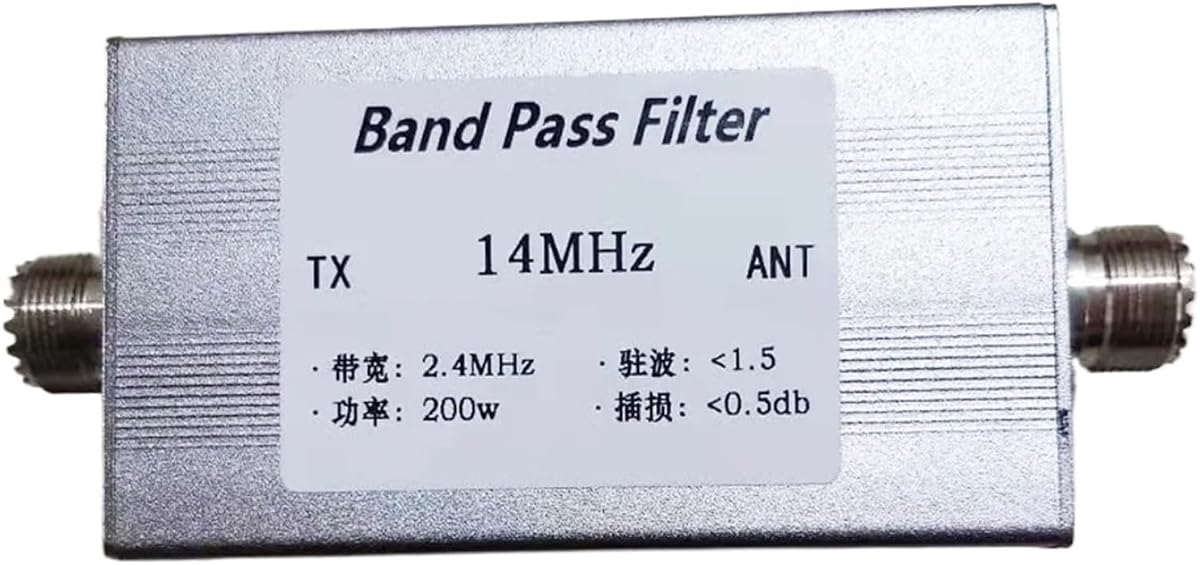


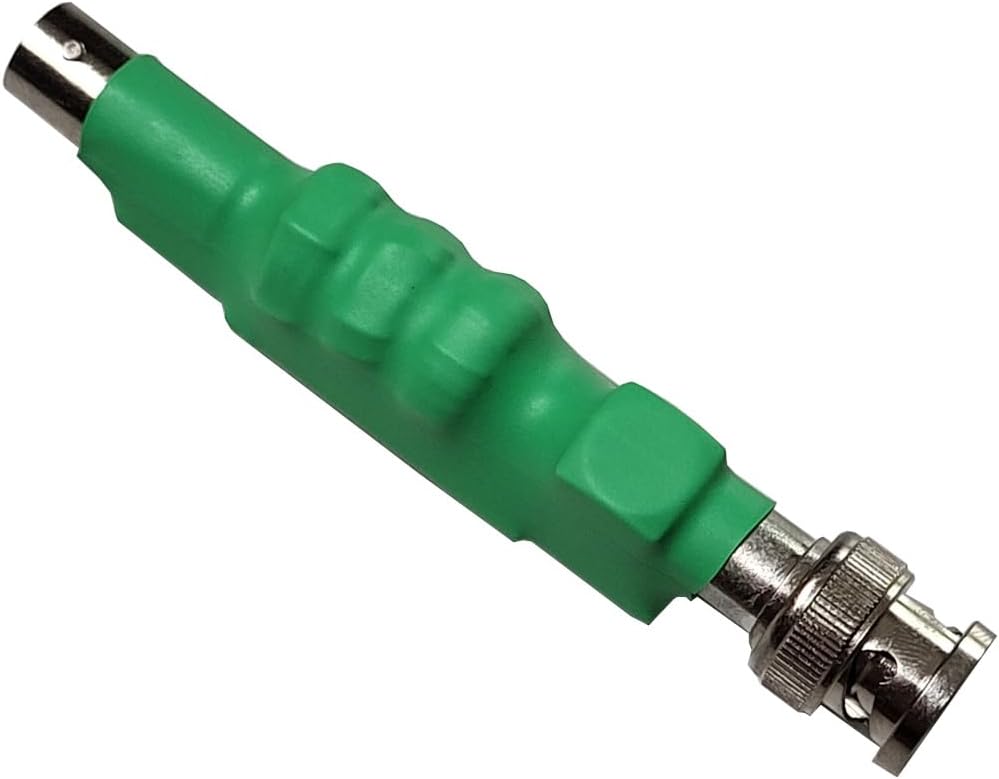
This 14MHz LC bandpass filter combines a 200W power rating with a focused high-isolation design. Its 5.0 rating also makes it one of the strongest-reviewed products in this guide. The filter is aimed at demanding shortwave stations, including contest and other high-power operating environments where unwanted signals need to be rejected effectively.
We may earn a commission when you buy through this link, at no additional cost to you.
The LC circuit is central to the product’s appeal. Rather than offering a broad selection of bands, it concentrates on the 14MHz range, helping the operator separate wanted signals from out-of-band energy. The M female connector provides a secure station connection, while the stated 200W capability allows use with more demanding transmitters than lightweight or low-power alternatives.
The main trade-off is specialization. This is not a portable QRP filter, nor does it offer the multi-band convenience of the Nooelec module. Operators must also confirm that the M female interface suits their cables and equipment. Despite those limitations, the combination of power handling, targeted filtering, and a strong user rating makes this a compelling choice for a 14MHz station.
Buy this filter when you operate 14MHz at substantial power and want a dedicated high-isolation LC filter. It is especially relevant for contest work, crowded band conditions, and installations where a single reliable 14MHz filter is more useful than a general-purpose accessory. Check connector and system compatibility before ordering.
The stated 200W handling makes the filter more appropriate for conventional high-power HF stations than for lightweight portable setups. That capacity allows the filter to serve demanding shortwave and contest applications when correctly matched to the transmitter and feed-line system.
The narrow, LC-based bandpass design is intended to pass the wanted 14MHz activity while improving isolation from unwanted signals. That focus makes it a sensible dedicated choice for operators who primarily work one HF band.
We may earn a commission when you buy through this link, at no additional cost to you.
The Nooelec Ham Filter Bank Barebones is a multiband module containing five separate bandpass filters and a passthrough. It covers the 2-meter, 1.25-meter, 70-centimeter, 33-centimeter, and 23-centimeter ham bands. Its 4.1 rating reflects a practical option for stations that need several upper-frequency paths in one module.
We may earn a commission when you buy through this link, at no additional cost to you.
The defined passbands include 144–148MHz, 220–225MHz, 420–450MHz, 902–928MHz, and 1240–1300MHz. A pushbutton applies 4.5V bias-tee voltage to the input SMA, allowing integration with bias-tee-powered equipment. The filtering is presented as useful for ham communication, selective signal processing, and transceiver protection.
This is a more specialized product than a conventional HF antenna filter, and its band coverage centers on common ISM-related amateur allocations. It does not provide the 200W handling or narrow HF-band selection offered by several dedicated filters in this guide. Buyers should therefore treat it as a flexible upper-band module rather than a general-purpose HF solution.
The bank is a strong option for portable, VHF, UHF, or microwave-oriented stations that work across several covered allocations and value one configurable module. Confirm the selected passband, connector arrangement, and bias requirements against your radio system before purchase.
Combining five filters and a passthrough reduces the need to carry separate modules for the listed 2-meter through 23-centimeter allocations. The result is a compact selection point for stations working across widely separated amateur bands.
The pushbutton bias control applies 4.5V to the input SMA for compatible devices. This is useful for installations involving powered accessories, although operators should verify polarity and system requirements before enabling it.
We may earn a commission when you buy through this link, at no additional cost to you.
This high-isolation bandpass filter is available for seven HF choices: 7, 14, 18, 21, 24, 27.5, and 28MHz. The supplied listing identifies a 14MHz configuration, while also noting that the interface can be customized. No customer rating is available, so the stated specifications and intended use are the main basis for evaluation.
We may earn a commission when you buy through this link, at no additional cost to you.
The filter handles up to 200W across SSB, CW, AM, FM, and FSK operation. Its compact enclosure measures 140 by 53 by 38mm and weighs approximately 255–245 grams. Those dimensions make it more manageable than a large rack-style filter while still supporting the power requirements of a serious HF station.
The major ambiguity is configurability. The listing says the SL16-F, or stand M, interface can be tailored for higher power demands, but the supplied information does not provide detailed insertion-loss or isolation curves. Operators should establish the exact configuration, connector, and target band with the seller before purchase.
This filter is worth considering for an HF station that may need several conventional band choices or wants a compact 200W-capable design. It is less convincing for buyers who need extensive published performance data or a ready-made connection for a particular radio. Confirm the final configuration before committing.
Coverage from 7MHz through 28MHz spans several widely used amateur allocations. The available configurations make this product more adaptable than a single-band filter, provided the correct band and interface are selected.
A stated 200W capacity combined with a relatively small enclosure balances station capability and portability. The compact dimensions can make the filter easier to integrate than a larger dedicated high-power unit.
We may earn a commission when you buy through this link, at no additional cost to you.
This dedicated 40-meter bandpass filter is centered at 7MHz, handles up to 200W, and carries a 5.0 rating. It is a straightforward answer for operators who want focused filtering for the 40-meter band rather than a broad collection of selectable paths.
We may earn a commission when you buy through this link, at no additional cost to you.
The stated features center on improving receiver sensitivity and reducing out-of-band noise. SSB, CW, AM, FM, and FSK operation are supported within the 200W power rating. A Type-N female connector provides a robust connection, and the anodized aluminum casing is designed for a durable, permanent station installation.
As a single-band device, it cannot replace a filter bank for a station that regularly changes between multiple HF bands. The Type-N connector may also require a suitable cable or adapter in stations built around SO-239 equipment. On the other hand, those very constraints make the product easier to understand and potentially more predictable to deploy on 40 meters.
Choose this filter for a high-power 40-meter station that values a dedicated unit, robust construction, and straightforward high-level signal selection. It is best suited to operators who already know their feed-line and connector arrangement and want filtering purpose-built for 7MHz.
Targeting the 7MHz band allows the filter to concentrate on one important amateur allocation. That specificity is useful when the operating goal is reducing out-of-band noise and improving the usable signal presented to the receiver.
The anodized aluminum enclosure is suited to a fixed installation, while the Type-N female connection supports a secure cable interface. Together, they present a practical option for stations operating at the filter’s stated 200W level.
We may earn a commission when you buy through this link, at no additional cost to you.
The BPF-3.8-200w is a dedicated bandpass filter for 3.8MHz shortwave communication. Its model designation indicates a 200W version, but the supplied product information gives little beyond the target frequency and general filtering role. No customer rating is available for this listing.
We may earn a commission when you buy through this link, at no additional cost to you.
A filter for 3.8MHz can be attractive to operators with a specific requirement around that frequency. The 200W designation suggests it is aimed beyond very low-power work, while the dedicated shortwave format may reduce the need for broader, multi-band filtering equipment.
The lack of connector, insertion-loss, isolation, and supported-mode information is a meaningful drawback. Without those details, it is difficult to compare the filter confidently with better-documented models or verify whether it will integrate with a particular station. Its selection also requires a clearly defined 3.8MHz operating need.
This product is best considered when the buyer already knows that 3.8MHz is the required band and can confirm the missing installation details. For a general HF station, a filter with more complete published specifications may be a safer choice.
The filter is built around 3.8MHz rather than a broader collection of amateur bands. That makes it a specialized option for stations with a definite operating requirement at that frequency.
Because the supplied information omits several key specifications, buyers should ask about connector type, passband limits, insertion loss, and isolation. Those details determine whether the filter is truly compatible with the planned station.
We may earn a commission when you buy through this link, at no additional cost to you.
The JMT filter is a compact SMA-connected product offered in 868MHz, 915MHz, 433MHz, and 1200MHz configurations. The selected listing is for 915MHz, with a stated 902–928MHz bandwidth and a maximum load of 1W. Its 4.0 rating reflects a useful low-power option rather than a high-power station filter.
We may earn a commission when you buy through this link, at no additional cost to you.
The product uses imported SMD components and a shielded design to provide passband behavior and out-of-band suppression. The other choices include an 868MHz filter for sound meters, a 433MHz filter for mini VTX use, and a 1200MHz low-pass filter with a 5–1200MHz pass-through range.
The low power limit is the central consideration. These are not substitutes for a 200W HF filter, and the 1200MHz selection does not have the same bandpass function as the other frequency options. Although all use an SMA interface, buyers should also confirm whether male or female termination is required by the selected configuration.
This filter is best for low-power receiver work, RFID reception, compact radio projects, or signal cleanup where the relevant frequency option matches the system. It is less relevant to transmitter-heavy HF stations, where substantially greater power capacity is required.
The shielded construction and SMD components are intended to improve stability and suppress out-of-band energy. This makes the filter relevant to compact receiver systems that need more selectivity than a simple connection provides.
The listed options serve different functions: bandpass behavior for several frequencies and low-pass behavior for the 1200MHz version. Selecting the right variant is essential for achieving the intended signal path.
We may earn a commission when you buy through this link, at no additional cost to you.
This 10MHz bandpass filter offers a 7–11MHz bandwidth and insertion loss better than 1.3dB. Its 4.8 rating makes it one of the most favorably reviewed products in the guide. It is a compact, single-filter option for stations seeking efficient signal passage around the 10MHz region.
We may earn a commission when you buy through this link, at no additional cost to you.
The product uses an SMA female male-thread interface and emphasizes low insertion loss. For a receiver or low-power setup, preserving as much of the wanted signal as possible is important. The simple single-piece format also makes the filter easier to integrate than a multi-band assembly.
There is no stated high-power capacity, so it should not be treated as a substitute for the 200W filters listed here. Its 7–11MHz bandwidth is also broader than a sharply selected single amateur allocation, although that range may be useful for receiving across several signals. Station owners should consider the intended operating mode and available power before choosing it.
This is a compelling budget-oriented filter for low-power reception, compact experimental stations, and users who prioritize low insertion loss over high-power capability. It is best suited to installations that can comfortably use SMA connections and do not require a 200W signal path.
The stated insertion loss of better than 1.3dB is the defining feature of this filter. That low-loss approach is particularly relevant to receiving systems where preserving weak signals is more important than supporting a high-power transmitter.
With a 7–11MHz bandwidth centered on the 10MHz region, the filter provides a simple way to improve frequency selection in a compact setup. Its single-unit design avoids the complexity of a configurable filter bank.
We may earn a commission when you buy through this link, at no additional cost to you.
The K9DP 100W BCI Filter is designed for HF shortwave radios and receivers suffering from AM broadcast interference and front-end overload. It has a 5.0 rating, measures four inches in length, weighs 78 grams, and uses SO-239 connectors on both ends. It is especially appealing for portable activities such as POTA, SOTA, and Field Day.
We may earn a commission when you buy through this link, at no additional cost to you.
The filter was tested up to 100W with SSB, CW, and digital FT8. High-quality C0G capacitors and Micrometals toroids form part of the design, while the unit is fully assembled and tested in the USA by K9DP. These details make it more purpose-built for real HF operation than a generic low-power module.
Its maximum tested power is below the 200W offered by several dedicated HF filters, and its central purpose is BCI rejection rather than generic selection among several bands. That narrow mission is actually an advantage for operators whose primary problem is strong local AM interference overwhelming the receiver. It may not be the right general-purpose choice for every station.
This is the leading recommendation for portable HF operators facing AM broadcast interference. Its low weight, familiar SO-239 connectors, substantial 100W test coverage, and focused BCI purpose give it a clear place in a field station. Operators above 100W should choose a higher-capacity filter.
The filter targets the condition in which nearby AM broadcast energy overloads an HF receiver’s sensitive front end. Addressing that problem directly can improve the station’s ability to hear intended shortwave signals.
At four inches and 78 grams, the filter is easy to carry for POTA, SOTA, or Field Day. SO-239 connectors also align with common amateur radio station hardware, reducing the need for unusual interface arrangements.
We may earn a commission when you buy through this link, at no additional cost to you.
The K9DP QRP 20 Meter Portable Bandpass Filter is a compact option made in the USA for low-power 20-meter stations. It has a 4.8 rating, measures 3.7 inches in length, weighs only 35 grams, and uses male and female BNC connectors. The design is expressly suited to POTA, SOTA, and Field Day.
We may earn a commission when you buy through this link, at no additional cost to you.
The filter is intended to reject interference from nearby stations operating on different bands, giving the receiver a cleaner view of 20-meter activity. It was tested up to 20 watts with SSB, CW, and digital FT8. High-quality C0G capacitors and Micrometals toroids support the compact, purpose-built construction.
The 20W ceiling is the defining limit. It cannot safely serve a conventional high-power station, and even within QRP work, operators should respect the tested power and mode range. Its single-band focus also means it does not replace a multiband solution for someone changing bands frequently.
For a portable QRP operator on 20 meters, this filter is a particularly attractive balance of size, weight, and selectivity. Its BNC connectors are convenient for lightweight station builds, while the tested operating modes cover common portable activity. It is not intended for high-power use.
The 3.7-inch length and 35-gram weight are ideal for operators who carry a radio into parks, summits, or field locations. A compact filter is easier to integrate into a small station than a full-sized high-power unit.
By targeting 20 meters, the filter helps reject signals from nearby bands while preserving the desired operating channel. It is particularly useful where crowded-band conditions make selectivity important during portable operation.
We may earn a commission when you buy through this link, at no additional cost to you.
This 7MHz bandpass filter is designed for the 40-meter ham radio band with a stated 200W power-handling capacity. It aims to improve receiver sensitivity and reduce out-of-band noise. No customer rating is supplied, so its documented features offer the clearest basis for comparison.
We may earn a commission when you buy through this link, at no additional cost to you.
The filter uses a Type-N female connector and an anodized aluminum housing. Those are practical characteristics for a fixed or semi-fixed high-power station, especially one already configured for Type-N connections. The stated support for SSB, CW, AM, FM, and FSK gives the filter broad mode compatibility at the 200W level.
Its specifications closely resemble the other 40-meter model in this guide, making the choice difficult when all that matters is the listed data. This listing has no supplied rating, while the separately listed 40m filter has a 5.0 rating. The shared image, power rating, connector, enclosure, and target frequency may indicate a closely related product or listing.
This filter is a practical candidate for a 40-meter station requiring 200W handling and Type-N connectivity. It deserves attention when its current configuration, connector arrangement, and availability are confirmed. Buyers who place greater weight on customer feedback may prefer the separately ranked 40-meter option.
The filter combines a 7MHz target with substantial stated power handling. That pairing suits conventional HF stations that require a dedicated 40-meter path and want to reduce out-of-band noise reaching the receiver.
The anodized aluminum enclosure and Type-N female connector present a practical, robust interface for permanent installation. Cable compatibility should be checked before installation.
We may earn a commission when you buy through this link, at no additional cost to you.
The right ham radio bandpass filter depends on the band you use, the power you transmit, the type of interference you face, and the connectors already installed at your station. These factors determine whether a compact low-loss module, portable QRP filter, or high-power dedicated unit will serve you best.
A bandpass filter should be selected around the frequencies you actually intend to use. The list includes dedicated 7MHz, 10MHz, 14MHz, and 3.8MHz filters, as well as products covering groups of higher amateur bands. A 7–11MHz bandwidth may be useful for broader reception around 10MHz, while a dedicated 7MHz or 14MHz model suits operators with a firm single-band requirement. Multiband units offer flexibility, but the selectable paths and their exact limits should be checked before purchase.
Choose the filter whose published passband matches your operating plan, and verify whether its frequency selection is truly appropriate for your mode and region.
Power handling is one of the most consequential compatibility checks. Products in this guide range from filters rated for 1W or 20W to dedicated models supporting 100W or 200W. A receiver-only filter is entirely reasonable for a low-power station, but it should not be placed in a high-power transmit path. The 200W filters list SSB, CW, AM, FM, and FSK support, while the K9DP products were tested with SSB, CW, and FT8.
Match the filter to the highest sustained power and modes you plan to use, and never infer safe handling from a general product description alone.
Different filters address different interference mechanisms. A general HF bandpass filter is intended to improve selectivity and reduce out-of-band noise or unwanted signals. The K9DP 100W BCI Filter has a more focused purpose: helping HF receivers that suffer from AM broadcast interference and front-end overload. The JMT options target particular upper-frequency applications such as RFID reception, sound meters, and mini VTX use.
Identify the source of interference before choosing. Broad station filters, broadcast-rejection devices, and frequency-specific modules are not interchangeable solutions.
Connector type determines how easily a filter integrates into an existing station. The selections in this guide use M female, SMA, Type-N female, SO-239, and BNC connections. Each has different cable, adapter, and hardware requirements. A high-quality filter still adds avoidable loss and complexity if its connector does not match the feed line or transceiver. Some products also offer customizable interfaces, making it especially important to establish the final connector before ordering.
Check both ends of the intended signal path and plan for the correct cable, adapter, and mating hardware before making a purchase.
A filter must pass the wanted signal while rejecting energy outside the target range. The 10MHz model publishes insertion loss better than 1.3dB, but most of the other products do not provide comparable figures. This makes it difficult to compare expected signal attenuation precisely. Receiver stations should generally pay close attention to loss and passband behavior, while high-power transmit stations need matching between the filter, cable, and antenna system.
Prioritize published loss and passband figures when they are available, and ask the seller for missing technical details rather than assuming all filters with similar bandwidth behave alike.
Isolation describes the degree to which a filter separates wanted signals from unwanted energy. The 14MHz LC product and the multiband 7–28MHz model both emphasize high isolation, while several others describe anti-interference improvements. Isolation can help a receiver avoid overload and can make a crowded band more manageable, but the supplied data does not provide standardized isolation figures for most units.
Prioritize filters that explicitly state high isolation, and consider the separate protection benefits of a dedicated BCI filter when strong local AM stations are the main problem.
A permanent station and a field station have very different physical requirements. The 40-meter 200W filters use anodized aluminum housings, which suit robust station installations. The K9DP 100W model weighs 78 grams and measures four inches, while the QRP 20-meter model is only 35 grams and 3.7 inches long. The Nooelec filter bank consolidates five paths into one module, and the compact high-isolation model measures 140 by 53 by 38mm.
For a fixed station, focus on durability and connector integration; for POTA, SOTA, Field Day, or travel, favor lower weight, compact dimensions, and straightforward connections.
The construction details can indicate whether a filter was designed for a particular operating environment. The K9DP models use C0G capacitors and Micrometals toroids, and the 200W 40-meter filters use anodized aluminum cases. The JMT filter uses SMD components and shielding. These details are useful, but they should be considered alongside power rating, passband, isolation, and connector compatibility rather than treated as proof of overall performance.
Look for a robust enclosure, stable components, and a clearly documented build, but use those features to support—not replace—the filter’s electrical specifications.
Before installation, confirm that the filter’s target band, power rating, connector type, and operating modes match the station. Read the product documentation and verify any adapter, cable, or bias arrangement required by the manufacturer. Never install a low-power receive filter in a high-power transmit path, and do not exceed the stated continuous or tested power of the selected unit.
Install the filter where cables can be supported without strain and where connectors are not exposed to moisture, impact, or excessive heat. In a receive-only system, position it according to the manufacturer’s guidance. In a transmit system, use suitable coaxial cable and ensure the antenna system and filter form a matched arrangement. For the Nooelec bank, enable the 4.5V bias only when the connected device requires it and the polarity has been confirmed.
Operate gradually and check for reflected power, signal changes, or abnormal heating. Never work around a filter that becomes excessively hot, arcs, or shows visible connector damage. For portable use, protect the filter with a suitable case, keep connectors clean and dry, and avoid placing strain on the coax. Periodically inspect shielding, cable seating, mounting, and connector condition.
A bandpass filter passes frequencies within a selected range and attenuates signals outside that range. In a ham radio station, this can reduce unwanted interference, improve receiver selectivity, and help protect sensitive equipment from excessive out-of-band energy. Its usefulness depends on using the correct band and installing it correctly within the signal path.
No. The K9DP QRP 20 Meter filter is tested only up to 20 watts with SSB, CW, and FT8. Exceeding that limit could damage the filter, create unsafe operating conditions, or produce unreliable results. Operators with a 100-watt transmitter should choose a filter explicitly rated and tested for that power level.
A BCI filter is designed to reduce interference from AM broadcast stations that can overload a receiver’s front end. The K9DP 100W BCI Filter targets HF shortwave radios and receivers affected by this specific problem. It is particularly relevant in areas with strong nearby AM signals, where ordinary selectivity alone may not prevent receiver overload.
No. A bandpass filter selects or rejects signal frequencies; it does not create additional transmitter power. A well-matched filter can improve system behavior and protect equipment, but any insertion loss must be accounted for in the station. Operators should also follow the filter’s power limit and use appropriate antenna-system components.
A single-band filter is convenient when you operate one band consistently and want focused performance. Multiband filters are more useful when changing among several bands, especially in portable or shared station setups. The best choice depends on your operating pattern, the bands covered, the required power, and whether one dedicated filter or a selectable module fits your available space.
The products in this guide use several different interfaces, including M female, SMA, Type-N female, SO-239, and BNC. Each requires a compatible cable or adapter. Check the connector at both ends of the intended installation and confirm the filter variant before ordering, especially for products with customizable interfaces.
Yes. Insertion loss is the amount of signal attenuated while passing through the filter. On a weak received signal, excessive loss can make reception harder, so specifications such as the 10MHz filter’s stated loss below 1.3dB are useful. Power levels and modes also matter, so low loss should be considered together with handling, isolation, and bandwidth.
Placement depends on the filter’s role and the manufacturer’s instructions. A receive filter may sit near the receiver or appropriate antenna feed point, while a transmit filter must be matched to the transmitter, coax, and antenna system. Secure every connection, support the cable, and avoid allowing a high-power filter to become hot or mechanically strained.
The strongest overall choice is the 200W 14MHz LC filter because it combines substantial power handling, focused high-isolation design, and a strong 5.0 rating. The K9DP 100W BCI filter stands out for portable stations confronting AM broadcast overload, while the 10MHz low-loss filter provides a simple, compact option for receivers that prioritize minimal signal attenuation.
The right choice for the rest of the list depends on more specific priorities. Operators needing broad HF coverage can examine the 7–28MHz model or the Nooelec filter bank. Dedicated 40-meter users can compare the two 200W Type-N designs, while portable QRP operators may prefer the lightweight 20-meter filter. Always prioritize the target band, power level, connector arrangement, and real interference problem over any single feature.
Product specifications, availability, and prices can change, so confirm the current listing before buying. Check the final frequency configuration, supported modes, power rating, connector gender, and required accessories. Those checks will help ensure that the selected ham radio bandpass filter integrates cleanly and addresses the station’s actual operating needs.