
32GB TF Memory Card Class 10 FAT32
4.6Editor score
Preformatted FAT32 compatibility
C10, A1, and V10 ratings
32GB capacity for recordings
Five-year product warranty
This FAT32 Microsd Card guide compares ten options for capacity, speed, durability, device compatibility, and everyday storage needs.
A FAT32 microSD card is a small but important storage device for cameras, dash cams, security systems, phones, tablets, and other compatible electronics. A worthwhile card should combine an appropriate capacity with dependable sustained performance, broad device support, and safeguards against everyday environmental risks. The format itself is only one compatibility consideration, so matching the card to the intended equipment remains essential.
The products in this guide were compared using the supplied specifications, including capacity, speed-class markings, stated read or write performance, environmental resistance, included accessories, and intended recording uses. The list includes cards explicitly described as FAT32, as well as higher-performance microSDHC and microSDXC options that may require formatting checks before use in FAT32-dependent equipment.
Each review explains where the card stands out, what limitations should be considered, and which users are most likely to benefit. Ratings and specifications reflect the product information supplied for this guide rather than personal testing. Product availability, configuration, and prices can change, so confirm the current listing, exact capacity, device requirements, and file-system compatibility before ordering.
4.6Editor score

4.8Editor score

4.8Editor score
The table below places all ten cards side by side, emphasizing the factors that most affect FAT32 compatibility, continuous recording, transfer performance, durability, and overall value.


This 32GB TF memory card combines an explicit FAT32 format with Class 10, A1, and V10 performance, making it a practical choice for devices that expect FAT32 media. It carries a 4.6 rating and is specifically positioned for security cameras, dash cams, and other systems used for extended recording. Its main advantage is the combination of straightforward compatibility and a clearly stated recording focus.
We may earn a commission when you buy through this link, at no additional cost to you.
The card offers read and write speeds of up to 20MB/s, with the listing correctly cautioning that actual results depend on the host device and operating conditions. Its 32GB capacity can hold photos, Full HD videos, and other media, while the A1 class adds a level of random-access performance relevant to applications and miscellaneous file handling. The C10 and V10 markings align well with ordinary video recording rather than high-bitrate 4K workflows.
Environmental specifications are unusually comprehensive for this class of product. The listing states IPX7 waterproofing, resistance from -10°C to 80°C, anti-static protection, X-ray safety, and successful drop testing. Those claims make the card suitable for enclosed cameras, vehicles, and portable equipment, although no microSD card should be assumed immune to every environment. A five-year warranty is also included, though stored data itself is not covered.
This is a sensible recommendation for someone setting up a dash cam, home camera, phone, or tablet that explicitly supports FAT32 and does not need maximum transfer speed. The limited capacity means older recordings may need to be transferred or deleted regularly. Even so, the clear format statement, robust protection specifications, and warranty make it one of the most balanced choices for straightforward continuous-recording use.
Continuous recording places more emphasis on consistent writing and dependable storage than on maximum burst-transfer speed. The stated C10, A1, and V10 ratings align with the product's intended camera and dash-cam use, although the device itself must also support FAT32 and the selected recording resolution.
Water, temperature, static, X-ray, and drop-resistance claims provide useful reassurance for cards that stay inside cameras, vehicles, or outdoor equipment. Keeping the card in its device or a protective holder remains sensible, especially if every saved recording is important.
We may earn a commission when you buy through this link, at no additional cost to you.
The SanDisk 32GB Ultra microSDHC is a high-rated, performance-oriented microSD card with a stated read speed of up to 120MB/s. It supports A1 application performance and Class 10, UHS-I operation, making it more versatile than a basic recording card when files also need to be moved between a phone, tablet, camera, or computer. Its 4.8 rating reflects a favorable user reception.
We may earn a commission when you buy through this link, at no additional cost to you.
The most attractive feature is the balance between speed and capacity. Thirty-two gigabytes is a familiar capacity for many FAT32-oriented devices, while the 120MB/s headline read speed can improve file-transfer workflows when the card reader and host equipment support those speeds. A1 performance is particularly useful for random operations, such as accessing stored applications or managing numerous smaller files, while Class 10 provides the familiar minimum-speed class expected by compatible devices.
The principal consideration is that the supplied product information does not explicitly identify this card as FAT32 formatted. A microSDHC card may be used with FAT32, but file systems can vary by product and seller configuration. Users whose cameras or security equipment require FAT32 should check the current package, seller information, and device documentation before purchasing. Formatting a card can solve compatibility problems, but only when the operating system offers that option and the device accepts the resulting structure.
For a phone, tablet, lightweight camera, or compatible device that values fast transfers and application responsiveness, this card is an excellent general recommendation. It is less obviously ideal for someone who needs a large archive of continuous recordings or requires guaranteed FAT32 labeling. Confirm formatting first, and this otherwise well-rounded card may be the strongest all-around performer in the group.
A stated read speed of up to 120MB/s can shorten transfers when paired with a compatible card reader. Real-world performance will vary, so the host device, reader, cable, file count, and operating system all matter when judging transfer times.
The A1 rating is valuable when a card holds both media and files used by applications. It is less relevant to a device that only records video, but it makes the Ultra a convenient option for a phone or tablet shared between storage and everyday app tasks.
We may earn a commission when you buy through this link, at no additional cost to you.
This 32GB FAT32 Class 10 card is among the clearest matches for the requested format. It is explicitly described as FAT32, carries C10, A1, and V10 standards, and targets security cameras, dash cams, and similar devices that record around the clock. Its 4.8 rating makes it one of the strongest-rated options in this ten-product comparison.
We may earn a commission when you buy through this link, at no additional cost to you.
The listing states read and write speeds of up to 20MB/s and notes that actual performance depends on the equipment and conditions. That figure is well suited to conventional Full HD recording and routine file transfers, where sustained sequential writes generally matter more than headline transfer speed. The A1 designation also supports efficient handling of smaller files and application-oriented operations on compatible mobile devices.
Its most notable strength is specificity. Rather than relying only on a capacity or speed designation, the product title and description directly identify the FAT32 format and intended continuous-recording use. That makes it easier for buyers to match the card with equipment that rejects other file systems. The trade-off is that 32GB fills relatively quickly, particularly in a camera that loops recordings or stores Full HD footage continuously.
The card is best suited to security cameras, dash cams, digital cameras, phones, and tablets that request FAT32 and do not require high-bitrate 4K capture. Buyers who need more room may consider a larger card, but they should verify both device capacity and formatting support first. For the stated use case, this is a focused and highly rated recommendation.
A card advertised as FAT32 can save time when a device refuses another file system. Even then, checking the manual is worthwhile because firmware versions and manufacturer requirements can differ, and formatting may still be needed after purchase.
The stated 20MB/s maximum supports common video workflows, but the speed class is more meaningful than an isolated maximum. A card must maintain an appropriate minimum write rate for its designated class, subject to the host device and actual conditions.
We may earn a commission when you buy through this link, at no additional cost to you.
This 64GB FAT32 Class 10 TF card offers twice the stated capacity of the leading 32GB recommendation while retaining the same broad device and recording orientation. It is formatted as FAT32, supports C10, A1, and V10 standards, and is aimed at security cameras, dash cams, digital cameras, smartphones, and tablets. Its 4.5 rating remains solid despite trailing the highest-rated products.
We may earn a commission when you buy through this link, at no additional cost to you.
The advantage over a 32GB card is practical rather than technical. A security camera or dash cam that records continuously will overwrite files sooner, and twice the capacity can reduce how frequently older footage must be moved or removed. The card still offers up to 20MB/s read and write performance, with actual results depending on the host equipment and conditions, as the listing states.
Environmental resilience is another meaningful strength. The product information states IPX7 waterproofing, temperature resistance from -10°C to 80°C, anti-static protection, X-ray safety, and passed drop testing. These qualities are relevant to cameras located in vehicles, entryways, or other variable environments. They do not mean the card should be left submerged or exposed to conditions outside the listed limits.
This is a better fit than a 32GB model when uninterrupted recording space is more important than minimizing cost or using the latest UHS speed class. Buyers should still confirm that their device supports a 64GB FAT32 card, especially if the product was originally designed around lower capacities. With that compatibility check completed, the extra room makes this a compelling recording-focused option.
Doubling capacity gives a recording device more time to accumulate files before looping or manual cleanup becomes necessary. The practical benefit depends on resolution, bitrate, compression, and how the device manages storage.
Waterproofing, temperature resistance, static protection, X-ray safety, and drop resistance make the card better suited to mobile and unattended recording positions. Protective cases and regular backups still remain important for valuable footage.
We may earn a commission when you buy through this link, at no additional cost to you.
The Amazon Basics 128GB microSDXC is a high-speed option for users who need more capacity and stronger performance classes than a basic FAT32 surveillance card. It supports A2, U3, and V30, offers a stated read speed of up to 100MB/s, and is described as ready for high-bitrate video, burst photography, RAW files, time-lapse sequences, and 4K playback. It holds a 4.7 rating.
We may earn a commission when you buy through this link, at no additional cost to you.
The included full-size adapter improves workflow flexibility by allowing direct transfer into compatible devices with a full-size SD slot. The 128GB label corresponds to at least 116GB usable capacity according to the supplied information, with the difference arising from formatting and binary-versus-decimal capacity calculations. That distinction is worth considering when checking whether a device advertises a particular maximum capacity.
UHS-I U3 and V30 performance makes this card much more ambitious than a basic Class 10 recording option. A2 certification is useful for application loading and responsive multitasking on compatible Android devices. The listing also states shock resistance, IPX6 water resistance, X-ray resistance, magnetic-field resistance, and a -10°C to 80°C operating range. Compatibility with the Nintendo Switch is specified, while the Nintendo Switch 2 is expressly excluded.
The key caveat is FAT32. The supplied information does not state that this card is preformatted as FAT32, and its microSDXC classification can be associated with file systems that older FAT32-dependent devices cannot use. A phone, camera, or computer may allow reformatting, but some equipment may not. Choose it for modern high-speed storage, then verify formatting and capacity support in the target device.
The 128GB capacity provides room for extended footage, high-resolution images, RAW files, and time-lapse projects. The 100MB/s stated read speed can make offloading faster when the reader and host device support the interface, though actual results vary.
A2 and U3 ratings give this card an advantage for app-heavy phones and high-bitrate cameras. The supplied information also notes compatibility with the original Nintendo Switch, making it useful for expanded console storage where that device accepts the capacity.
We may earn a commission when you buy through this link, at no additional cost to you.
This 128GB TF card is designed for people who require both a larger capacity and an explicitly stated FAT32 format. It is marketed for 24/7 security-camera and dash-cam recording and carries C10, A1, and V10 standards. The 4.4 rating is the lowest among these ten products, but that does not erase its value for a buyer whose device specifically requires this combination of format and capacity.
We may earn a commission when you buy through this link, at no additional cost to you.
The card's stated read and write performance reaches up to 20MB/s, with actual speed dependent on the equipment and conditions. That is sufficient for many standard-definition and Full HD recording workflows. It is not positioned as a high-bitrate 4K or 5K solution, so a camera that records very high-resolution video may benefit from a card with U3 and V30 performance instead.
Its most important benefit is the combination of 128GB and FAT32. A card advertised simply as high capacity may not satisfy a device that cannot read another file system. Because the title and description identify the format directly, this option reduces uncertainty when selecting a card for compatible security equipment, cameras, phones, tablets, and recorders. The A1 class also supports responsive handling of smaller files and applications where supported.
This card is a good choice when long recording windows and format compatibility matter more than premium transfer performance. Check the target device's maximum supported capacity because a larger card is not always accepted even when its file system is appropriate. Its lower rating and modest speed ceiling are reasonable trade-offs for a specialized, high-capacity FAT32 use case.
The product's defining combination is a stated 128GB capacity with FAT32 formatting. This can be useful for recording equipment that refuses common alternative file systems while still needing more room than a 32GB or 64GB card provides.
C10 and V10 performance align with continuous, conventional video recording. Buyers using the card for high-bitrate 4K, burst workflows, or intensive app use should favor a higher-class card instead of relying on headline capacity.
We may earn a commission when you buy through this link, at no additional cost to you.
The SanDisk 32GB Extreme microSDHC is built for demanding media workflows, with C10, U3, V30, and A1 ratings plus stated read speeds of up to 100MB/s and write speeds of up to 60MB/s. It supports 4K and 5K UHD capture when the host device, file attributes, and other factors are compatible. Its 4.8 rating makes it one of the most highly rated selections in the guide.
We may earn a commission when you buy through this link, at no additional cost to you.
Compared with ordinary Class 10 cards, the U3 and V30 ratings allow a higher sustained write performance suitable for high-bitrate video. A1 performance is valuable for application access, while the included adapter provides a convenient way to transfer files through compatible full-size SD devices. The listing appropriately notes that internal test results may be lower when connected through a slower host interface or under different usage conditions.
Durability is another major selling point. The card is described as temperature-proof, waterproof, shockproof, and X-ray proof, with those protections applying to the card itself. The information also calls out the need for compatible devices and notes that full HD, 4K, and 5K support can vary according to the host and individual recording settings.
This card is an excellent match for action cameras, compatible drones, high-resolution cameras, and mobile devices that can benefit from faster transfers. However, the supplied data does not explicitly say that it is FAT32 formatted, so a buyer whose equipment requires FAT32 should verify before ordering. For users who simply need a high-performance 32GB microSD card, it offers an especially strong feature set.
U3 and V30 are meaningful advantages when a camera writes high-bitrate 4K or 5K footage. Actual resolution and frame rate remain controlled by the camera, and the listed support explicitly depends on compatible hardware and file attributes.
Temperature, water, shock, and X-ray resistance make the card a good fit for cameras, drones, and mobile equipment used away from controlled environments. The protection is card-specific, so the card should still be handled, stored, and inserted with care.
We may earn a commission when you buy through this link, at no additional cost to you.
The Lexar 256GB Blue microSDXC is the fastest-transfer option in this group, with a stated read speed of up to 160MB/s. It combines that headline performance with 256GB of capacity, V30 video support, A2 application performance, and UHS-I technology. Its 4.7 rating reflects strong user satisfaction, while the product is especially relevant to users who regularly move large media collections.
We may earn a commission when you buy through this link, at no additional cost to you.
The listing explains that peak read speeds require pairing the card with a select Lexar 2-in-1 USB 3.1 card reader. Without that reader and a compatible host interface, performance will be lower. Even under ideal conditions, the figure is based on internal testing, so it should be treated as a maximum rather than an everyday guarantee. The card's V30 rating and large capacity nevertheless make it practical for 4K recording and extensive photo libraries.
A2 performance improves app loading and multitasking on compatible Android devices, while V30 provides a more meaningful sustained-write standard for video. The card is also described as tested against temperature, IPX7 water resistance, X-ray protection, vibration, magnetism, shock, drops up to 1.5 meters, and wear. A 10-year limited warranty and lifetime access to Lexar Recovery Tool add extra support, though a recovery tool should be treated as a backup rather than a substitute for routine data protection.
The product is best for users who want substantial storage, quick professional-style transfers, and strong media performance. FAT32 is not explicitly identified in the supplied data, and a 256GB microSDXC may use a file system that certain FAT32-only devices cannot read. Confirm the target device's limits, reformat only when supported, and choose this card for modern high-capacity workflows.
The 160MB/s maximum can reduce waiting time when transferring high-resolution photos, 4K clips, or extensive archives. To approach it, use the specified reader class and a host port capable of the relevant transfer standard; otherwise, the card will operate at the slower interface's limit.
The included access to Lexar Recovery Tool and a 10-year limited warranty can add confidence for important files. Recovery utilities may help in some accidental deletion or formatting situations, but regular backups remain the safest way to protect irreplaceable recordings.
We may earn a commission when you buy through this link, at no additional cost to you.
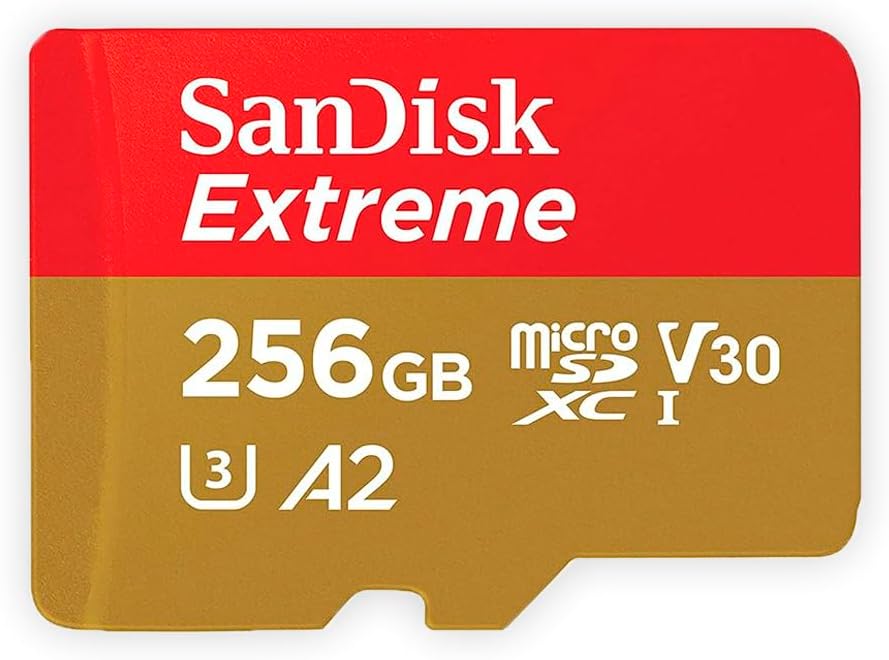
The SanDisk 256GB Extreme MicroSDXC combines a large capacity with the speed classes expected from the Extreme line. Its listed specifications include C10, U3, V30, A2, and 4K support, giving it a strong profile for high-resolution video and large photo collections. The product has a 4.8 rating, matching the highest rating in the guide.
We may earn a commission when you buy through this link, at no additional cost to you.
A 256GB card offers more room for prolonged recording than the 32GB and 64GB alternatives. U3 and V30 performance is especially relevant to 4K workflows because it communicates a higher sustained-write requirement than a basic Class 10 card. A2 support is useful in compatible phones and tablets where the card stores both media and application data. The exact real-world transfer speed is not supplied in the product data, so buyers should consult the current listing for complete performance details.
This option sits between a general-purpose high-capacity card and a specialist FAT32 device card. The 256GB capacity and MicroSDXC designation do not guarantee a particular file system, and the supplied information does not state FAT32 formatting. Cameras, security systems, and older devices can impose their own file-system requirements. Reformatting may be possible through a phone or computer, but it will not make a card compatible with hardware that cannot read the resulting format.
The card is best recommended for compatible cameras and mobile devices that need abundant storage and 4K-ready performance. Users should verify maximum capacity, file-system support, and any required speed class in the target equipment. With those checks complete, it offers a compelling combination of capacity, user rating, and modern media features.
The 256GB capacity helps users avoid frequent transfers when working with high-resolution clips or extensive images. Compression, bitrate, and recording duration determine actual capacity usage, so checking actual footage requirements helps prevent unexpected interruptions.
U3, V30, and A2 make the card more appropriate for high-bitrate media and app-heavy phones than a basic Class 10 card. The host device must support the relevant features, and the card must be formatted in a structure the device accepts.
We may earn a commission when you buy through this link, at no additional cost to you.
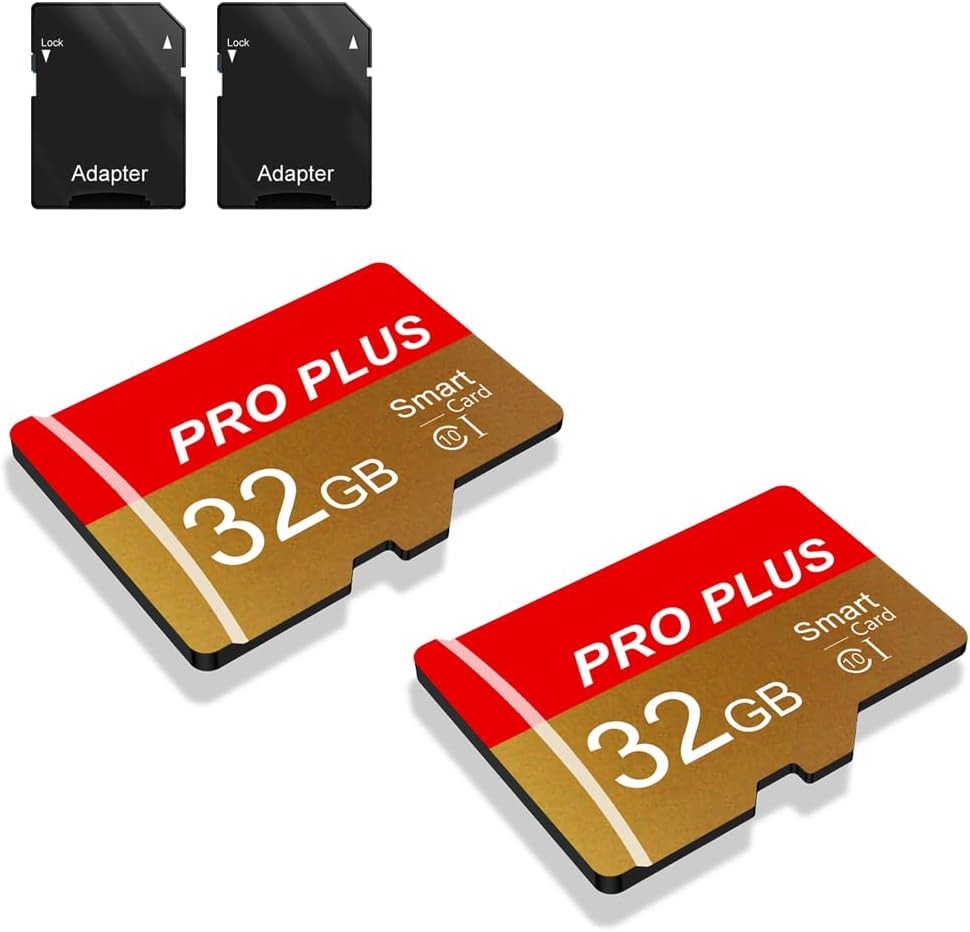
This two-pack provides two 32GB TF cards, making it convenient for users who need separate storage for a phone, tablet, camera, car-audio system, game console, or recorder. Each card includes an adapter, and the product is listed with UHS-I, C10, and A1 performance. Its 4.5 rating indicates a generally positive reception without matching the strongest individual ratings in the comparison.
We may earn a commission when you buy through this link, at no additional cost to you.
The package's defining benefit is convenience. Two cards can be distributed between devices, used in rotation for a compatible camera, or kept as a spare. This reduces the need to move one card back and forth and can improve workflow organization. A stated transfer speed of up to 80MB/s supports relatively quick media transfers, though the listing notes that results vary with capacity, platform hardware, test software, and operating system.
The product description gives broad compatibility with mobile phones, computers, game consoles, cameras, drones, surveillance equipment, and car recorders. C10 and A1 ratings make it appropriate for standard video and application-oriented use. However, FAT32 formatting is not explicitly stated in the supplied information. Devices with strict file-system requirements should therefore be checked before purchase, and the card should only be reformatted if the device or computer supports doing so safely.
This two-pack is best for multi-device households, travelers, or anyone who wants a spare card alongside a primary one. It may also suit a compatible camera that benefits from card rotation. The main limitations are the modest per-card capacity and the lack of an explicit FAT32 claim, so buyers should prioritize verification over assumptions.
A spare card can reduce interruptions while one is being transferred or used in another device. Card rotation may also help organize footage, provided every card is compatible with the equipment and formatted appropriately.
C10 and A1 ratings support everyday video storage and responsive file handling, while the stated 80MB/s maximum can speed media transfers on suitable hardware. High-resolution or high-bitrate recording may still justify a U3 and V30 card.
We may earn a commission when you buy through this link, at no additional cost to you.
The best FAT32 microSD card is not simply the one with the highest capacity or headline speed. Format support, device limits, sustained write requirements, durability, and data-management needs should determine which option makes the most sense.
FAT32 is the defining requirement in this guide, but it must be supported by both the card and the device that will read it. Some products in the comparison explicitly state that they are FAT32 formatted, while others provide no file-system claim. Check the current package and seller listing, and review the device manual for accepted formats. A phone may offer an option to format a card as FAT32, but some cameras, security systems, and older devices do not. Formatting cannot solve a capacity-limit problem, and reformatting erases existing data.
Capacity is closely connected to how long a camera can record before files are overwritten or manually removed. A 32GB card can be sufficient for a lightly used phone or occasional camera, but it may fill quickly in a dash cam or security camera operating continuously. The 64GB and 128GB FAT32 choices offer more room, while the 256GB models suit larger media libraries and modern devices. File-system and capacity rules can also differ between operating systems and equipment.
Maximum read speed describes how quickly data can be transferred under favorable conditions, while a speed class describes minimum performance for specific workloads. C10 and V10 suit conventional video recording, U3 and V30 address higher-bitrate capture, and A2 indicates stronger random and application-oriented performance. For continuous recording, sustained write performance matters more than a spectacular transfer number. Actual results also depend on the camera, card reader, host interface, file size, and operating system.
A card can support a file system and still fail to work because the device has a maximum supported capacity. This is particularly relevant to security cameras, dash cams, older phones, game consoles, and specialized navigation or media equipment. The Amazon Basics product description specifically advises checking a device's maximum supported capacity. The same caution applies to every card here: use the manufacturer's current specification rather than assuming that all devices support the largest advertised capacity.
Cards used in vehicles, outdoor cameras, drones, and security systems benefit from resistance to water, temperature extremes, shock, static, vibration, X-rays, and magnetic fields. The cards in this guide offer varying combinations of these protections, including IPX7, IPX6, and extended temperature claims. Protection ratings apply to the card alone and often have specific operating conditions. They do not make frequent removal, careless insertion, or exposure beyond the stated limits safe.
A full-size SD adapter can make it easier to move files into a laptop, camera, or other device with a compatible SD slot. The Amazon Basics 128GB card, the SanDisk 32GB Extreme, and both cards in the two-pack include adapters according to the supplied product information. Adapters do not convert the underlying file system or increase speed. For the fastest transfers, use a card reader and host interface that support the card's stated maximum performance.
Advertised and usable capacity are not identical because operating systems calculate space differently and reserve some area for internal use. The Amazon Basics listing illustrates this point by pairing 128GB with at least 116GB usable capacity. A smaller usable total is normal, not necessarily a defect. When estimating recording time, consider usable capacity, the camera's bitrate, compression method, and whether the device loops or overwrites files automatically.
The market includes explicitly FAT32 options with focused feature sets as well as premium cards with faster transfer rates, stronger speed classes, broader durability testing, longer warranties, or recovery software. The lowest-cost card can be ideal for a compatible security camera, while a premium card may be more economical when it reduces transfer time or better supports high-resolution media. Product prices and configurations change, so compare the current listing rather than relying on an old deal or an assumed permanent difference.
Begin by confirming that the device supports FAT32 and the card's capacity. Consult the manufacturer's current manual, insert the card with the device powered off, and format it through the device or a computer before saving important files. If you format it yourself, use the exact file system requested by the device and avoid interrupting the process. A full format can also help verify that the card is recognized correctly, but it erases existing content.
When recording continuously, review footage regularly and maintain free space on the card. Do not remove it while a camera is writing, and avoid swapping cards in ways that could interrupt a recording. Use the card, adapter, and reader according to their instructions, keep contacts clean, and store the card in a dry protective case when it is not in use. Labeling cards by device and date can prevent important files from being overwritten or misplaced.
For valuable recordings, maintain a separate backup rather than relying on the card as the only copy. Periodically check that footage can be transferred and played back, and consider rotating multiple cards when the equipment supports it. Protect the card from moisture, excessive heat, impact, and static even when its specifications indicate resistance. Replace a card that shows transfer errors, corrupted files, missing recordings, or physical damage, and use a suitable reader when moving media between devices.
No. Capacity alone does not prove the file system, because manufacturers can ship cards with different formats or allow buyers to reformat them. The safest approach is to look for an explicit FAT32 statement, check the current product packaging and listing, and confirm what the target device supports. Formatting a card in FAT32 is useful only if the device permits it and does not impose its own capacity or file-system rules.
Yes, but the card also needs an appropriate sustained write speed and the camera must support FAT32 with the desired resolution and frame rate. A C10 and V10 card is generally aimed at conventional recording, while U3 and V30 cards are better aligned with demanding high-bitrate capture. Even a fast card cannot compensate for unsupported resolution, frame rate, or file size settings.
Read speed is the maximum rate at which stored data can be copied from the card, while write speed concerns saving new data to it. Read speed is important when moving files to a computer, while write speed is central to cameras and recorders. Headline maximums are measured under particular conditions, and the host device, reader, interface, and file workload can reduce real results.
These markings communicate different minimum performance expectations. C10 describes a baseline sequential write class, U3 identifies a higher sustained-write class for demanding media, V30 supports a minimum video write rate, and A2 addresses random and application-oriented performance. Comparing like-for-like classes is more meaningful than treating every number as directly interchangeable.
The answer depends on resolution, bitrate, compression, file format, and how often the device overwrites old footage. A 32GB card may hold many hours of ordinary recordings, but high-resolution 4K video can fill it much faster. Check the device's storage estimator or monitor it during use, and maintain a regular backup and cleanup routine for important recordings.
It can be safe, provided the computer and card reader support the capacity and the target file system, and you back up anything worth keeping first. Use a reputable card reader and complete the format without interruption. Remember that FAT32 commonly carries a 4GB single-file limit, which can prevent a camera from saving a continuous clip larger than that size.
Many cards in this guide advertise temperature, water, shock, static, or X-ray resistance, making them suitable for demanding mobile use. Those protections have limits and generally apply to the card rather than the entire device. Regular inspection, careful handling, and maintaining backup copies remain necessary even for a rugged card.
A large card minimizes the need for frequent transfers and offers more uninterrupted recording space, while multiple cards make rotation and device sharing easier. A two-pack can be convenient for separate devices, but each card still needs the correct format and capacity support. The best arrangement depends on your equipment, recording duration, backup habits, and preference for convenience versus storage headroom.
The 32GB TF Memory Card Class 10 FAT32 stands out as the most balanced budget recommendation because it explicitly states FAT32 formatting, targets continuous recording, provides broad environmental protection, and includes a five-year warranty. The 32GB FAT32 Class 10 TF Card is another strong recording-focused choice, pairing a 4.8 rating with C10, A1, and V10 classes, while the SanDisk 32GB Ultra microSDHC delivers the best balanced performance for compatible modern devices.
Prioritize the requirements your equipment actually imposes. FAT32 format and maximum capacity come first for older cameras, security systems, and specialized recorders. Sustained write performance matters for high-resolution video, while fast read speed and A2 support are more useful for phone application storage and large transfers. Environmental protection and accessories should support the intended setting rather than add complexity for no practical benefit.
Before ordering, verify the current product listing, exact capacity, file-system state, speed requirements, and device support. Ratings and specifications are useful points of comparison, but they cannot replace checking the manual of the device that will use the card. Prices, seller configurations, and availability can change, so review the current listing at the time of purchase and make sure the selected card satisfies both your storage volume and compatibility needs.