
Soundcore V20i
4.4Editor score
Open-ear situational awareness
Four adjustable fit positions
HearID and EQ controls
Discover the best earbuds for hearing aid users, comparing hearing features, sound quality, fit, battery life, compatibility, and daily convenience today.
Earbuds for hearing aid users must do more than deliver enjoyable music. They may need to improve speech perception, reduce distracting noise, support phone calls, accommodate different hearing levels, and remain comfortable during extended wear. The right model depends heavily on ear anatomy, degree of hearing loss, listening environment, and device compatibility.
We compared all ten products according to their documented hearing features, noise-control systems, microphone performance, fit, battery life, connectivity, charging convenience, and intended use. The list covers dedicated hearing-assist devices, hearing-test-enabled earbuds, TV-focused systems, open-ear models, and general earbuds with useful accessibility features.
Each review explains who the product is best suited for, what stands out, and where its limitations may matter. Rankings reflect the supplied ratings and product information rather than personal testing. Features, software support, and availability can change, and current prices should always be checked before purchase.
4.4Editor score
4.4Editor score

4.4Editor score
The comparison below highlights each product's core purpose, hearing-oriented functionality, physical design, and connectivity, making it easier to identify the right option for everyday conversations, television, travel, or compatible hearing-aid systems.


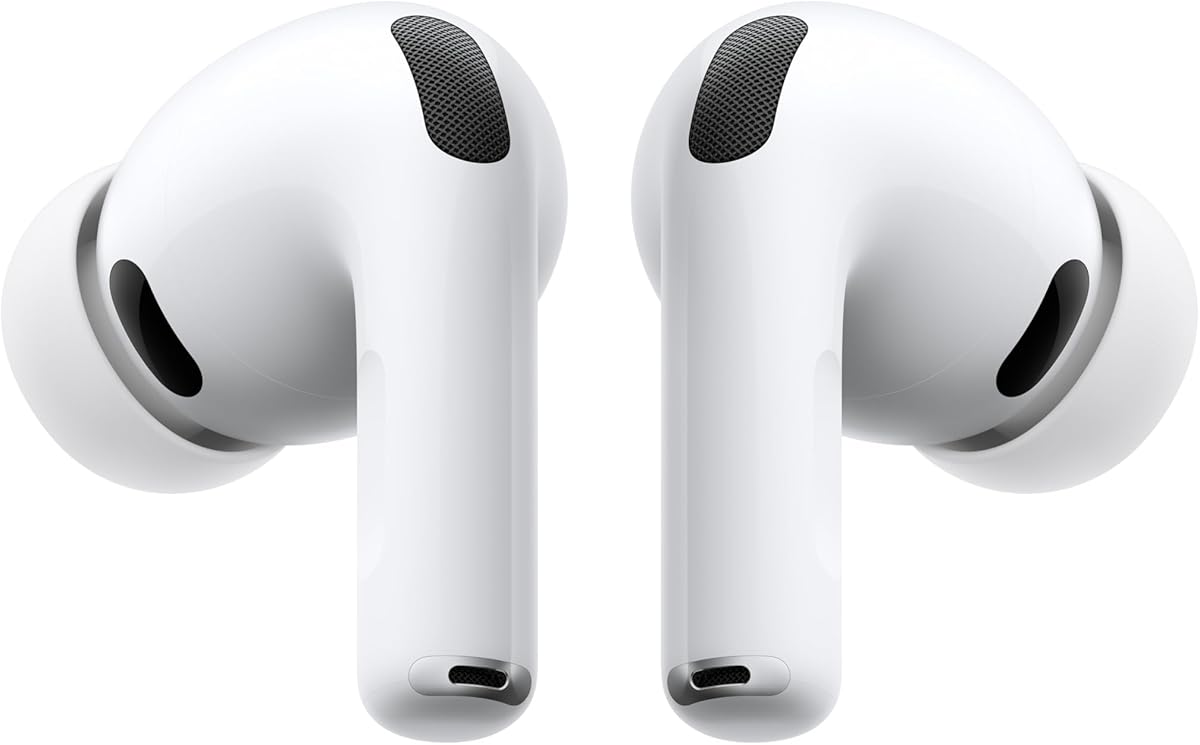
Apple AirPods Pro 3 combine conventional premium earbuds with an unusually broad set of hearing-oriented tools. The supplied rating is 4.4, and the defining attraction is the Hearing Aid feature, which can provide clearer communication with automatic Conversation Boost. The product also supports an at-home hearing test, giving users a structured way to assess their hearing before changing settings.
We may earn a commission when you buy through this link, at no additional cost to you.
Active Noise Cancellation is described as removing up to twice as much unwanted noise as AirPods Pro 2, while Hearing Protection is intended to reduce exposure to loud environmental sound. Personalized Listening uses Adaptive EQ to account for ear geometry and fit, while inward-facing microphones make real-time adjustments. Five ear-tip sizes support both comfort and consistent in-ear performance.
The trade-off is ecosystem dependence. Automatic Switching, Audio Sharing, Apple Intelligence features, and the broader app experience are most natural within Apple's device ecosystem. Battery life reaches up to eight hours with Active Noise Cancellation and up to ten hours in Transparency with the Hearing Aid feature, but that does not match the longest total battery claims in the list. Users should also confirm regional hearing-feature availability and compatibility before relying on the product for a specific care plan.
This is the strongest all-around recommendation for a user who wants music, calls, hearing assistance, and noise control in one familiar device. It is especially compelling for Apple users willing to complete the hearing test and tune the feature to their needs. Those who need a more substantial hearing-aid function or use non-Apple devices should examine the dedicated hearing-assist products and compatibility requirements more closely.
The built-in hearing test can turn an otherwise complex feature into a guided process. Automatic Conversation Boost then provides a practical way to improve speech emphasis without requiring users to make several manual adjustments for every conversation.
Adaptive EQ, real-time in-ear measurements, and five ear-tip sizes work together to improve consistency. This combination may be particularly useful for users whose comfort and perceived sound quality vary according to ear shape or tip size.
We may earn a commission when you buy through this link, at no additional cost to you.
These rechargeable hearing aid earbuds are built around hearing assistance rather than entertainment alone. They carry a supplied rating of 5.0 and combine a smart DSP chip, voice enhancement, five volume levels, and amplification of up to 42 dB. A one-button control layout makes core adjustments more approachable for seniors and users who prefer straightforward controls.
We may earn a commission when you buy through this link, at no additional cost to you.
Noise reduction is divided into three levels and can reduce background noise by up to 18 dB. The same product functions as Bluetooth earbuds for calls and music, reducing the need to carry separate devices. A flexible ear hook offers a more secure fit, while three tip sizes accommodate different ear dimensions and help prevent the unit from falling out during movement.
The 2000 mAh charging case is fully charged in about one hour and can reportedly recharge the hearing aids up to 17 times. It can also provide backup power to a mobile phone or another small device. This is a useful feature for travel, although the product's broad electronics capabilities do not change the importance of confirming battery expectations, ear fit, and local hearing-aid requirements before purchase.
The product is a compelling choice for someone seeking a simple two-in-one hearing and Bluetooth device with a particularly strong supplied rating. It may be especially appealing to users who want voice enhancement, several noise settings, and a physical ear hook. However, consumers should view it as a consumer hearing-assist product rather than a substitute for an individualized professional fitting, particularly when hearing loss is significant or progression is possible.
The DSP system is designed to identify and enhance human voices, while the volume controls offer a broad adjustment range. That focus directly addresses common listening challenges in conversations without requiring the user to change multiple separate settings.
A case that can recharge the hearing aids repeatedly and top up a phone adds resilience when outlets are inconvenient. The power-bank function is particularly useful for travel or days with unusually heavy device use.
We may earn a commission when you buy through this link, at no additional cost to you.
This second dedicated hearing-aid option offers the same core 42 dB amplification, five volume levels, and three noise-reduction modes as the preceding product. Its 3.5 supplied rating places it behind several alternatives, but the documented feature set is substantial. A smart DSP chip is intended to identify and enhance voices, and the single-button operation keeps daily changes uncomplicated.
We may earn a commission when you buy through this link, at no additional cost to you.
The meaningful distinctions are its automatic on-and-off behavior and the LED power display in the charging case. It also combines hearing assistance with Bluetooth calling and music, includes three ear-tip sizes, and uses flexible ear hooks for stability. The 2000 mAh case takes about 1.2 hours to charge and can recharge the hearing aids up to 17 times while also acting as a mobile power source.
Its lower supplied rating may reflect a less consistent customer experience, although the provided information does not identify a specific defect or cause. Buyers should pay close attention to fit, charging behavior, and ease of daily operation. The product also lacks the app-based personalization and broader hearing-test workflow associated with premium smart earbuds, so it is better viewed as a direct, feature-focused hearing-assist device.
This model makes sense for a senior who values automatic operation, visible charging information, and a combined hearing and Bluetooth design. It may be less attractive to users who want detailed sound adjustment, environmental sound presets, or seamless integration with a wider device ecosystem. Trying the controls and confirming the fit before relying on it for important conversations is advisable.
Automatic on-and-off behavior can reduce the need to manage the device manually throughout the day. That convenience may be more valuable than sophisticated controls for some users, particularly those less comfortable with small touch interfaces.
The case's LED power display gives users a quick visual indication of charging status. That can make routine charging easier for people who want to avoid remembering whether the hearing aids were returned to the case correctly.
We may earn a commission when you buy through this link, at no additional cost to you.
The Soundcore V20i is an open-ear model for listeners who want to remain aware of their surroundings rather than completely separating themselves from them. It has a supplied rating of 4.4 and positions itself around comfort, flexible positioning, and customizable sound. Unlike dedicated hearing aids, it does not claim to amplify voices to a specific decibel level.
We may earn a commission when you buy through this link, at no additional cost to you.
The open-ear construction is non-intrusive and allows environmental sound to remain perceptible during music or calls. Four adjustable positions help users orient each earbud for stability and comfort. Audio is driven by 16 mm titanium-coated domes with BassUp technology, while the soundcore app provides HearID, EQ modes, Spatial Audio, and over-the-air firmware updates.
Call clarity is supported by four microphones and AI enhancement. The main limitation is that an open design generally cannot provide the same level of acoustic isolation as sealed or active-noise-cancelling earbuds. Soundcore V20i also lacks a dedicated hearing-test or hearing-aid feature, so it is most appropriate for users who need situational awareness rather than clinically oriented voice assistance.
This is a strong option for a hearing-aid user who wants comfortable music, clearer calls, and awareness of doors, traffic, or other environmental cues. It may also work well alongside separate hearing aids because the open design does not block the ears. Users who need stronger speech amplification in difficult environments should instead consider a dedicated hearing-assist model.
The open architecture lets surrounding sound remain present, which can be helpful outdoors, around the home, or during short interactions. It also avoids the fully blocked sensation some users experience with in-ear earbuds.
HearID, EQ modes, and Spatial Audio allow users to adjust the sound profile to their preferences. Firmware updates through the app can also help the earbuds remain current as software behavior changes.
We may earn a commission when you buy through this link, at no additional cost to you.
Avantree Aura Loop focuses on a precise use case: making television dialogue easier to hear without forcing other people in the room to accept a louder volume. The supplied rating is 4.1, and its Auracast transmission, transmitter, and Voice Clear mode make it a practical alternative for users whose main hearing difficulty is following TV dialogue.
We may earn a commission when you buy through this link, at no additional cost to you.
The included transmitter connects to televisions with Optical, AUX, or RCA audio outputs. Once connected, the earbuds can remain linked to the TV while also staying connected to a phone, allowing incoming calls and alerts to be reached. Voice Clear is one of three EQ modes and is intended to enhance speech and improve dialogue clarity, though results vary with ear fit, selected mode, and TV settings.
The most important limitation involves television compatibility. Aura Loop does not work with HDMI-only televisions and cannot pass television audio through to a soundbar. This makes checking the television's available outputs essential before buying. Although the product focuses on TV listening, it cannot automatically resolve every audio-routing or hearing-related limitation in a home entertainment setup.
Aura Loop is best for someone who regularly watches television, wants private wireless audio, and needs a dedicated speech-enhancement mode. The cable-free charging dock reduces the friction of a nightly routine, while phone connectivity prevents the earbuds from becoming isolated from important alerts. Buyers should confirm their TV connections first and ensure the product's Auracast approach fits their entertainment equipment.
Sending television audio directly to the earbuds lets users select a comfortable level independently of other household members. This is particularly useful late at night or in a shared living space.
Maintaining both TV and phone links means incoming calls and alerts can be reached without abandoning the television setup. The system can return to television audio after the interruption.
We may earn a commission when you buy through this link, at no additional cost to you.
JLab Go Air Pop+ is a compact conventional earbud rather than a hearing-assist device. Its supplied rating of 4.4 highlights its broader appeal, while the small case and reduced earbud weight make it convenient to carry. The product is best viewed as a complementary audio option for users who want music, calls, and occasional environmental awareness.
We may earn a commission when you buy through this link, at no additional cost to you.
Bluetooth 5.3 supports quick pairing, and the earbuds automatically power on and reconnect to each other when removed from the USB charging case. Three tip sizes help create a snug seal, while the JLab app provides EQ presets, touch-control changes, and Be Aware settings. Google Fast Pair is also supported for compatible Android devices.
Battery performance is a major strength. Each earbud can provide nine hours of playback, while the case adds at least 26 hours, for more than 35 hours in total. The trade-off is the absence of a dedicated hearing test, hearing-aid assistance, or documented voice amplification. Users who depend on hearing aids or have significant hearing loss may need the open-ear or dedicated amplification options elsewhere in the list.
The Go Air Pop+ is a strong choice for travel, exercise, and everyday use because it is small, uncomplicated, and long-lasting. It can be useful as a secondary pair for hearing-aid users who already have a separate solution for difficult conversations. Its sealed in-ear design and Be Aware mode provide a useful contrast with open-ear products, but should not be mistaken for medical-grade hearing assistance.
The case is described as smaller than a credit card, while the earbuds are 15 percent smaller and 40 percent lighter than JLab's Go Air model. The reduced footprint suits pockets, small bags, and travel.
Removing an earbud from its case starts the connection process, reducing the need for repeated manual pairing. The total playback time makes the model practical for users who frequently travel or forget to charge frequently.
We may earn a commission when you buy through this link, at no additional cost to you.
Avantree Aura Focus is built for uncomplicated television listening, especially for users who want one dock to handle both transmitter functions and earbud charging. Its supplied rating is 3.5, making it less strongly rated than many alternatives, but the documented design addresses a genuine convenience need for regular TV users.
We may earn a commission when you buy through this link, at no additional cost to you.
The included transmitter connects through Optical, AUX, or RCA television outputs. While the user watches television, the earbuds remain connected to a phone, and incoming calls automatically interrupt television audio before the system returns to it. A compatible smartphone or companion app may be required when connecting Auracast-enabled earbuds or hearing aids, and some setups may not work without a phone or app.
The most significant limitation is that the transmitter is not for classic Bluetooth headphones or earbuds. It works only with compatible Auracast-enabled products. It also cannot pass television audio through to a soundbar. These restrictions mean buyers should treat Aura Focus as a specific Auracast television ecosystem rather than a universal wireless TV accessory.
Aura Focus makes sense for a senior who wants television audio, phone alerts, and cable-free charging centered in one place. Its integrated dock avoids the process of connecting a separate transmitter and charging cable, making the routine more approachable. Prospective buyers should confirm television outputs and confirm that the intended earbuds or hearing aids support Auracast before making the purchase.
Combining the transmitter and charging base reduces the number of separate items users need to manage. Placing the case on the dock provides a simple nightly charging routine without additional cables.
Automatic switching lets users answer a call and then return to television audio. That continuity is useful for people who depend on their phones but also watch television for long periods.
We may earn a commission when you buy through this link, at no additional cost to you.
SHOKZ OpenDots 2 is a premium open-ear clip-on model with a supplied rating of 4.4. It combines a 6.4 g weight, flexible nickel-titanium JointArc, and contoured silicone to create a light, secure design. The open architecture keeps users naturally aware of their surroundings, which can make it easier to hear people who address them directly.
We may earn a commission when you buy through this link, at no additional cost to you.
Audio uses dual 11.8 mm drivers, Shokz Bassphere 2.0, upgraded Dolby Audio, and MirrorPitch technology. Call performance is supported by three microphones: a dedicated bone-conduction microphone and two air-conduction microphones work with beamforming and AI noise reduction. The interchangeable left-right design uses Dynamic Ear Detection to recognize which ear each bud occupies.
Battery life reaches up to 10 hours per charge and 40 hours with the case. A five-minute quick charge provides up to two hours of playback, while the case supports Qi-certified wireless charging. MultiPoint Pairing, Bluetooth 6.1, IP57 water resistance, and app-based customization broaden the everyday feature set. The product does not provide documented hearing-aid amplification, so it works best for users whose needs center on awareness, call clarity, and comfortable listening.
OpenDots 2 is an excellent match for someone who dislikes the insertion depth of conventional earbuds or wants one pair for music, calls, exercise, and awareness. The interchangeable sides are convenient for users who alternate ears or frequently lose a single bud. Those who need stronger voice enhancement or medically directed hearing support should consider dedicated hearing-assist models instead.
The contoured silicone and flexible joint keep the earbud positioned around the ear rather than deep in the ear canal. This can reduce pressure while retaining enough stability for commuting, working, and exercise.
Three complementary microphones work together to isolate the user's voice. Beamforming and AI noise reduction provide additional support when calls occur on busy streets or in active workplaces.
We may earn a commission when you buy through this link, at no additional cost to you.
Starkey Comfort Buds are hearing-aid accessories rather than independent earbuds. They carry a supplied rating of 5.0 and are designed to improve comfort and retention for users who already wear compatible Starkey devices. The open, 11 mm silicone buds attach to receiver wires instead of functioning as separate Bluetooth products.
We may earn a commission when you buy through this link, at no additional cost to you.
The soft silicone is intended to conform to the ear canal, supporting comfortable extended wear. Easy installation allows users to replace or attach buds without a complicated process, and the flexible material is intended to maintain a secure connection with compatible receivers.
Compatibility is the decisive issue. The buds support Starkey SnapFit and SnapFit 2.0 receiver wires, and the listed hearing-aid families include Genesis, Livio, Evolv, Muse, Halo, Z Series, and 3 Series. Users should still verify their exact model and receiver-wire type, since a general hearing-aid brand match does not guarantee compatibility with every variant.
This accessory is best for existing Starkey users who find their current tips uncomfortable or insecure. It is not a solution for someone seeking Bluetooth earbuds, amplified music, or standalone hearing assistance. Its value lies in making an already compatible Starkey system more comfortable, and its strong supplied rating suggests it may be a worthwhile replacement for users familiar with the platform.
The flexible silicone is designed to conform to the shape of the ear canal. That can reduce irritation during long listening sessions and make all-day hearing-aid use more comfortable.
The buds attach directly to compatible receiver wires and are designed for straightforward installation. Users can replace worn or uncomfortable tips without navigating a more complex electronic system.
We may earn a commission when you buy through this link, at no additional cost to you.
EarFun Air Pro 4+ is a feature-rich wireless earbud for users who value sound quality, noise cancellation, modern codecs, and broad connectivity. Its supplied rating is 4.1 reflects a capable general-purpose product, although it does not include a dedicated hearing-aid mode, hearing test, or documented voice-amplification function.
We may earn a commission when you buy through this link, at no additional cost to you.
The hybrid acoustic system combines a 10 mm composite dynamic driver with a FeatherBA balanced armature, aligned at an 11-degree angle to reduce high-frequency attenuation. Qualcomm QCC3091, Snapdragon Sound certification, aptX Lossless, LDAC, LC2, and LE Audio support make the earbuds attractive to listeners with varied source devices and codec priorities.
QuietSmart 3.0 adaptive hybrid ANC can detect external noise and adjust in real time, reportedly cancelling ambient noise by up to 50 dB. A six-microphone array with AI beamforming and Qualcomm cvc 8.0 supports calls. Battery life reaches 12 hours without ANC and 54 hours with the case, or eight and 36 hours respectively with ANC enabled. Multipoint and Auracast support improve device flexibility.
This is a strong secondary pair for a hearing-aid user who wants high-quality music, quieter commutes, and reliable calls. Auracast compatibility may also be useful in public-audio environments. It is not the most direct choice for someone needing to understand speech in difficult conditions, however, so users should prioritize a dedicated hearing or open-awareness feature for that goal.
The dual-driver arrangement combines a dynamic driver's impact with a balanced armature's detail. Support for high-resolution codecs gives compatible source devices additional options for preserving tonal and spatial information.
QuietSmart 3.0 adjusts ANC in response to surrounding sound, while Auracast opens the earbuds to compatible public audio broadcasts. Together, these features serve both focused private listening and shared-audio environments.
We may earn a commission when you buy through this link, at no additional cost to you.
The right choice depends on the kind of hearing support required, the environments where the earbuds will be used, and the hearing devices already in your routine. Consider clinical purpose, speech clarity, awareness, comfort, and connectivity before comparing features or ratings.
Start by separating music listening from hearing assistance. A user who wants clearer television dialogue needs a system designed for TV audio, while someone who wants more comfortable hearing-aid use may need replacement buds rather than electronic earbuds. Dedicated hearing-assist models advertise voice enhancement, amplification, and noise reduction, whereas premium earbuds may focus on sound quality, calls, and environmental awareness. The products in this guide differ considerably in purpose, so the phrase earbuds for hearing aid users can describe several distinct needs rather than one uniform product category.
Speech-focused features can include voice detection, dialogue EQ, automatic Conversation Boost, noise reduction, and directional microphones. Two dedicated hearing aids in this list claim voice enhancement and amplification up to 42 dB, while the Avantree Aura Loop provides a Voice Clear mode specifically for television dialogue. These claims are not interchangeable: a mode optimized for TV speech may not perform the same way in face-to-face conversation, and general noise cancellation may be designed to reduce environmental sound rather than isolate a nearby speaker. Users should consider where conversations occur most often and whether the product offers controls suited to those settings.
In-ear buds can provide isolation and direct sound delivery, but some users find them uncomfortable or dislike inserting devices into the ear canal. Open-ear models, including the Soundcore V20i and SHOKZ OpenDots 2, preserve environmental awareness and reduce insertion pressure. Dedicated hearing aids use flexible ear hooks and multiple tip sizes for stability. The Starkey Comfort Buds take a different approach by improving the physical interface of compatible hearing aids. Ear shape, dexterity, glasses, hearing-aid use, and extended wear time should all influence this decision.
Active noise cancellation uses microphones and processing to counter external sound, while open-ear designs allow sound to pass naturally. Noise reduction in a dedicated hearing device may focus on making voices more intelligible instead of simply minimizing every sound. For a user who must remain alert to vehicles, doorbells, or announcements, an open design may be safer and more comfortable. Someone struggling to hear a quiet speaker during travel may benefit more from active cancellation. The best choice depends on whether reduced noise, enhanced speech, or environmental awareness is the primary objective.
Compatibility deserves careful attention because wireless audio standards and television outputs are not interchangeable. Both Avantree television systems require Optical, AUX, or RCA connections and do not support HDMI-only televisions or audio passthrough to a soundbar. The Aura Focus transmitter works only with Auracast-enabled products and may require a smartphone or app for setup. The Starkey Comfort Buds must match specific receiver wires and listed hearing-aid models. By contrast, standard Bluetooth earbuds may pair with phones, tablets, and computers, but their advanced features can still depend on operating-system and manufacturer support.
Battery life can be expressed per earbud or as a combined total with the case, and those figures are not directly comparable. The SHOKZ OpenDots 2 claims up to 40 hours with its case, while the EarFun Air Pro 4+ reaches 54 hours in normal mode. Dedicated hearing aids use a 2000 mAh case that can recharge them repeatedly and also provide backup phone power. Users should consider how often they will remember to charge, whether a cable-free dock is important, and whether a depleted case could leave them without hearing support during travel.
Simple physical controls can be more useful than a feature-heavy app for users with limited dexterity or less experience with technology. The dedicated hearing-assist models emphasize one-button operation, while the Apple AirPods Pro 3 rely more heavily on device features and software. App-based equalizers, hearing tests, personalized sound, and firmware updates add flexibility but can also create a learning curve. Look for controls that offer the adjustments you actually need without making routine tasks unnecessarily complicated.
Advanced specifications do not guarantee a perfect fit, clearer speech in every environment, or compatibility with every hearing aid. Open-ear models may leak sound and provide less isolation, while sealed earbuds can reduce awareness. A high amplification figure does not replace a professionally fitted hearing aid, and a hearing test should not be treated as a complete clinical evaluation. Review product limitations, regional feature availability, return options, and warranty information before making a final decision.
Begin by charging both the earbuds and their case, then complete any available hearing test or device pairing before relying on the product in an important conversation. If the earbuds will be used with hearing aids, confirm that the model, receiver wire, television, transmitter, phone, and app are all compatible. Fit matters as much as the electronic settings, so try every supplied tip size and reposition the earbuds until they feel secure without causing pressure.
Use the product's mode controls to match the environment. Open-ear or transparency settings are useful when awareness matters, speech-enhancement modes can help with television or group conversation, and active noise cancellation is generally better suited to consistent background noise. Make small adjustments rather than immediately turning every setting to maximum. If a dedicated hearing-assist device is used for long periods, begin with comfortable volume and increase it only as needed to understand speech.
Care for the devices according to the manufacturer's instructions, remove ear tips or receiver attachments for cleaning, and keep charging contacts free of moisture and debris. Open-ear products require particular attention to the clip and silicone joint, while sealed earbuds can trap moisture inside the tip. Store the earbuds in their case, avoid exposing them to heat or water beyond the stated rating, and have hearing aids assessed if sound becomes uncomfortable, distorted, or suddenly worse.
It depends on the product and the severity of the user's hearing loss. Some models provide hearing-assist features, voice enhancement, or limited amplification, while others are conventional earbuds designed for better personal listening. None should be assumed to replace a professionally fitted prescription hearing aid without an appropriate hearing evaluation. Consumers with significant or changing hearing loss should consult a qualified hearing professional.
The Avantree Aura Loop is explicitly designed for TV listening and includes a Voice Clear mode. It works with televisions offering Optical, AUX, or RCA outputs, so buyers should check the TV before buying. The Aura Focus offers a similar television focus with a more convenient integrated charging dock, but it requires Auracast-compatible devices and may need a phone or app for setup.
They can be more comfortable because they do not require deep insertion and they preserve environmental awareness. This makes open-ear models useful for hearing surrounding voices, traffic, or announcements. They do not inherently amplify speech, however, so users who need stronger voice assistance may be better served by dedicated hearing-assist products or by pairing open-ear earbuds with separate hearing aids.
Check the exact hearing-aid model and receiver-wire system first. The buds are listed as compatible with Starkey SnapFit and SnapFit 2.0 receiver wires and several Starkey product families, but individual variants can differ. These are hearing-aid comfort accessories rather than standalone earbuds, so they cannot provide Bluetooth music or call functionality on their own.
It depends on the model. Dedicated hearing-assist devices emphasize simple physical buttons and may perform their core functions without a phone. Smart earbuds often use an app for hearing tests, equalization, firmware updates, or device setup. Auracast systems may also require a compatible phone or companion app during configuration, so confirm the requirements before purchasing.
Active noise cancellation attempts to reduce unwanted environmental sound so the music or conversation you are already receiving becomes easier to hear. Hearing amplification specifically increases the level of incoming sound, often with an emphasis on human voices. The AirPods Pro 3 and EarFun Air Pro 4+ provide noise control, while the dedicated hearing-assist products in this guide advertise voice amplification up to 42 dB.
The dedicated Bluetooth hearing aids in this list are designed to support both hearing assistance and calls. Other products, including the Avantree television earbuds, keep the phone connected so incoming calls and alerts can interrupt television audio. General features such as microphones, multipoint pairing, and app-based call controls vary by model, so check the listed connectivity functions before purchasing.
Compare the documented control method, charging behavior, supplied rating, physical fit, and the environments where the product will be used. The Bluetooth Hearing Aids model emphasizes a one-hour case charge, while the Rechargeable Bluetooth Hearing Aids model adds automatic on-and-off operation and an LED power display. Neither feature set can replace personal comfort testing, so check the ear-hook feel, tip sizes, and ease of daily operation.
The Apple AirPods Pro 3 stand out as the most complete all-around option, combining a hearing test, Hearing Aid feature, Conversation Boost, active hearing protection, and strong noise cancellation. The dedicated Bluetooth Hearing Aids product is best for users seeking explicit voice amplification and a simple hearing-plus-music design, while the Soundcore V20i offers the most approachable open-ear format for environmental awareness.
The right priority depends on the listening problem. Choose a dedicated hearing-assist model for stronger voice support, an Avantree system for television dialogue, an open-ear model for awareness and insertion comfort, or a feature-rich conventional earbud for music, calls, and noise control. The Starkey Comfort Buds serve a narrower purpose: improving comfort for people already using compatible Starkey hearing aids.
Before ordering, confirm the physical fit, device compatibility, television outputs, app requirements, and accessibility of the controls. Specifications, firmware behavior, regional hearing features, and current prices can change, so check the latest listing and product support information at the time of purchase.