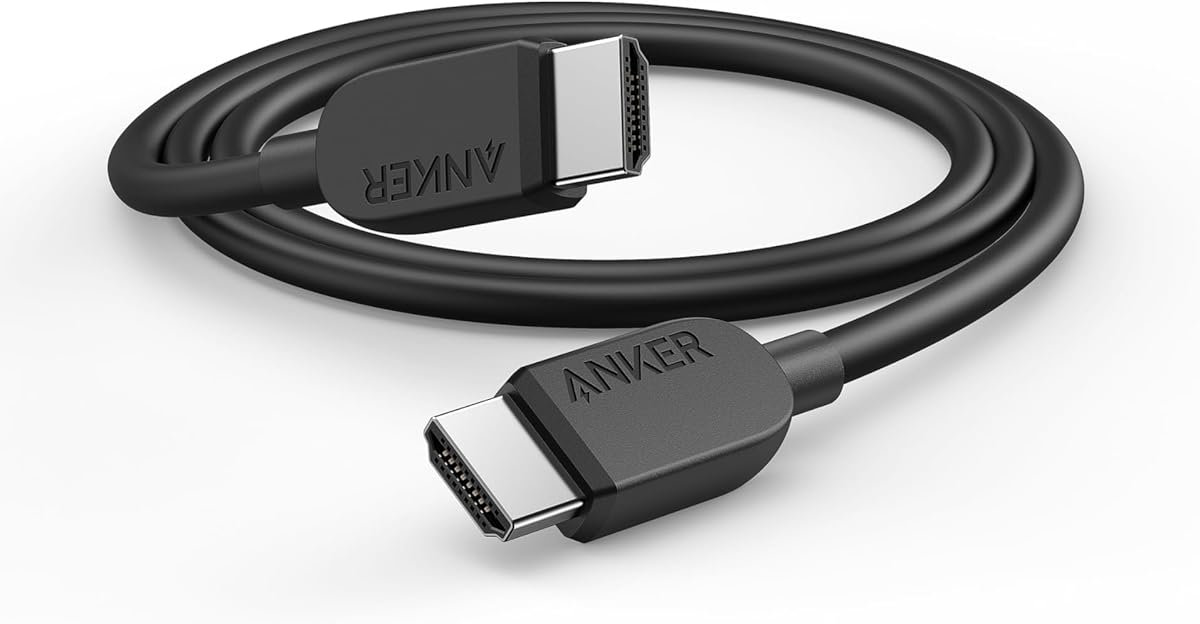
Anker HDMI 2.1 Cable, 4K@240Hz
4.7Editor score
48Gbps ultra-high-speed data
8K and high-refresh support
Rated for 1,000 bends
Explore the best HDMI leads for 4K TV, comparing bandwidth, refresh rates, audio support, durability, compatibility, and gaming features.
An HDMI lead determines how much data reaches your television, soundbar, console, or streaming device. A capable cable helps preserve 4K resolution, high refresh rates, HDR color, and immersive audio, while a poorly matched cable can cause flickering, dropped frames, or limited picture modes.
This guide compares ten HDMI leads using the specifications and feature information supplied for each model. We examine bandwidth, maximum resolution and refresh rate, HDMI certification, gaming support, audio return functions, physical construction, length, and compatibility with modern televisions and source devices.
Every selection offers a different balance, from a straightforward 4K@60Hz option to certified 48Gbps cables, multi-lead bundles, and a 96Gbps model. Each review highlights the most suitable use case, while availability and prices can change, so readers should confirm current details before purchasing.
4.7Editor score
4.8Editor score
4.8Editor score
The comparison below highlights the major technical differences among the ten leads, including their stated bandwidth, maximum picture modes, gaming-oriented functions, and construction.


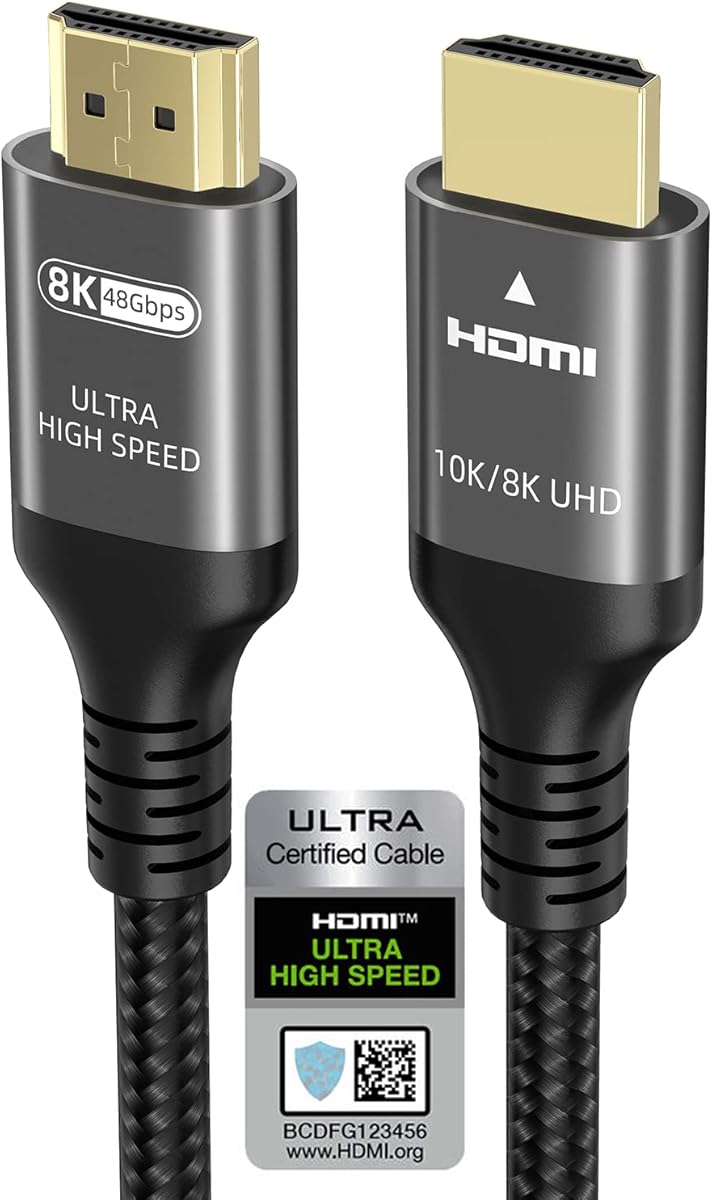

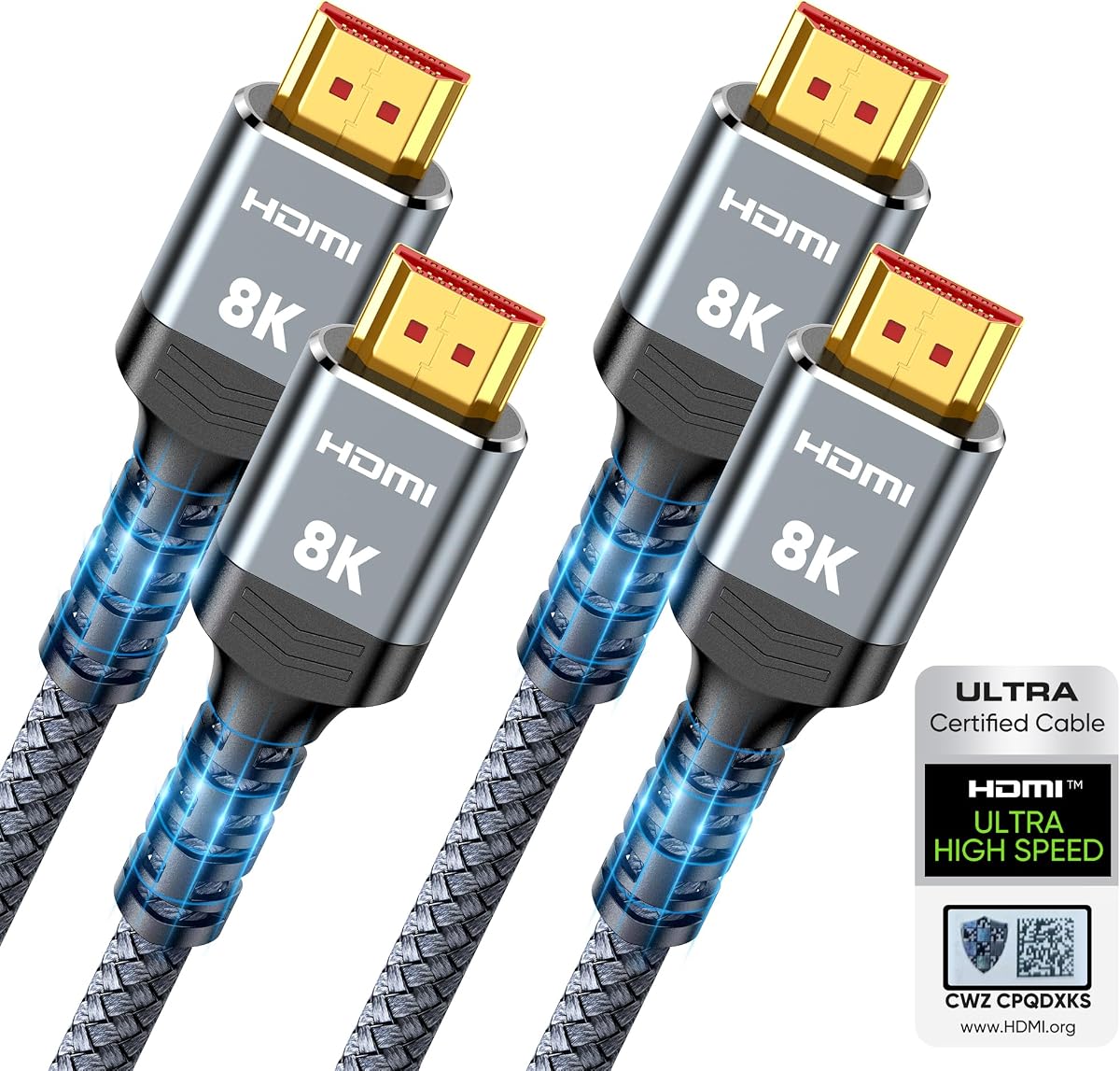


The Highwings 8K 10K 4K HDMI Cable combines certified Ultra High Speed performance with a 48Gbps data rate, making it a capable choice for a modern 4K television. Its supplied rating is 4.7, and the stated support for 8K@60Hz, 4K@240Hz, and 4K@120Hz gives buyers considerable headroom for demanding consoles, PCs, and displays.
We may earn a commission when you buy through this link, at no additional cost to you.
A major strength is the combination of raw bandwidth and practical features. The cable supports variable refresh rate, which can reduce screen tearing when used with compatible gaming hardware. It is also backward compatible with HDMI 2.0b, 2.0a, and earlier versions, allowing it to serve existing televisions and media devices without requiring a matching connector standard.
Construction is designed around everyday wear. Highwings describes an upgraded anti-bending tail, military-grade tensile nylon material, and laboratory performance testing. These points do not guarantee a particular lifespan, but they indicate attention to the places where HDMI leads commonly weaken. The six-foot length also suits most TV cabinets without creating an unnecessarily large loop behind the screen.
This is a good general recommendation for a household that wants more than basic 4K@60Hz capability but does not need the very latest bandwidth standard. Choose it when your source and television both support higher refresh rates, and verify the required input, HDR format, and VRR mode before changing picture settings.
The stated variable refresh rate support and 4K@120Hz capability suit compatible PlayStation 5, Xbox Series X|S, and gaming-PC configurations. They also provide ample bandwidth for 4K television viewing, giving the lead a useful role across entertainment and gaming setups.
The reinforced tail and tensile nylon construction target the connector end, where repeated bending and pulling commonly cause damage. Careful routing behind a television remains important, but the listed design offers a reassuring foundation for regular use.
We may earn a commission when you buy through this link, at no additional cost to you.
The Anker HDMI 2.1 Cable,4K@240Hz HDMI Cord is an appealing all-round choice for buyers seeking a straightforward 4K television lead with high-refresh capability. It carries a 4.7 rating and is described as a certified Ultra High-Speed cable with 48Gbps bandwidth, 8K@60Hz support, and support for 4K@120Hz and 4K@60Hz.
We may earn a commission when you buy through this link, at no additional cost to you.
Its most useful attribute is the combination of specification and simplicity. Rather than requiring specialized setup, it can connect tablets, laptops, projectors, desktop screens, televisions, and other HDMI devices. That makes it practical for a primary entertainment link or a secondary connection to a gaming monitor.
Anker states that the cable is designed to withstand up to 1,000 bends, offering a measurable durability standard without making the lead unnecessarily complicated. The package includes a six-foot cable, welcome guide, and 18-month warranty, providing a clearer ownership package than many basic alternatives.
The sensible buyer is someone whose television, console, or computer needs more than 4K@60Hz but who will not routinely use the most exotic display modes. Confirm that the connected devices support the intended resolution and refresh rate, and use the lowest mode that delivers your preferred picture quality.
This lead fits the common gap between basic 18Gbps cables and elaborate enthusiast models. Its 48Gbps specification provides ample room for 4K@120Hz use, while broad device support makes it easy to move between rooms or replace an older connection.
The stated 1,000-bend endurance is a practical indicator for a lead that will be moved between components or routed behind a media unit. It does not eliminate the need for careful handling, but it supports regular use.
We may earn a commission when you buy through this link, at no additional cost to you.
The Silkland Certified HDMI 2.1 Cable is a feature-rich option for a 4K television used for gaming, streaming, and home cinema. Its 4.7 rating reflects a broadly favorable customer response, while its 48Gbps bandwidth and certification provide a strong technical foundation for high-resolution displays.
We may earn a commission when you buy through this link, at no additional cost to you.
The stated picture-mode support is extensive: 10K and 8K at 60Hz, 5K at 120Hz or 90Hz, 4K at 144Hz or 120Hz, and 2K at 240Hz or 165Hz. Silkland also lists dynamic HDR, HDCP 2.2 and 2.3, DTS:X, Dolby Atmos, and enhanced Audio Return Channel functions, covering both visual and audio ecosystems.
Its exclusive E-Braid construction uses a double-layer fishnet winding and nylon braid, while copper cores and ferrite magnetic beads are intended to maintain stable signal transmission. These construction claims make the lead a good match for installations where the cable may be moved, bundled, or routed through tight furniture spaces.
This cable is best for enthusiasts whose equipment actually supports the advertised functions. A compatible game and television are required for 4K@120Hz or 4K@144Hz, and a suitably equipped soundbar or receiver is needed for the listed advanced audio features. Buyers with simpler equipment can still benefit from the bandwidth and robust exterior.
Support for 4K@120Hz and 4K@144Hz makes this a useful option for current consoles and capable gaming PCs. Because game and display must both provide the required mode, check those specifications before expecting the highest listed refresh rate.
The double-layer nylon construction is designed to resist daily wear while reducing tangling. Connector strain relief and cable routing remain important, but a braided exterior generally suits frequently handled home-entertainment installations.
We may earn a commission when you buy through this link, at no additional cost to you.
The Ubluker 10K 8K 4K HDMI Cable is designed as a broad, specification-rich connection for modern home entertainment. It has a 4.7 rating and is described as officially certified, with 48Gbps bandwidth and support for 10K@60Hz, 8K@60Hz, 5K high-refresh modes, and 4K@240Hz.
We may earn a commission when you buy through this link, at no additional cost to you.
Its feature set includes low EMI, SBTM, ALLM, VRR, QMS, QFT, Dynamic HDR, HDR10+, CEC, HDCP 2.2, HDCP 2.3, and VESA DSC 1.2a. These specifications make it relevant to televisions, projectors, consoles, PCs, soundbars, and streaming devices, particularly where gaming latency and fast source switching matter.
Audio support is another strength. The listed formats include eARC, ARC, DTS Master, DTS:X, Dolby TrueHD, Dolby Vision, and Dolby Atmos. Buyers can therefore use a single compatible lead for both a high-bandwidth picture and advanced home-theater sound, assuming the television, soundbar, and receiver support those functions.
This model makes sense for people who want one lead capable of connecting a wide range of current and future devices. However, no cable can create a feature its source lacks. Check the maximum output of your console or computer and the input capabilities of your television, especially for high-refresh gaming and advanced audio return.
The extensive compatibility list covers gaming PCs, FreeSync and G-SYNC systems, current consoles, soundbars, projectors, televisions, and streaming platforms. That makes it convenient to keep a capable spare lead for different spaces and equipment.
Quick Frame Transport, Quick Media Switching, ALLM, and VRR target different parts of the modern display experience. Their usefulness depends on compatible source and television settings, but they make the cable relevant for owners of capable gaming hardware.
We may earn a commission when you buy through this link, at no additional cost to you.
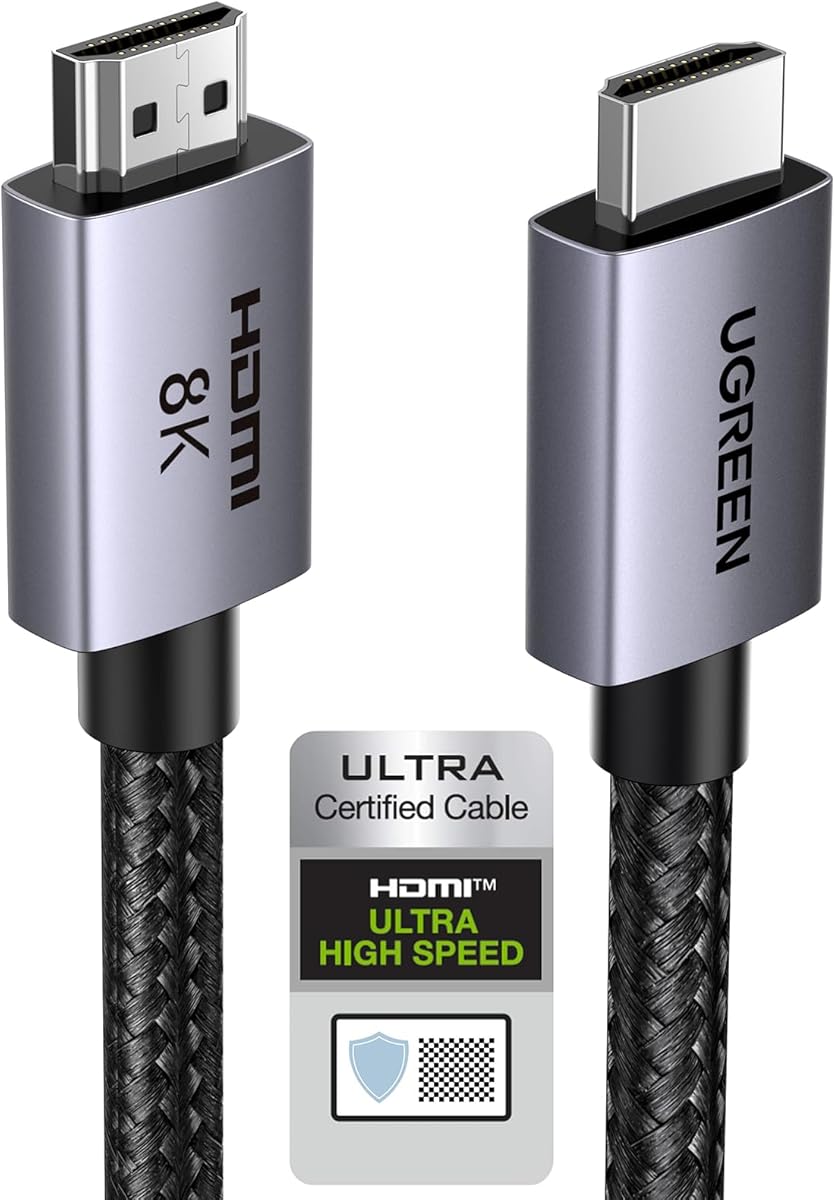
The UGREEN 8K HDMI 2.1 Cable stands out as the most balanced recommendation in this guide. It has a 4.8 rating, certified HDMI 2.1 performance, and 48Gbps bandwidth, while remaining a conventional six-foot lead suited to most television installations. It supports 10K@60Hz and 4K@240Hz, giving users a wide range of high-end picture modes.
We may earn a commission when you buy through this link, at no additional cost to you.
UGREEN highlights variable refresh rate, Quick Frame Transport, Auto Low Latency Mode, and Quick Media Switching. These features target smoother gaming, lower display latency, and smoother transitions when an HDMI source changes video mode. Dynamic HDR and 12-bit color are also listed, improving the cable's relevance for modern OLED and high-end 4K television setups.
Audio is also well covered. Enhanced Audio Return Channel can carry full-resolution audio, including Dolby Atmos and DTS:X, from a compatible television to a soundbar or AV receiver. HDCP 2.2 and 2.3, Ethernet, and 3D support round out a specification that works across both viewing and listening applications.
The construction deserves attention. UGREEN lists an aluminum alloy connector housing, nickel-plated contacts, and a nylon braided jacket, all intended to improve resistance to repeated bending without sacrificing flexibility. The extensive compatibility list includes major streaming devices, game consoles, laptops, projectors, monitors, and 8K televisions. This is the lead to choose when you want strong performance, useful modern features, and a well-rounded specification set without moving to a future bandwidth standard.
Support for 4K@240Hz, 8K@60Hz, Dynamic HDR, and 12-bit color makes the cable appropriate for high-end televisions and capable graphics hardware. The source device, television, and chosen picture mode must all be compatible.
The aluminum alloy housings, nickel-plated connectors, and braided jacket target the durability demands of a lead used between a television and frequently swapped source devices. A six-foot length also gives installers room to route the cable neatly.
We may earn a commission when you buy through this link, at no additional cost to you.
The Amazon Basics HDMI Cable is the most approachable option for viewers whose television and source equipment operate at 4K@60Hz. Its 4.7 rating and 18Gbps bandwidth align with the basic HDMI 2.0 specification, making it suitable for many Blu-ray players, streaming boxes, game consoles, computers, and conventional 4K televisions.
We may earn a commission when you buy through this link, at no additional cost to you.
The cable supports 2160p video, 48-bit color, Ethernet, 3D, and Audio Return Channel. That is a useful collection of functions for everyday home entertainment, particularly when a television can return compatible audio to a soundbar or receiver through a single HDMI connection.
Its primary limitation is clearly stated in the product data: the cable supports up to 4K@60Hz, so it will not work properly with a connected device that outputs a higher standard. That means it is not the right choice for 4K@120Hz gaming, 4K@240Hz monitors, 8K television modes, or other high-bandwidth features.
For viewers who do not need those capabilities, this cable avoids unnecessary complexity. It offers a practical six-foot length, backward compatibility with earlier HDMI devices, and broad support for familiar source products. It is a sensible basic lead for a second television, bedroom setup, or older media device.
The 18Gbps bandwidth comfortably covers 4K@60Hz, which remains the central picture mode for many televisions, streaming services, and Blu-ray players. It is a sensible connection when higher refresh rates are not part of the setup.
ARC can simplify television-to-soundbar audio, while the included Ethernet function can share an internet connection between compatible devices. Both features depend on support from the connected equipment and television.
We may earn a commission when you buy through this link, at no additional cost to you.
The Highwings 8K HDMI 2.1 Cable 2-Pack offers a convenient way to connect a primary 4K television and keep a matching spare. Both leads are 6.6 feet long, carry certified Ultra High Speed HDMI 2.1 specifications, and provide 48Gbps bandwidth with stated support for 8K@60Hz and 4K at 240Hz or 120Hz.
We may earn a commission when you buy through this link, at no additional cost to you.
Compared with buying a single enthusiast lead, the two-pack is useful for homes with more than one television, monitor, projector, or game console. It can also prevent cable clutter by matching leads placed in separate rooms, provided each location is within the stated cable length.
The build uses an aluminum alloy shell, upgraded anti-bending tail, and military-grade tensile nylon material. Variable refresh rate support is listed for gaming, while the high bandwidth offers room for demanding picture modes on compatible hardware.
This bundle is most attractive to buyers who know they need two or more high-speed connections. A single-TV household may prefer one cable and will not gain extra performance from the duplicate. As with the other 48Gbps leads, actual 4K@120Hz, 4K@240Hz, and 8K modes still depend on the source and display.
A matching second lead is useful for a game room, guest television, or projector. The six-foot size fits most stands and cabinets, and having a spare reduces the inconvenience of moving a single cable between devices.
Highwings places emphasis on the connector shell and tail, where cables often receive the greatest strain. The stated aluminum alloy and nylon construction supports regular reconnection without relying on an oversized or overly stiff cable.
We may earn a commission when you buy through this link, at no additional cost to you.
The Acer HDMI 2.1 Cable is a strong choice for a 4K television connected to a modern game console, gaming PC, or high-end monitor. It has a 4.7 rating and provides 48Gbps bandwidth with stated support for 8K@60Hz, 4K@240Hz, 4K@120Hz, 4K@144Hz, 4K@60Hz, 2K, and 1080p.
We may earn a commission when you buy through this link, at no additional cost to you.
For gaming, the cable lists variable refresh rate to help reduce screen tearing on compatible systems. Its eARC and ARC support, together with Dolby Vision and Dolby Atmos, make it relevant to a complete living-room installation where a television sends high-quality audio to a soundbar or receiver.
The physical design uses high-purity copper, aluminum alloy shells, and a braided jacket. Acer says these elements help resist electromagnetic interference, bending, and daily wear. The six-foot length suits most television furniture, while the additional 3-foot and 10-foot options mentioned in the product information offer flexibility for other arrangements.
This lead is a good match for buyers who want console and PC performance without paying attention to a future HDMI generation. Check your display's input bandwidth and supported refresh rates, as even a capable cable cannot overcome a television that only accepts 4K@60Hz.
The high bandwidth and VRR support align well with PS5, Xbox Series X|S, and capable gaming PCs. Connect the source directly to the television or monitor to avoid adding a device that may limit the available signal.
Copper cores, aluminum housings, and braided shielding form the stated physical platform for reliable transmission. The same cable can also handle eARC or ARC audio when the television, source, and soundbar are configured correctly.
We may earn a commission when you buy through this link, at no additional cost to you.
The Highwings 16K 4K 480Hz HDMI 2.2 Cable represents the forward-looking end of this selection. It carries a 4.6 rating and a stated 96Gbps bandwidth, with support claimed for 16K, 12K@120Hz, 8K@240Hz, and 4K@480Hz. The bandwidth offers exceptional headroom even though most current 4K televisions do not require it.
We may earn a commission when you buy through this link, at no additional cost to you.
The gaming-oriented functions include variable refresh rate and Auto Low Latency Mode, while Dynamic HDR and Dolby Vision support target high-end picture presentation. For home theater use, eARC can transmit high-quality, uncompressed audio such as Dolby Atmos from a compatible television to a soundbar or AV receiver. An Ethernet channel is also included.
Construction is unusually comprehensive for the category. The lead uses a flexible double-braided nylon jacket, corrosion-resistant 24K gold-plated connectors, and aluminum foil shielding intended to reject electromagnetic and radio-frequency interference. These are meaningful physical features for a cable marketed around stable signal transmission.
The trade-off is practicality. Few current source devices and displays can use the advertised 16K or 4K@480Hz modes, and its rating is slightly lower than those of the other selections. Choose it for a future-oriented installation, extensive cable management, or compatibility with emerging high-bandwidth equipment; otherwise, a 48Gbps lead offers the same capabilities for present-day 4K systems.
The 96Gbps specification is useful as a long-term connectivity choice. It creates substantial headroom for future display and source standards without requiring an immediate upgrade when equipment advances.
Aluminum foil shielding, braided protection, and gold-plated connector pins support conductivity and reduce interference. The stated materials are especially relevant for installations carrying high-volume data between a television, console, computer, or projector.
We may earn a commission when you buy through this link, at no additional cost to you.
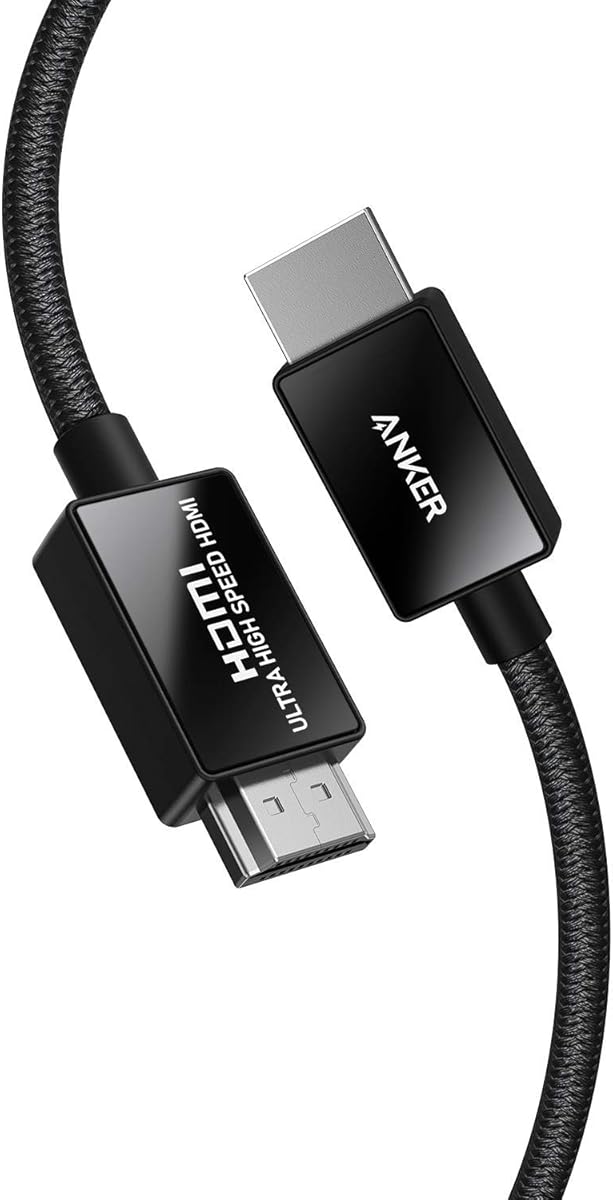
The Anker HDMI 2.1 Cable, 48Gbps Ultra High Speed Cord is a premium-oriented recommendation with a 4.8 rating. It supports 8K@60Hz and 4K@120Hz over 48Gbps bandwidth and is described as among the first cables officially certified as Ultra High Speed by the HDMI Forum.
We may earn a commission when you buy through this link, at no additional cost to you.
Its gaming relevance is clear. Compatibility is listed with the PlayStation 5, Xbox Series X|S, Sony 8K UHD televisions, Apple TV, and Roku Ultra, with 4K@120Hz support where the source and television provide it. Certification testing is also stated to cover electromagnetic interference, helping the cable operate alongside wireless devices and networks.
Material quality is another distinguishing point. Anker lists carbon steel connectors, gold connector pins, and a double-braided nylon finish. The company says the cable can be plugged and unplugged up to 10,000 times, making it suitable for setups where sources are switched regularly or the lead must be moved between rooms.
The package includes the cable, a welcome guide, an 18-month warranty, and customer service. It is a refined choice for a modern 4K television, especially for buyers who value certification, gaming support, and stated connector durability. Its 48Gbps rate provides more than most current televisions need, while remaining less specialized than the 96Gbps alternative.
Official Ultra High Speed certification provides a clear performance baseline for high-bandwidth 4K gaming. The cable's 4K@120Hz support is particularly relevant to compatible current consoles and high-end PCs.
Carbon steel connector bodies, gold-plated pins, and a double-braided exterior are intended to withstand regular plugging, unplugging, and routing. The stated 10,000-cycle figure reinforces its suitability for frequently changed source setups.
We may earn a commission when you buy through this link, at no additional cost to you.
The right HDMI lead depends on your television, source equipment, desired refresh rate, gaming features, audio setup, and cable placement. The following factors help separate basic 4K connectivity from high-end, high-bandwidth performance.
In short, choose a cable that comfortably covers the highest resolution and refresh rate in your setup.
For ordinary 4K@60Hz viewing, 18Gbps is sufficient; for high-refresh gaming, 48Gbps is the more relevant target.
Prefer a certified model when picture stability, future compatibility, or high-bandwidth performance is important.
For gaming, prioritize VRR and high-refresh support, but confirm that the television and source device offer the same features.
Choose a lead with modern HDR support when your content and television can actually use those formats.
Choose eARC support when you want a single television-to-soundbar setup and the connected equipment is compatible.
Choose the shortest length that comfortably reaches, then leave enough slack for safe routing and future adjustments.
Look for a reinforced jacket and strain relief, especially if the cable will be moved or plugged and unplugged frequently.
Connect the cable directly to the television first, with the television powered off and the selected source identified in its menu. Plug the other end into the game console, streaming device, disc player, AV receiver, or computer, then turn on the television and source. Select the matching HDMI input and allow a few seconds for the display and audio to negotiate their capabilities.
To access the intended picture mode, open the television's game, picture, or input settings and enable the resolution and refresh rate supported by the source. For HDR, VRR, ALLM, QFT, or eARC, use the relevant television menus and verify that the connected soundbar or receiver is recognized. If a mode is missing, test the source directly, confirm that the correct port is selected, and ensure every intermediate device supports the feature.
Care for the lead by unplugging it from the television rather than pulling it sideways from the connector. Keep the cable free from tight coils, sharp bends, pinch points, and contact with hot surfaces. Bundle excess slack loosely, and use a cable guide when routing behind a mounted television. If picture flicker, color problems, or audio dropouts occur, reseat both connectors and test another input before suspecting the cable itself.
A 4K television can work with a standard HDMI 2.0 cable when the desired mode is 4K@60Hz. A 48Gbps Ultra High Speed cable becomes more important for 4K@120Hz or higher gaming, 8K displays, advanced gaming functions, and high-bandwidth HDR. Match the cable to the highest mode used by your source and television.
It can preserve signals that a lower-bandwidth cable cannot carry, but it will not improve the picture beyond the capabilities of the television or source. At 4K@60Hz with a compatible device, a good HDMI 2.0 cable may produce the same visible result. The larger benefit appears with high refresh rates, 8K, VRR, and advanced audio return functions.
For most stands and wall-mounted displays, six feet provides enough reach for tidy routing. A longer lead may be needed for a large room, a distant console, or a projector positioned away from the media cabinet. Avoid unnecessary extra length, and never leave the cable stretched tightly across a walking path.
Yes, as long as you intend to use modes within the cable's stated capacity. The 18Gbps Amazon Basics model supports 4K@60Hz, but it will not function properly with a source that outputs a higher standard such as 4K@120Hz. Check the output settings before connecting more demanding equipment.
No. The HDMI version alone does not guarantee every advertised mode, so examine the cable's bandwidth and certification details. A 48Gbps Ultra High Speed cable is designed for high-refresh 4K, but your television and source must support the same resolution and refresh rate. HDR, VRR, and eARC also require compatible hardware.
A cable can be a factor, particularly if it is damaged, sharply bent, or unable to carry the selected mode. The television input, source resolution, refresh rate, HDR setting, and intermediate devices are also common causes. Reseat the cable, power the components in the recommended order, and test a simpler 4K@60Hz mode to isolate the problem.
A modern high-speed HDMI lead is preferable because it has sufficient bandwidth and commonly includes eARC, Dynamic HDR, and the required compatibility features. However, the cable alone cannot create these formats. The television, source content, soundbar, receiver, and settings must all support Dolby Atmos, Dolby Vision, and the chosen HDMI audio-return function.
Length matters only when it solves a placement problem. A suitable cable can maintain the required signal at its supported length, but added slack can complicate routing. Choose the shortest practical option, protect it from sharp bends, and use quality strain relief rather than relying on extra length to compensate for poor installation.
The UGREEN 8K HDMI 2.1 is the strongest all-around choice because it combines 48Gbps bandwidth, certification, high-refresh support, Dynamic HDR, eARC, and durable connector construction. The Anker 4K@240Hz cable offers a more streamlined alternative, while the premium Anker 48Gbps model stands out for certification, materials, and stated plug-cycle endurance.
Most viewers should prioritize compatibility with their source and television before considering the largest advertised resolution. Choose 18Gbps for straightforward 4K@60Hz use, 48Gbps for current high-refresh gaming and modern features, and 96Gbps only when emerging standards or substantial future headroom justify the specialized lead. Cable length, routing, and connector care also affect long-term reliability.
Product specifications and prices can change, so confirm the current listing, supported television modes, cable length, and warranty before purchasing. Checking the exact source output and television input capability will prevent an otherwise capable cable from being limited by a setting or component elsewhere in the setup.