
OSGEAR 24x SATA DVDRW
4.2Editor score
24x DVD write speed
56x CD read speed
Tray-loading desktop design
Broad Windows compatibility
Explore the 10 best SATA DVD burners for 2026, comparing speed, format support, compatibility, installation, archival features, and suitability for desktop PCs.
A SATA DVD burner adds useful disc-reading and disc-writing capability to a desktop computer, especially when recovering software, creating installation media, archiving files, or accessing legacy media. The right drive should combine broad format support, dependable recording performance, straightforward installation, and compatibility with the intended computer case.
This guide compares ten internal and external optical-drive options using the supplied specifications, ratings, supported formats, interface details, writing speeds, and installation features. It covers models for standard desktop towers, compact builds, quiet workstations, archival projects, and users who prefer a USB connection instead of an internal SATA installation.
The top selections highlight the strongest combinations of value, recording technology, and specialized functionality, while every review explains the relevant trade-offs. Product availability and prices can change, so readers should confirm the current listing details and verify case, connector, and operating-system requirements before ordering.
4.2Editor score

4.5Editor score

4.5Editor score
The table below compares the ten featured drives by interface, recording speed, format support, and the features most relevant to desktop installation, archival work, or portable use.
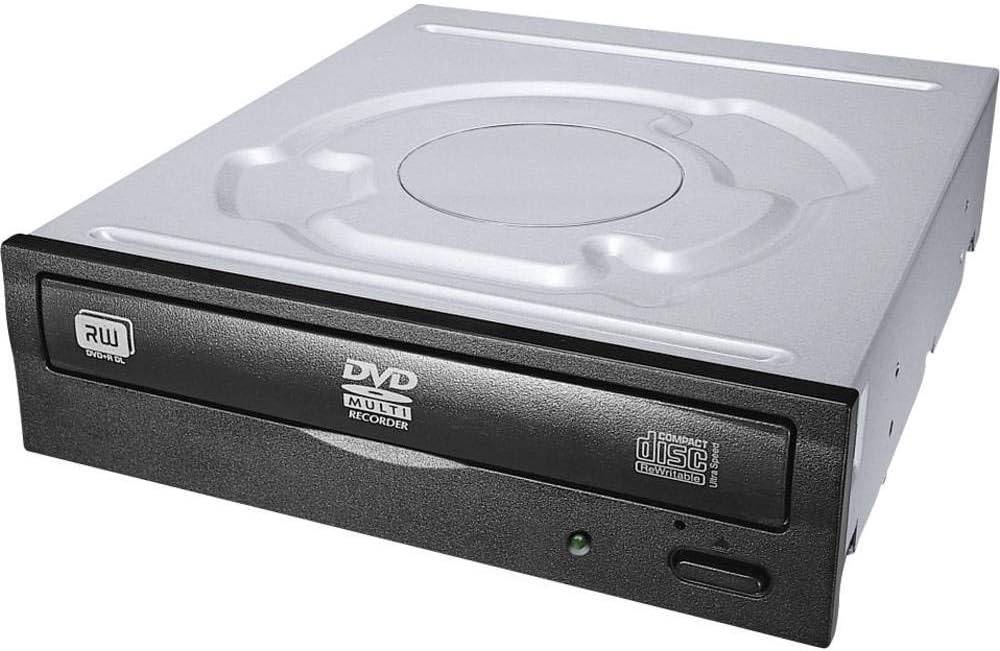


This Lite-On internal optical drive earns a 4.5 customer rating and stands out as the most complete general-purpose option in the group. It combines 24x DVD writing with support for DVD-R, DVD-RW, dual-layer DVDs, CD-R, and CD-RW, giving it the format coverage needed for software discs, music backups, data storage, and routine duplication work.
We may earn a commission when you buy through this link, at no additional cost to you.
The installation package is unusually practical because it includes a SATA data cable and mounting screws. Its approximate 5.75-inch width, 1.63-inch height, and 6.69-inch depth fit the conventional internal optical-drive format used by many desktop towers, servers, workstations, and duplicator systems. A 24x maximum writing speed is useful when moving larger files or producing multiple discs.
The main limitation is that the supplied specifications do not mention the broad specialty-media database or archival burning functions associated with the Plextor in this guide. This model also has to be installed internally, making it less convenient for a laptop or a user who does not want to open a desktop case. Neither issue undermines its strength as a conventional all-purpose burner.
This is the most balanced recommendation for users who want broad format support, a 24x write speed, included installation parts, and compatibility across Windows, Linux, and other SATA-supported systems. It is particularly appropriate for desktop upgrades, legacy disc access, server or workstation restoration, and straightforward duplication projects.
Dual-layer support expands practical archive capacity and allows the drive to handle larger DVD formats. It is especially useful for backups, media storage, and installation images that benefit from more room than a standard single-layer disc provides.
The included SATA cable and mounting screws reduce the need for extra parts during a standard desktop installation. Buyers should still confirm case clearance, power-connector availability, and the location of the motherboard SATA header before opening the system.
We may earn a commission when you buy through this link, at no additional cost to you.
The Lite-On IHAS124-14 carries a 4.5 customer rating and belongs to a well-recognized 24x internal DVD writer family. Its core proposition is straightforward: provide SATA-connected DVD and CD reading and rewriting performance for desktop systems without introducing an external enclosure into the workflow.
We may earn a commission when you buy through this link, at no additional cost to you.
The listing identifies the drive as a 24X SATA internal DVD+/-RW optical drive, which places it among the faster conventional DVD writers in this roundup. A 24x capability can shorten burn times for compatible media and make the drive more practical for users who regularly create installation discs, duplicate music CDs, or transfer archived files.
The supplied product information is much less detailed than that for the first Lite-On model. It does not explicitly list dual-layer recording, included cables, operating-system compatibility, or dimensional measurements. Buyers therefore should not assume those features are present merely because the model shares the Lite-On brand and 24x specification.
This model makes sense for a desktop builder seeking a recognizable 24x SATA writer and a strong customer rating without requiring advanced archival-media features. It is a practical option for general-purpose disc use, but buyers who need confirmed dual-layer support or a bundled installation kit may find the first Lite-On listing better documented.
A 24x internal writer is well suited to routine software media, music CDs, and standard DVD backups. Its speed advantage is most meaningful when the computer software and media support the advertised maximum rate.
The compact listing provides limited feature information. Checking the exact model specifications for dual-layer capability, accessories, dimensions, and operating-system support can prevent an incompatibility later in the buying process.
We may earn a commission when you buy through this link, at no additional cost to you.
The Plextor PX-891SAF is the premium choice in this guide, combining a 4.5 rating with 24x recording, dual-layer capability, and extensive control over how media is written. It is built for users who do more than occasional disc burning, including duplication operators and archivists who want the drive to recognize a broad selection of specialty media.
We may earn a commission when you buy through this link, at no additional cost to you.
Its most impressive feature is the ability to burn virtually all makes of specialty archival media, including M-Disc. A database of media specifications helps the drive communicate relevant disc details, while secure media-speed stability prevents the duplication rate from exceeding the encoded maximum. These features support consistent results when the same source needs to be copied repeatedly.
The trade-offs are practical rather than fundamental. This is an internal SATA unit, so it needs an appropriate desktop case, a SATA data connection, and power. The bulk designation may also mean that presentation or included accessories differ from retail-boxed versions. Compared with generic 24x writers, it offers more specialized media intelligence rather than simply a faster headline speed.
Choose the PX-891SAF when recording consistency, archival media support, or dependable duplication matters more than minimal cost. It is the strongest recommendation for professional workflows, serious personal archives, and users who routinely produce multiple copies of important data.
Support for virtually all makes of specialty archival media, including M-Disc, distinguishes this model from conventional writers. That capability is valuable for long-term photo, video, and file preservation projects.
The drive's media database and speed-stability system help keep recording behavior aligned with each disc's encoded maximum. This reduces the chance that a repeated duplication will outrun the intended media rate.
We may earn a commission when you buy through this link, at no additional cost to you.
This OSGEAR drive is a value-oriented internal burner with a 4.2 customer rating. Its core specifications include 24x DVD performance, 56x CD-ROM reading, and a tray-loading SATA design, making it a practical choice for adding disc functionality to a compatible desktop without moving to an external solution.
We may earn a commission when you buy through this link, at no additional cost to you.
The drive can read and write DVD and CD formats, so it can handle software installation media, music discs, data archives, and legacy content in one unit. Compatibility is explicitly listed for Windows XP, 7, 8, 10, and 11, which is useful for older systems as well as current desktops. Its internal mounting also avoids the need to find a free USB port.
The listing is less specific about accessories and advanced recording behavior than the higher-ranked models. There is no mention of dual-layer capacity, specialty archival media, cable inclusion, or quiet-operation engineering. Those omissions do not affect its basic role, but they mean buyers should not treat the drive as an archival specialist.
This is a sensible recommendation for straightforward desktop use when the goal is an inexpensive, recognizable 24x DVD writer with fast CD reading. It suits general computer upgrades, family desktops, and users who need to read or create ordinary CDs and DVDs without specialized media features.
A listed 56x CD-ROM read speed is useful for quickly accessing music, educational discs, and older software. It complements the drive's 24x DVD performance while preserving support for common disc formats.
The explicit support for Windows XP through Windows 11 makes this drive relevant to older desktops as well as modern systems. Operating-system support does not replace the need to confirm that the case has a suitable SATA data header and power connection.
We may earn a commission when you buy through this link, at no additional cost to you.
The GODBPNYMU internal optical drive offers a broad collection of accessible features, including 24x DVD writing, 52x CD burning, dual-layer support, and installation accessories. Its 3.4 customer rating is the lowest among the rated internal models, but the underlying specification set can still be attractive for users who prioritize functionality over a longer-established brand.
We may earn a commission when you buy through this link, at no additional cost to you.
The drive supports reading, playing, and burning CD, DVD, and VCD media, with a maximum dual-layer DVD capacity of 8.5GB. The included SATA cable and four mounting screws improve installation convenience. It also supports major desktop operating systems, including Windows versions from XP through 11, macOS, and Linux, without requiring separate driver installation.
Its most important limitation is the customer rating of 3.4, which is appreciably lower than the 4.2 to 4.5 ratings attached to the leading choices. The drive also does not support Blu-ray discs. Although its quiet-operation design is promoted, there is no indication of the same level of recording-media control offered by the Plextor.
Buyers who need a straightforward internal DVD and CD burner with dual-layer writing, an included cable, and broad system compatibility can find this option functional. Those who place greater emphasis on customer feedback, archival media, or professional duplication consistency will likely prefer a higher-rated alternative.
Dual-layer recording provides more capacity than a conventional single-layer DVD. The stated maximum of 8.5GB is helpful for larger data archives, installation media, and mixed multimedia projects.
The included cable and screws simplify assembly, while automatic operating-system recognition reduces setup complexity. The system must still be fully powered off before either SATA cable is connected or disconnected.
We may earn a commission when you buy through this link, at no additional cost to you.
This 5.25-inch SATA DVD and CD burner combines a 4.0 customer rating with a 24x DVD write speed and a 52x CD burning speed. It is particularly notable for its complete accessory bundle, which includes a SATA cable, four mounting screws, a screwdriver, and four disc storage sleeves.
We may earn a commission when you buy through this link, at no additional cost to you.
The drive supports reading, playing, and burning CD, DVD, and VCD discs, including dual-layer DVDs with a maximum stated capacity of 8.5GB. Compatibility is listed for Windows 7, 8, 10, 11, and XP, as well as macOS and Linux. Plug-and-play operation means the system can recognize the drive without driver installation.
The supplied information describes a quiet design with internal noise reduction during reading and writing, which is helpful in an office, study area, or quiet home environment. The trade-off is that the drive does not support Blu-ray and carries only a 4.0 rating. Its inclusion of a screwdriver is convenient, though careful installation still requires the computer to be fully powered down.
This model is a good fit for PC builders or upgraders who want a complete installation kit and a quiet internal burner for ordinary DVD and CD tasks. It is less suitable for buyers who require specialty archival media or Blu-ray functionality, but it delivers a well-rounded feature set for standard disc use.
The supplied screwdriver and disc sleeves add practical value beyond the SATA cable and screws. This makes the package particularly convenient for a first internal optical-drive installation.
The stated internal noise-reduction design is intended to limit sound during high-speed burning and disc playback. Actual noise can depend on the chassis, mounting method, media, and nearby components.
We may earn a commission when you buy through this link, at no additional cost to you.
This internal DVD rewriter distinguishes itself with a native SATA 3.0 interface, vibration damping, and automatic speed adjustment. It supports DVD±R, DVD±RW, dual-layer DVD±R DL, CD-R, and CD-RW formats, covering the principal media categories required for data backup, archiving, and operating-system installation.
We may earn a commission when you buy through this link, at no additional cost to you.
Its listed interface bandwidth of up to 6Gb/s provides a modern connection path to compatible motherboards, although the speed of the optical media itself remains the practical limit for disc operations. Automatic speed adjustment is intended to preserve stable reading and writing, while vibration damping helps reduce movement and noise during operation.
The listing does not provide a customer rating, a maximum DVD write speed, or a clear list of included accessories. Those details make it harder to compare this drive confidently with models whose performance and package contents are clearly documented. Compatibility is listed for Windows 10, Windows 11, Linux, and legacy Windows operating systems.
This model is worth considering when a quiet, modern SATA interface, broad format support, and a standard desktop optical-drive format are priorities. Because essential performance details are sparse, buyers should confirm the drive's write speed, cable inclusion, dimensions, and case requirements on the current listing.
A native SATA 3.0 connection is appropriate for current desktop motherboards and provides ample interface bandwidth for optical-disc operations. A SATA data port and suitable power connection remain necessary.
Vibration damping and automatic speed adjustment are designed to support quieter, steadier operation. These features may be particularly useful in a shared office, home study, or late-night media workflow.
We may earn a commission when you buy through this link, at no additional cost to you.
The ASUS DRW-08D6MT is a compact internal SATA DVD burner that prioritizes case compatibility, power management, and archival media support. Its 3.9 customer rating is lower than the leading products, but the 30mm-shorter chassis and M-Disc technology give it a clear purpose in space-conscious or preservation-oriented builds.
We may earn a commission when you buy through this link, at no additional cost to you.
It writes DVD-R, DVD+R, DVD-RW, and DVD+RW discs at up to 8x and records CD-R and CD-RW at up to 24x. Although 8x is slower than the 24x figure used by several competitors, the drive remains useful for installation media, standard backups, and routine disc creation. Its compact size can also improve airflow and make installation easier in constrained cases.
M-Disc uses a resistant stone recording surface instead of organic dye, while E-Green technology places the drive into sleep mode when it is not being used to reduce power consumption. The trade-offs include the slower DVD write speed, no stated dual-layer support, and a rating that does not stand out against higher-scoring models.
This ASUS drive is best for a compact desktop that cannot accept a full-length writer, or for a user who values M-Disc and lower idle power use. Buyers focused on rapid DVD duplication should select a faster 24x model instead.
The chassis is 30mm shorter than a standard 5.25-inch writer, improving compatibility with compact desktop cases and potentially leaving more room for airflow. Physical case clearance should still be confirmed.
M-Disc support adds a durable archival option, while E-Green sleep behavior reduces power use when the drive is idle. Together, these features suit preservation-minded users and always-on desktop environments.
We may earn a commission when you buy through this link, at no additional cost to you.
The ASUS ZenDrive V1M is the leading portable option in this guide, with a 4.3 customer rating and a USB-C interface designed for modern laptops. Although it is not a SATA internal burner, it fills an important gap for users who want DVD writing without opening a desktop case or carrying a separate cable.
We may earn a commission when you buy through this link, at no additional cost to you.
Its built-in 24cm connecting cable is stored inside the drive body, reducing the chance of leaving a required USB-C cable behind. The interface suits current-generation ultrathin laptops, while stated Windows and macOS support broadens its usefulness across platforms. M-Disc support adds a preservation-oriented recording option.
The Windows-only drag-and-burn interface is a meaningful limitation for macOS users, who can still use the drive but may need a different burning workflow. Its external format also means it cannot use the SATA data connection or fit the 5.25-inch mounting bay used by internal models. It is best viewed as a portable complement rather than a direct internal replacement.
Choose the ZenDrive V1M for a laptop, compact workspace, or shared system where external USB-C convenience matters more than internal expandability. For a fixed desktop build with a spare drive bay, one of the internal SATA models offers a more integrated solution.
The 24cm cable fits inside the drive housing, so it remains available whenever the burner is needed. This is a small but meaningful convenience for mobile use compared with a detachable-cable external drive.
M-Disc compatibility allows a portable workstation to create archival media without a built-in optical drive. The included one-year warranty also provides manufacturer support for the listed model.
We may earn a commission when you buy through this link, at no additional cost to you.
This Dell external DVD writer provides a 4.5 customer rating and broad disc-format support through a USB 2.0 connection. It is designed primarily for notebooks and other systems that lack a built-in optical drive, making it a useful alternative for occasional software installation, legacy media access, and disc-based file transfer.
We may earn a commission when you buy through this link, at no additional cost to you.
The drive supports DVD±RW, dual-layer DVD±R DL, and DVD-RAM media, while its CD specifications include 24x writing, rewriting, and reading. DVD-RAM support is the distinguishing feature, giving users access to rewritable disc technology beyond the more common DVD-R and DVD-RW formats. Its black enclosure and tray-loading mechanism provide a conventional external form.
The USB 2.0 interface is the central compromise. It is compatible with many systems, but it is an older standard than USB-C and may offer less theoretical throughput than newer external alternatives. The listing does not state a maximum DVD write speed or provide extensive information about bundled accessories and operating-system compatibility.
This Dell drive is well suited to notebook owners and legacy-system users who value DVD-RAM support and a strong customer rating over the newest connector standard. It is less appealing for fast modern workflows where a USB-C model with clearly documented DVD speeds would be preferable.
DVD-RAM expands the range of reusable media available to users, while DVD±R DL support covers dual-layer discs. These formats are useful for users preserving, organizing, or repeatedly updating disc-based data.
The external USB design avoids the need to install a drive inside a laptop or compact desktop. USB 2.0 offers broad device support, although newer interfaces may be better for demanding external storage.
We may earn a commission when you buy through this link, at no additional cost to you.
Choosing a SATA DVD burner means balancing installation needs, supported formats, recording speed, media reliability, and the type of computer in which the drive will be used. The following factors help separate a genuinely useful upgrade from a model that merely matches the basic category requirements.
An internal SATA writer is the most natural choice for a desktop with a free 5.25-inch optical-drive bay, a SATA data header, and a suitable power connector. It avoids occupying a USB port and remains permanently available to the operating system. An external USB drive is more convenient for notebooks, compact systems, temporary use, or users who do not want to open a computer case. USB-C models suit modern thin laptops, while USB 2.0 units can offer broad compatibility with older notebooks and desktop systems.
Choose an internal model for a permanent desktop upgrade and an external model for portability. Do not assume every USB optical drive in this category is SATA, because the Dell and ASUS ZenDrive options shown here use external USB connections.
A useful writer should support the formats found in the user's collection and planned projects. DVD±R and DVD±RW cover many common recordable and rewritable discs, while CD-R and CD-RW remain relevant for audio CDs, software installers, and older backups. Dual-layer support adds capacity, and DVD-RAM provides another rewritable-disc option. Specialty archival media such as M-Disc is relevant only when the user specifically wants that medium.
Review the complete format list rather than focusing on a headline writing speed. A fast drive that cannot read an existing disc is less useful, while broad read and write support makes the device more adaptable.
Maximum DVD writing speeds in this guide range from 8x to 24x, while several models support CD burning around 52x or 52x-class performance. A 24x writer can reduce the time required for compatible media, but speed does not guarantee better results if the disc quality, firmware, or recording strategy is poor. CD-ROM read speed is especially useful for quickly accessing large music or software discs.
Prioritize overall workflow needs rather than the largest printed number. Rapid duplication, large backups, and frequent disc creation benefit from faster writing, while a compact installation disc may be completed in less time than expected on any of these drives.
A burner should create discs that can be read reliably later. The Plextor distinguishes itself through an extensive media-specification database, speed stabilization, and support for specialty archival media. Other conventional writers can still be appropriate for routine work, but their listings may not describe the same level of recording control. Reliability also depends on the quality of the blank media, system configuration, firmware, and proper shutdown procedures.
For professional duplication, preservation, or irreplaceable files, favor a drive with documented media intelligence and archival support. For ordinary software discs and temporary backups, the added sophistication may be unnecessary.
Most internal optical drives use a standard 5.25-inch faceplate, but their depths and connector positions vary. The Lite-On model listed here measures approximately 5.75 inches wide, 1.63 inches high, and 6.69 inches deep. The ASUS DRW-08D6MT is 30mm shorter than a standard writer, which can make it easier to fit in a compact case. Buyers should measure the available bay and check for obstructions before purchasing.
Also consider the faceplate color, tray-loading behavior, and whether the computer case has a matching external bay. A drive that is electrically compatible but physically difficult to mount can still create an avoidable installation problem.
Most modern optical drives rely on operating-system support rather than custom driver packages, but compatibility should still be confirmed. The featured internal models variously list Windows XP through Windows 11, Linux, macOS, or other SATA-supported systems. External models may use a drag-and-burn utility, and the ZenDrive V1M's stated drag-and-burn interface is Windows-only even though the drive itself supports macOS.
Confirm the intended operating system, the available SATA or USB connection, and any burning utility requirements. Also check that the desktop has a power connector for an internal unit or that the laptop supports the external drive's connector.
Some optical drives include a SATA data cable and mounting screws, while others require those parts to be sourced separately. The OSGEAR listing does not clearly identify included accessories, whereas the GODBPNYMU models specify a cable and screws, and one also includes a screwdriver and disc sleeves. A complete package can simplify a first installation, although a spare cable is still useful if the included lead has a different connector arrangement.
Check the box contents carefully before assembly. A missing SATA cable is a common and easily avoidable reason that an otherwise compatible internal drive cannot be installed immediately.
Optical drives can produce noticeable movement and sound while reading or burning at high speed. Models with vibration damping, automatic speed adjustment, or noise-reduction design may be preferable in offices, libraries, studios, and quiet home offices. Compact ASUS models may also suit space-constrained cases, while the external ZenDrive provides portability and integrated cable storage for mobile workflows. Power-saving sleep behavior can help in systems that remain switched on.
Prioritize these qualities when the drive will share a quiet workspace or operate in a compact environment. They are less important when the computer sits in a separate room and the main need is straightforward disc creation.
Before installing an internal SATA DVD burner, shut down the computer completely and disconnect its power cord. Remove the case cover, locate a free 5.25-inch mounting bay, and connect the drive's SATA data cable to a motherboard or supported SATA header. Connect the other SATA power lead, secure the drive with the appropriate screws or rails, and restore the cover before reconnecting power. External USB drives require only a compatible port and a secure connection to the computer.
Insert a blank disc or the disc to be copied, close the tray, and use a trusted burning application or the operating system's disc-authoring function. Select the desired recording format and speed, avoid interrupting the process, and close other demanding applications to reduce vibration and interrupted writes. After completion, eject the disc through the operating system and allow the drive's tray to retract fully before moving the computer.
Keep the tray and internal mechanism clean, handle discs by their edges, and avoid writing to discs that are scratched, dirty, warped, or previously damaged. Do not connect or remove SATA cables while the computer is running. If a burn fails, check the disc brand, try a fresh compatible medium, update the drive firmware where applicable, and consult the manufacturer's troubleshooting guidance rather than repeatedly forcing the same disc.
A SATA DVD burner installs inside a desktop case and connects to the motherboard with a SATA data cable plus a SATA power connection. An external USB writer stays outside the computer and connects through USB, making it more convenient for laptops and temporary use. The internal option is better for a permanent desktop build, while the external option offers greater portability.
No. The advertised speed is a maximum under compatible media and supported conditions, and the writing software may select a lower rate to improve reliability. Disc brand, format, capacity, file size, and drive behavior all affect the actual time. High speed is most useful for routine DVD creation and duplication rather than archival media.
Not usually. Several featured drives include a SATA data cable, which can cover the connection between the optical drive and motherboard. If the included cable has an unusual connector, is missing, or has a damaged latch, a standard internal SATA data cable may be needed. The drive also requires a separate SATA power connection from the power supply.
Not unless the specific model explicitly supports Blu-ray. The GODBPNYMU models in this guide expressly do not support Blu-ray, and most conventional DVD-only drives listed here are designed for CD and DVD media. Confirm the exact format list before attempting to use a Blu-ray disc, especially for reading or writing purposes.
The limiting factor depends on the drive and interface. The Dell external writer uses USB 2.0, while the ASUS ZenDrive uses USB-C, and neither listing provides the same maximum DVD write-speed detail as several internal models. Connection bandwidth alone does not determine burn speed, but the drive's media engine and supported media still control the result.
Dual-layer support is useful when you want to record more data on a single disc than a standard single-layer DVD can hold. The relevant models state a maximum capacity of 8.5GB. It is especially useful for larger backups and installation media, but it is not essential for users creating only music CDs or small conventional DVDs.
The listings cover a range of Windows versions, Linux, macOS, and other SATA-supported systems, depending on the model. Compatibility varies: the ZenDrive V1M supports Windows and macOS, but its drag-and-burn utility is Windows-only. Check the current product details and your specific system before purchasing or installing a drive.
Usually, yes, provided the laptop has a compatible USB port and the operating system recognizes the external drive. The ASUS ZenDrive V1M uses USB-C, while the Dell model uses USB 2.0. Burning performance and software support may differ from those of an internal SATA writer, so the external unit is generally best for occasional use.
The OSGEAR 24x SATA DVDRW offers the most budget-conscious route to a conventional internal burner, with 24x DVD writing, 56x CD reading, and broad Windows support. The Lite-On 24x Dual-Layer model is the stronger all-round selection because it combines dual-layer recording, installation accessories, cross-platform compatibility, and a 4.5 customer rating. For specialized professional work, the Plextor PX-891SAF leads through its media database, stable duplication controls, and extensive archival-media support.
The right drive depends on where it will live and what it must do. Choose an internal SATA model for a desktop with a free optical bay, an external USB-C model for a modern laptop, or a USB 2.0 unit when notebook compatibility and DVD-RAM support matter. Match the supported formats to your discs, confirm physical clearance and power connections, and prioritize media control when important files will be duplicated.
Product listings and prices change, so confirm the current specifications, package contents, customer feedback, and connector requirements before purchasing. Those checks are especially important for internal drives, where dimensions and included SATA cables can affect whether the installation is immediate and trouble-free.