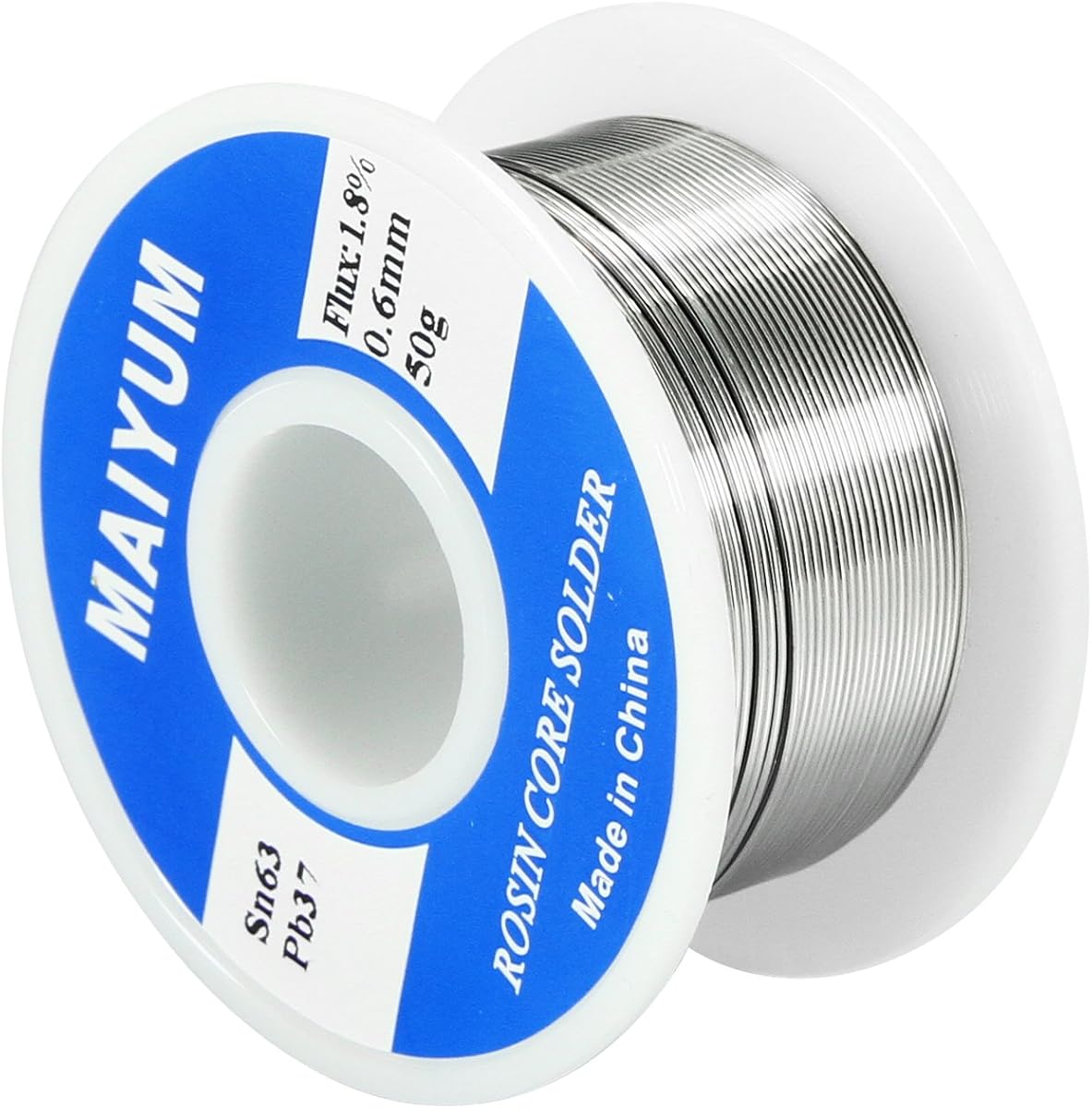
MAIYUM 0.6mm Solder Wire
4.6Editor score
Convenient 0.6mm wire diameter
63/37 tin-lead alloy
Rosin-core flux construction
Soldering is the foundation of reliable RC electronics work, from securing motor leads and connecting ESCs to replacing damaged connectors and repairing control boards. Good solder should melt predictably, wet the joint cleanly, and withstand movement without creating brittle joints or leaving excessive residue.
This guide compares ten products selected for RC-related solder wire, soldering irons, workbench mats, and hands-on training kits. We evaluated the supplied specifications, including alloy composition, wire diameter, temperature control, included accessories, heat resistance, organization, and intended level of electronics practice.
Each pick reveals a different strength: convenient wire formats, adjustable iron performance, organized bench setup, or guided skill development. Ratings reflect the published customer feedback in the supplied data, while availability and prices can change, so verify current listing details before buying.
4.6Editor score

4.8Editor score

4.8Editor score
As an Amazon Associate we earn from qualifying purchases.
The table below compares the ten selections by product type, key construction or feature, intended RC use, and practical advantage. Because the list includes solder wire, an adjustable iron, a silicone bench mat, and training kits, the comparison highlights the role each product plays rather than treating every item as a direct substitute.




This MAIYUM 63/37 rosin-core solder wire offers a practical balance of wire diameter, spool size, and application range. Its published rating is 4.6, making it a well-regarded general-purpose choice for RC wiring, circuit boards, cables, radios, toys, and household electronics.
We may earn a commission when you buy through this link, at no additional cost to you.
The 0.8mm wire is substantial enough for common through-hole joints, connector leads, and larger RC power components. Its 63/37 tin-lead composition and 1.8% rosin-core flux are designed to support smooth flow and strong solder points, while the stated melting point of 361°F lets it work with ordinary temperature-controlled soldering stations.
The main compromise is lead content. The listing includes a Proposition 65 warning, so users should work in a ventilated area, wash their hands after use, and keep solder away from food. Although the 50g spool is compact, it may need replenishing sooner than a larger roll for frequent RC building or repair work.
This is a strong choice for a hobbyist who wants one conventional solder wire for multiple types of electronics jobs. It is particularly suitable for through-hole RC boards, ESC connections, receiver wiring, and repair leads. Users with lead-sensitivity concerns should consider the lead-free option later in the list instead.
At 0.8mm, the wire offers enough material for larger pads and less risk of starving a joint, while remaining manageable for common hand-soldering work. It is a useful diameter when the same bench handles both delicate lead work and sturdier power connections.
The specified 361°F melting point supports efficient flow through the 1.8% rosin-core flux. This makes the solder a familiar choice for circuit boards, cable connections, and assorted electrical repairs described in the product data.
We may earn a commission when you buy through this link, at no additional cost to you.
This three-pack of 63/37 rosin-core solder wire is built around 0.6mm wire, each spool holding 27g. Its 4.5 rating reflects positive customer feedback, and the multi-spool format is convenient for separating bench stock, travel supplies, and dedicated projects.
We may earn a commission when you buy through this link, at no additional cost to you.
The finer wire can be useful around small RC components, control-board pads, receivers, and compact connectors where a larger 0.8mm wire may be awkward. The stated 361°F melting point and rosin core support fast, even flow, while the listing describes the formula as low residue to help reduce post-solder cleanup.
Lead is the central drawback, and the product includes a clear California warning. The three-pack does not mean three large spools; each contains 27g, so heavy repair schedules may consume the supply quickly. Buyers who require lead-free material for workplace or personal health reasons should select a compliant alternative.
The product is well suited to hobby builders who want several small spools of fine solder and want the option to keep one at a shared bench. It is especially relevant for smaller RC electronics tasks and basic repairs where controlled application of 0.6mm wire is helpful.
Keeping multiple small spools makes it possible to dedicate stock to different tasks or maintain separate supplies at more than one work area. It also reduces the need to replace a single small spool as quickly.
The 0.6mm diameter provides a practical balance for compact electronics work. Combined with the specified 1.8% flux core, it gives the user a controlled way to feed small RC pads and through-hole connections.
We may earn a commission when you buy through this link, at no additional cost to you.
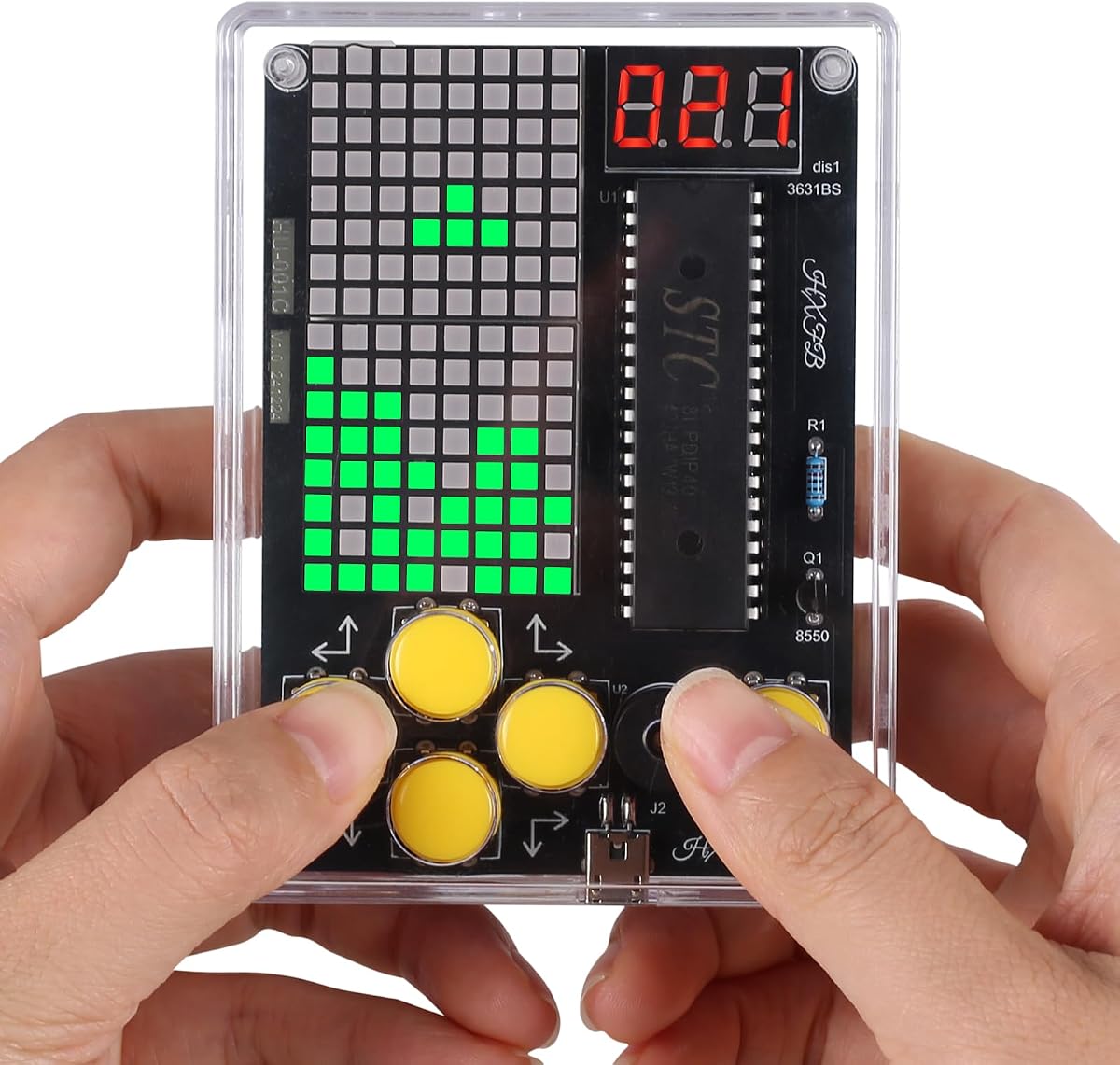
The PEMENOL 7-in-1 DIY Game Soldering Kit is a learning-oriented electronics project rather than a replacement for a general spool of solder. It carries a 4.1 rating and is designed for users aged 15 and above who want to practice component placement, soldering, assembly, and basic electronics skills.
We may earn a commission when you buy through this link, at no additional cost to you.
Its strongest feature is structured progression. Three difficulty levels let a beginner begin with fundamental assembly tasks and then move toward more involved work. Once built, the project offers seven interactive functions, giving learners a practical reason to complete the assembly and then test the result.
A color-printed manual and video guidance support the process, but the experience is less flexible than building an actual RC vehicle. The kit is intended for structured skill development, school projects, electronics workshops, and supervised group learning, so buyers seeking connector repair or a general bench supply may need separate tools.
This product is a good match for teens, adult beginners, instructors, and families who prefer guided learning over trial-and-error. For an RC hobbyist, it can serve as a preparatory exercise before tackling small control boards, provided the included project instructions and available soldering equipment are suitable for the user's experience level.
The staged difficulty structure helps users move from basic soldering and component assembly to more involved electronics practice. It is especially useful for workshops where learners benefit from a defined path rather than a collection of unrelated exercises.
Seven built-in functions give the completed project a testable outcome. The ability to explore the functions after assembly makes the kit feel like a working electronic system rather than simply a disposable assembly exercise.
We may earn a commission when you buy through this link, at no additional cost to you.
This MAIYUM 50g spool uses 0.6mm rosin-core solder wire made from a 63/37 tin-lead alloy. Its 4.6 rating and detailed application list make it a convincing choice for compact RC wiring, circuit boards, cable repairs, and other accessible electronics projects.
We may earn a commission when you buy through this link, at no additional cost to you.
The narrower 0.6mm diameter is useful when the joint area is limited or when the builder wants to control the amount of solder entering a pad. The 1.8% rosin flux core and stated melting point of 361°F support predictable flow on conventional electronics work, including small PCBs and wired components.
As with other 63/37 products in this guide, lead exposure is the main safety consideration. Ventilation, handwashing, food hygiene, and responsible disposal all matter. The 50g quantity also favors occasional builders and portable kits rather than a technician performing many daily repairs.
For an RC hobbyist working on small receivers, control boards, or compact lead connections, this is a practical pick. It is also straightforward to pair with a temperature-controlled iron and the larger soldering mat recommended in this guide, creating a compact but organized repair setup.
The 0.6mm wire makes it easier to limit solder around small pads and closely spaced components. That control is useful for RC electronics where excess buildup can make disassembly or visual inspection more difficult.
At 50g, the spool is described as pocket-friendly and easy to carry. It fits well in a small tool pouch or field-repair kit where a full-size solder roll would be unnecessary bulk.
We may earn a commission when you buy through this link, at no additional cost to you.
The STREBITO soldering mat is a premium bench-organization solution with a 4.8 rating. Its large 21.65-by-15.75-inch silicone surface, 133 compartments, 10 screwdriver slots, tool zone, and three magnetic areas are designed to support the many small parts involved in RC electronics work.
We may earn a commission when you buy through this link, at no additional cost to you.
Heat resistance up to 932°F helps protect the work surface during soldering, heat-gun, and rework sessions. Raised edges help keep screws and components from rolling away, while metric and imperial rulers support layout and measurement. The soft, elastic silicone also reduces scratching of sensitive electronics surfaces.
The important limitation is static. The manufacturer explicitly states that this is not an anti-static mat and does not prevent static, so it should not be treated as a complete ESD-safe workstation. It can still be used alongside a proper anti-static wrist strap and grounding measures when working with static-sensitive components.
This mat is an excellent addition for anyone who routinely opens ESCs, receivers, or control boards and struggles with loose screws. It is less essential for occasional one-off work, but for a dedicated hobby bench, it can make the soldering process cleaner, faster, and considerably less frustrating.
The 133 compartments make it possible to separate screws, connectors, heat-shrink pieces, and other small items during disassembly. Magnetic zones add another place for metal hardware, reducing the chance that tiny parts migrate into the work area.
With a stated tolerance of up to 932°F, the silicone surface offers stronger heat protection than a basic disposable pad. It provides a more permanent home for an adjustable iron, heat gun, and delicate RC electronics during extended repair sessions.
We may earn a commission when you buy through this link, at no additional cost to you.
The Plusivo 60W digital soldering iron kit earns a 4.8 rating and stands out as the most complete general-purpose bench option in this list. It combines an adjustable temperature-controlled iron with five replaceable tips, solder wire, a stand, a desoldering pump, and numerous supporting accessories.
We may earn a commission when you buy through this link, at no additional cost to you.
The LED display makes the operating temperature easy to read, while the stated 200–500°C range offers useful flexibility for different jobs. A fine tip can support small RC board work, whereas broader tips can handle larger leads and connections more efficiently. The ceramic heating element, ventilation holes, and heat-resistant silicone grip are all designed for repeated bench use.
The kit contains more than 15 accessories, including tweezers, a sponge, a mini wire stripper, mini screwdrivers, a mini PCB, heat-shrink tubing, and a carrying bag. That breadth is helpful for a new hobbyist, although beginners may not use every item immediately. The 120V plug also makes it less directly suitable for other voltage systems without an appropriate converter.
This is the most versatile recommendation for an RC builder who wants a complete starting setup. It can handle general soldering, component replacement, wire work, and basic desoldering. Pair it with the STREBITO mat for organization and either the 0.6mm or 0.8mm MAIYUM wire for a well-rounded RC repair station.
The digital adjustment range gives the user more control than a fixed-temperature iron. Users can select a lower setting for smaller components and raise it for heavier connections, improving flexibility across varied RC projects.
A stand, sponge, replacement tips, solder sucker, tweezers, and hand tools cover several recurring needs. The result is a practical foundation for building, repair, and learning without requiring a separate purchase for every basic accessory.
We may earn a commission when you buy through this link, at no additional cost to you.
This two-pack SMD soldering practice kit is designed to develop surface-mount assembly skills through realistic PCB work. Its 4.1 rating reflects a more specialized educational focus, and the inclusion of two boards lets beginners repeat an exercise rather than treating the first assembly as a one-time attempt.
We may earn a commission when you buy through this link, at no additional cost to you.
Components include 0805 and 0603 parts, diodes, transistors, and integrated circuits, allowing users to move from simpler packages toward denser work. The high-grade green PCB has clearly labeled footprints, which helps new builders associate component placement with the printed board design and makes errors easier to diagnose.
This is not a ready-made RC vehicle or a general repair kit. It also does not replace a soldering iron, solder, or other bench tools, so those requirements should be considered before purchase. Its real value is deliberate repetition in a safe, low-consequence environment before attempting a valuable receiver, ESC, or flight controller.
RC hobbyists interested in electronics should consider this kit when they want stronger surface-mount confidence. It is also appropriate for adult learners, students, and workshop participants who benefit from a standardized board and a diverse set of component packages to practice.
The mix of tiny passive packages, diodes, transistors, and ICs exposes users to several surface-mount techniques. This variety is more representative of modern electronics than practicing on a board with only one repeated component type.
A second board allows users to repeat the first assembly and focus on accuracy. That makes the two-pack format useful for deliberate skill-building rather than simply increasing the number of unfinished projects.
We may earn a commission when you buy through this link, at no additional cost to you.
The MAIYUM 0.8mm 100g solder wire is a higher-volume version of a well-established 63/37 rosin-core formula. It holds a 4.6 rating and is positioned for circuit boards, cable work, radio or TV repair, toys, DIY projects, and other electrical devices.
We may earn a commission when you buy through this link, at no additional cost to you.
Its larger spool is the defining advantage for active hobbyists. Builders who frequently reconnect ESC leads, replace connectors, repair receiver wiring, or maintain several vehicles can keep more solder at the bench. The 0.8mm diameter is practical for conventional through-hole and larger-pad joints, and the stated 361°F melting point supports efficient work with common soldering equipment.
Lead content remains the decisive safety consideration. Users should follow the warning, provide ventilation, avoid touching the face or eating while soldering, wash after use, and store the wire where it cannot be mistaken for food or a craft material. The 100g spool also takes up more storage space than a 50g version.
This is a strong value-oriented choice for regular RC work when the builder is comfortable using standard 63/37 solder. It combines the same general-purpose alloy and rosin-core construction as the smaller MAIYUM option with enough material to reduce the frequency of replenishment.
A 100g spool makes more sense when soldering is a recurring activity rather than an occasional task. It provides a useful bench reserve for multiple RC projects without the need for frequent replacement.
The 63/37 alloy, 1.8% rosin-core flux, and 361°F melting point create a conventional combination for smooth flow. It is appropriate for mixed electrical work where a dependable, readily available wire format matters.
We may earn a commission when you buy through this link, at no additional cost to you.
The MAIYUM 0.6mm 100g spool combines fine wire with a larger quantity, making it a useful option for RC hobbyists who regularly work on compact electronics but do not want to replace small spools frequently. Its published rating is 4.6.
We may earn a commission when you buy through this link, at no additional cost to you.
The 0.6mm diameter is a sensible middle ground for small pads, connectors, through-hole leads, and control boards. A 63/37 tin-lead alloy with a 1.8% rosin flux core is specified for smooth flow and a 361°F melting point. These characteristics align with conventional bench soldering and the wiring repairs commonly found in RC electronics.
The product contains lead, and the listing warns that it can expose users to reproductive harm. Proper ventilation and hygiene are essential. Although the wire is useful for moderate joints, very large lugs or substantial power connections may be easier to fill efficiently with a thicker wire diameter.
This pick suits builders who want the control of 0.6mm solder in a more substantial quantity. It is especially useful for repeated receiver, ESC, and small-board work. Those who need lead-free material should look to the alternative alloy in this guide, while those handling unusually large terminals may prefer 0.8mm wire.
The 0.6mm diameter gives the user precise feed over small RC components, while the 100g supply supports repeated sessions. This combination is useful for builders who would otherwise cycle through several small 27g or 50g spools.
The specified 1.8% rosin flux and 361°F melting point fit standard soldering practice. It remains a versatile wire for boards, radios, toys, cables, and other small electrical devices.
We may earn a commission when you buy through this link, at no additional cost to you.
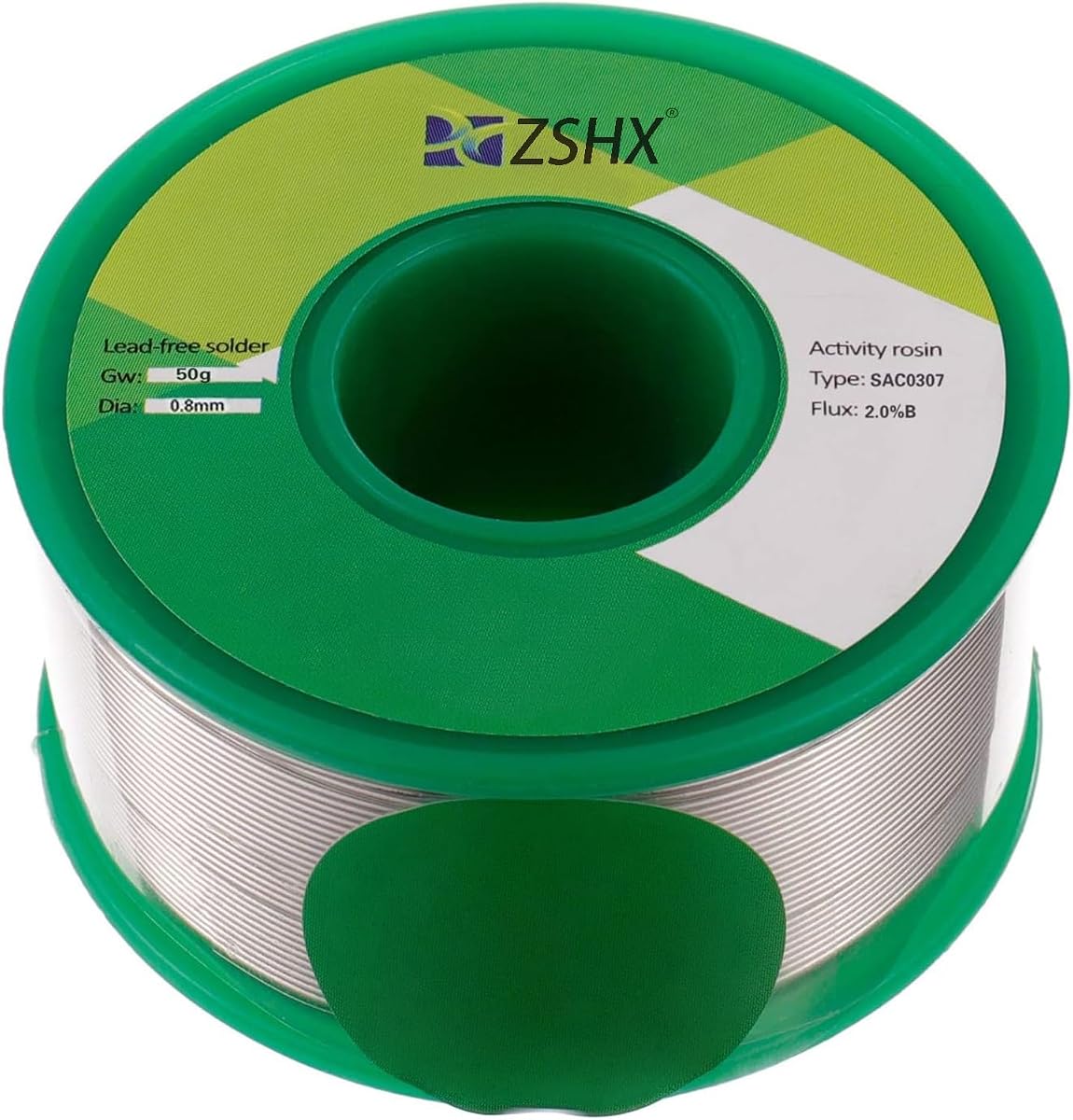
The ZSHX lead-free solder wire uses a Sn99-Ag0.3-Cu0.7 alloy with a rosin core, giving RC builders a meaningful alternative to the lead-containing wires in this guide. It has a 4.6 rating and comes on a compact 50g spool in a practical 0.8mm diameter.
We may earn a commission when you buy through this link, at no additional cost to you.
Its stated melting point of 422.6°F is higher than the 361°F figure associated with 63/37 solder. That difference matters: an iron must be set appropriately for the alloy, and the user may need to allow more time for the material to flow. The wire's 2% flux content supports soldering at the joint, while the silver and copper additions define the lead-free alloy.
Lead-free solder can be less forgiving during setup because users who are accustomed to conventional 63/37 may need to adjust temperature and technique. It may also cost more per unit of usable material, although the provided data does not establish how quickly it is consumed. A clean, well-maintained iron tip remains important.
This is the best pick for builders who specifically want a lead-free option for RC electronics. The 0.8mm diameter suits general wiring and board work, and the compact spool is easy to store. Pair it with a temperature-controlled iron so the higher melting requirement can be managed precisely.
The defining benefit is the absence of lead in the specified Sn99-Ag0.3-Cu0.7 composition. That makes the product relevant to users who prioritize lead-free materials for their workshop, workplace, or personal safety requirements.
With a stated melting point of 422.6°F, this wire calls for an iron set high enough to promote consistent flow. The digital Plusivo iron in this guide is better suited to that requirement than a simple fixed-temperature tool.
We may earn a commission when you buy through this link, at no additional cost to you.
Choosing solder for RC projects starts with identifying the work: conventional electrical joints, small surface-mount repairs, training, or full bench setup. Wire alloy, diameter, iron capability, safety requirements, and organization should be considered together rather than treating one product as suitable for every task.
The most consequential material choice is whether the solder contains lead. The 63/37 tin-lead wires in this guide melt at 361°F and are widely used for general electronics work, while the ZSHX Sn99-Ag0.3-Cu0.7 lead-free wire has a stated melting point of 422.6°F. Users should consider local workplace rules, household preferences, and their own safety requirements before choosing. Lead-containing solder requires ventilation, careful hygiene, and responsible storage.
Wire diameter affects how easily the user can control the amount of solder entering a pad. The 0.6mm options suit compact RC boards, small connectors, and fine lead work, while the 0.8mm options provide a useful flow rate for larger through-hole joints, cables, and power connections. The diameter should complement the iron tip because a broad tip and fine wire can slow work, while a narrow tip and heavy wire can create excessive buildup.
A temperature-controlled iron gives the user a wider range of working conditions than a fixed-temperature tool. The Plusivo kit adjusts from 200–500°C, which is particularly useful when working with both 63/37 and the higher-temperature lead-free wire. Temperature control also helps when moving between small RC components and larger cable connections, provided the tip and setting are properly matched.
A pointed or fine tip delivers solder precisely but is inefficient on large lugs, while a broader chisel or flat tip transfers heat better to heavier connections. The Plusivo kit includes five replaceable tips, allowing users to adapt to the joint and reduce the temptation to use one poorly matched tip for every task. A good tip should also retain its shape and transfer heat consistently.
The flux inside the wire helps it wet the joint and flow more readily. The products listed use rosin-core flux, with specified content ranging from 1.8% to 2%. Low residue can simplify inspection and cleanup, but users should still follow appropriate handling procedures. Flux residue, heat, and alloy composition can all affect the final appearance and work habits around a joint.
RC repairs produce screws, connectors, heat-shrink pieces, and other small parts that are easy to lose. The STREBITO mat provides 133 compartments, raised edges, magnetic areas, ruler markings, and heat resistance up to 932°F. It protects the workbench and gives parts a place to go, although it should be supplemented with proper grounding and an anti-static wrist strap when static-sensitive work requires them.
Practice boards and guided kits can make the difference between an intimidating first soldering attempt and a repeatable learning process. The PEMENOL project offers three difficulty levels and seven interactive functions, while the EGSCST pack includes two PCBs and a range of SMD components. These options are valuable for teens, adult beginners, students, and supervised workshops because they provide defined objectives before a builder modifies valuable RC electronics.
A soldering iron alone is rarely enough for electronics work. Useful additions include a stable stand, cleaning sponge, desoldering pump, tweezers, wire stripper, small screwdrivers, and heat-shrink tubing. The Plusivo 21-in-1 kit bundles many of these items, reducing the number of separate purchases. A dedicated mat adds organization rather than heat application, so it complements rather than replaces a soldering kit.
Begin by preparing the work area. Use the silicone mat or another suitable heat-resistant surface, keep small parts in labeled compartments, and ensure the iron is stable in its stand. For lead-containing solder, use effective ventilation, avoid eating or drinking at the bench, and wash your hands after handling the wire or completed joints. Confirm that the iron temperature and tip are appropriate for the selected alloy before beginning.
Heat the joint rather than simply melting the solder against the tip. Position the tip against the component lead and pad so heat can travel into the connection, then feed solder into the heated joint. Once the solder flows and wets the pad, remove the solder first and the iron second. Inspect the result for a clean, slightly concave fillet and mechanically secure the wire so movement cannot crack the connection before moving on to the next joint.
After use, allow the iron to cool safely, wipe the tip with a damp approved cleaning sponge, and replace or secure the tip before storage. Clean flux residue from completed boards using a method suitable for the components and board. Coil or dispense solder cleanly, protect the mat from hot tools, and inspect small parts and connectors for looseness. Periodically check tips for shape, clean the iron's connections, and keep the whole system dry, organized, and away from children or pets.
For general RC wiring and through-hole board work, a 63/37 rosin-core wire is a conventional choice, while 0.6mm is useful for smaller connections and 0.8mm is easier to feed onto larger joints. A lead-free option is appropriate when required by safety policy or personal preference, although it has a higher stated melting point. The best diameter also depends on the soldering iron tip and the size of the pad.
Choose 0.6mm when working around small receivers, control boards, closely spaced leads, and compact connectors where controlled solder placement is important. Choose 0.8mm for larger pads, cable connections, ESC leads, and frequent repairs where a faster solder feed is useful. Many builders keep both diameters available because an RC bench often handles more than one joint size.
A temperature-controlled iron is strongly preferable because it lets you adapt to different component sizes and solder alloys. The lead-free wire in this guide has a stated melting point of 422.6°F, compared with 361°F for the 63/37 products, so a fixed-temperature tool may not offer enough control. Adjustable heat also reduces the risk of overheating delicate components while preserving performance on larger joints.
Yes, lead-free solder can form suitable electrical joints when the iron temperature, tip, technique, and joint size are properly matched. It usually requires a higher operating temperature and may need more practice because its flow behavior differs from conventional 63/37 solder. Users should follow the alloy's stated melting point and verify that the finished joint is properly wetted, smooth, and mechanically secure.
At minimum, a stable iron stand, suitable tip, solder wire, and cleaning sponge are helpful. Tweezers, a desoldering pump, wire strippers, small screwdrivers, heat-shrink tubing, and an organized work mat make soldering and reassembly easier. The Plusivo kit includes many of these accessories, while the STREBITO mat adds heat protection and dedicated storage for tiny parts.
The STREBITO mat included in this guide is not anti-static and does not prevent static according to its product information. It provides heat resistance, compartment organization, magnetic areas, and surface protection, but those features do not replace ESD controls. For sensitive electronics, use a proper anti-static work surface, grounding method, and wrist strap alongside the soldering mat.
Practice is advisable because it helps users learn heat control, solder feeding, component alignment, and joint inspection without risking an expensive receiver or ESC. The EGSCST two-pack offers repeated SMD exercises, while the PEMENOL project provides structured, guided assembly. A beginner should still have a suitable soldering iron, wire, safety setup, and clear instructions before beginning.
Use the solder in a ventilated area and keep food, drinks, and personal items away from the bench. Wash hands after handling the wire or a completed joint, avoid touching the face while working, and store the spool where it cannot be mistaken for another material. Follow the product warning and applicable local requirements, and choose a lead-free alternative if that better fits the user's safety plan.
The Plusivo 60W digital soldering iron kit is the strongest all-around choice because it combines adjustable heat, five tips, solder, and the essential bench accessories needed for varied RC work. The MAIYUM 0.6mm 50g wire offers a convenient fine-wire option for compact joints, while the STREBITO mat provides the most refined organization and heat protection for a dedicated bench.
Prioritize the task that dominates your workflow. Fine-wire users should focus on the 0.6mm options, builders handling larger connections may prefer 0.8mm, and anyone using the lead-free alloy should choose an adjustable iron. New hobbyists can use a practice kit to develop control, but they will still need a reliable iron, suitable solder, ventilation, and a safe work surface.
Finally, check current product details, customer feedback, compatibility, and prices before ordering. Solder specifications are more durable than promotional descriptions, but component contents and included accessories can change. Choose the product that fits the wire diameter, alloy, temperature, and workspace an RC builder actually uses.


